Loading
Night and Fog
Genres
DocumentaryHistory
Overview
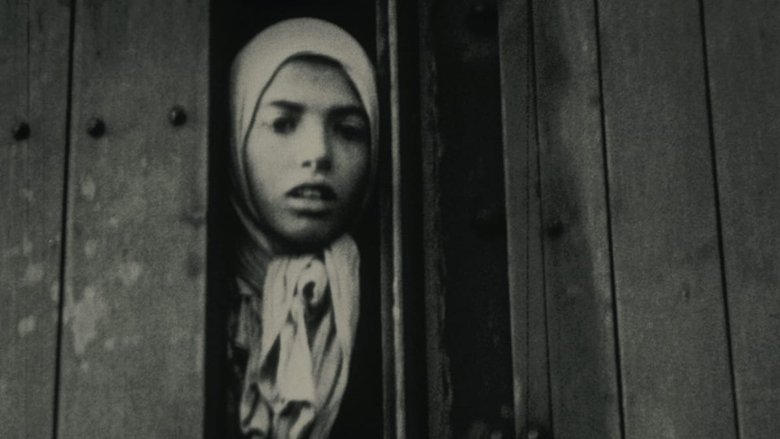
Filmmaker Alain Resnais documents the atrocities behind the walls of Hitler's concentration camps.
Details
Budget
$0
Revenue
$0
Runtime
32 min
Release Date
1959-04-27
Status
Released
Original Language
French
Vote Count
536
Vote Average
8.24
Cast
Meet the talented actors who bring the movie to life.
Michel Bouquet
Narrator (voice) (uncredited)
Reinhard Heydrich
Self (archive footage) (uncredited)
Heinrich Himmler
Self (archive footage) (uncredited)
Adolf Hitler
Self (archive footage) (uncredited)
Julius Streicher
Self (archive footage) (uncredited)
Similar Movies
Explore movies similar to this one that you might also enjoy.
5.2
La ruta de don Quijote
A poetic journey through the paths and places of old Castile that were traveled and visited by the melancholic knight Don Quixote of La Mancha and his judicious squire Sancho Panza, the immortal characters of Miguel de Cervantes, which offers a candid depiction of rural life in Spain in the early 1930s and illustrates the first sentence of the first article of the Spanish Constitution of 1931, which proclaims that Spain is a democratic republic of workers of all kind.
1934-01-01 | es
6.9
The Tin Drum
In 1924, Oskar Matzerath is born in the Free City of Danzig. At age three, he falls down a flight of stairs and stops growing. In 1939, World War II breaks out.
1979-05-02 | de
6.9
Pearl Harbor
The lifelong friendship between Rafe McCawley and Danny Walker is put to the ultimate test when the two ace fighter pilots become entangled in a love triangle with beautiful Naval nurse Evelyn Johnson. But the rivalry between the friends-turned-foes is immediately put on hold when they find themselves at the center of Japan's devastating attack on Pearl Harbor on Dec. 7, 1941.
2001-05-21 | en
6.8
Olympia Part One: Festival of the Nations
Starting with a long and lyrical overture, evoking the origins of the Olympic Games in ancient Greece, Riefenstahl covers twenty-one athletic events in the first half of this two-part love letter to the human body and spirit, culminating with the marathon, where Jesse Owens became the first track and field athlete to win four gold medals in a single Olympics.
1938-04-21 | de
6.7
Olympia Part Two: Festival of Beauty
Part two of Leni Riefenstahl's monumental examination of the 1938 Olympic Games, the cameras leave the main stadium and venture into the many halls and fields deployed for such sports as fencing, polo, cycling, and the modern pentathlon, which was won by American Glenn Morris.
1938-06-02 | de
6.7
Workers Leaving the Lumière Factory
Working men and women leave through the main gate of the Lumière factory in Lyon, France. Filmed on 22 March 1895, it is often referred to as the first real motion picture ever made, although Louis Le Prince's 1888 Roundhay Garden Scene pre-dated it by seven years. Three separate versions of this film exist, which differ from one another in numerous ways. The first version features a carriage drawn by one horse, while in the second version the carriage is drawn by two horses, and there is no carriage at all in the third version. The clothing style is also different between the three versions, demonstrating the different seasons in which each was filmed. This film was made in the 35 mm format with an aspect ratio of 1.33:1, and at a speed of 16 frames per second. At that rate, the 17 meters of film length provided a duration of 46 seconds, holding a total of 800 frames.
1895-03-22 | fr
0.0
The Hills of Qaytariyeh
A strange and mischievous documentary on an archeological site in the Qaytarieh hills in Tehran. This short narrates the story of the dead people who wished never to be found.
1969-04-29 | fa
7.1
Land Without Bread
An exploration —manipulated and staged— of life in Las Hurdes, in the province of Cáceres, in Extremadura, Spain, as it was in 1932. Insalubrity, misery and lack of opportunities provoke the emigration of young people and the solitude of those who remain in the desolation of one of the poorest and least developed Spanish regions at that time.
1933-12-01 | es
6.0
Gonzalo Suárez: Sam Peckinpah, director salvaje (TV)
2011-05-01 | es
6.8
Doctors of the Dark Side
Doctors of the Dark Side is the first feature length documentary about the pivotal role of physicians and psychologists in detainee torture. The stories of four detainees and the doctors involved in their abuse demonstrate how US Army and CIA doctors implemented the Enhanced Interrogation Techniques and covered up signs of torture at Guantanamo and Abu Ghraib. Interviews with medical, legal and intelligence experts and evidence from declassified government memos document what has been called the greatest scandal in American medical ethics. Based on four years of research by Producer/Director Martha Davis, written by Oscar winning Mark Jonathan Harris, and filmed in HD by Emmy winning DP Lisa Rinzler, the film shows how the torture of detainees could not continue without the assistance of the doctors.
2011-01-01 | en
10.0
Vito-Man
Vito is a sweet little boy with Down syndrome, and this short documentary puts his energetic, jolly personality on full display as he interacts with his loving family. By showing Vito’s dignity and inherent value, Vito-Man tackles the difficult conversation that is the eradication of people with Down syndrome, proving that an extra chromosome should not be a death sentence.
2024-12-11 | en
8.0
Andrei Rublev
An expansive Russian drama, this film focuses on the life of revered religious icon painter Andrei Rublev. Drifting from place to place in a tumultuous era, the peace-seeking monk eventually gains a reputation for his art. But after Rublev witnesses a brutal battle and unintentionally becomes involved, he takes a vow of silence and spends time away from his work. As he begins to ease his troubled soul, he takes steps towards becoming a painter once again.
1966-12-16 | ru
7.5
Spartacus
The rebellious Thracian Spartacus, born and raised a slave, is sold to Gladiator trainer Batiatus. After weeks of being trained to kill for the arena, Spartacus turns on his owners and leads the other slaves in rebellion. As the rebels move from town to town, their numbers swell as escaped slaves join their ranks. Under the leadership of Spartacus, they make their way to southern Italy, where they will cross the sea and return to their homes.
1960-10-13 | en
7.2
Seven Years in Tibet
Austrian mountaineer Heinrich Harrer journeys to the Himalayas without his family to head an expedition in 1939. But when World War II breaks out, the arrogant Harrer falls into Allied forces' hands as a prisoner of war. He escapes with a fellow detainee and makes his way to Lhasa, Tibet, where he meets the 14-year-old Dalai Lama, whose friendship ultimately transforms his outlook on life.
1997-09-12 | en
5.2
Cameramen at War
A tribute to the cameramen of the newsreel companies and the service film units, in the form of a compilation of film of the cameramen themselves, their training and some of their most dramatic film.
1943-01-01 | en
0.0
Under the water
A daily life in Korogocho, Kenya, one of the world’s poorest slums.
| en
7.0
Dogtown and Z-Boys
This award-winning, thrilling story is about a group of discarded kids who revolutionized skateboarding and shaped the attitude and culture of modern day extreme sports. Featuring old skool skating footage, exclusive interviews and a blistering rock soundtrack, DOGTOWN AND Z-BOYS captures the rise of the Zephyr skateboarding team from Venice's Dogtown, a tough "locals only" beach with a legacy of outlaw surfing.
2002-05-10 | en
6.0
Frihed forpligter
Danish social democratic propaganda film. During the Occupation, the young freedom fighter Søren had a good working relationship with a comrade in the resistance movement, despite the fact that Søren was a social democrat and his comrade a communist. After the liberation in May 1945, the differences that had been less important during the war begin to stand in Søren's way. Both his friendship with his comrade and his relationship with the wealthy Inger fall apart in the summer of liberation. But through his work in the Social Democratic Party, Søren experiences a renewed enthusiasm and resumes his relationship with Inger. Together, they actively engage in the party's work and both see it as an extension of the struggle for freedom during the occupation. Denmark's entry into NATO is particularly important.
1951-10-07 | da
5.0
Harbour
While shooting “Flying over blue field” we lived in Birtonas sanatorium hotel. I was watching treatment procedures. People were plunging into bubble, mud and mineral water baths. They were going circles singing, were standing under cold water spouts. All this seemed like a sacred ritual, that frees from scurf of life. They were naked, like just born, without any signs of standing in society. Movie – silent impression about tired people "harbour".
1998-01-01 | lt
0.0
An Island Invaded
Five Guamanians interviewed in the early 2000s recall the Japanese bombing of Guam on 7 December 1941, and the years of food shortages, abuses, and other hardships that followed. They describe their childhood lives before, during, and after the island's occupation by Japanese soldiers.
2004-01-01 | en