Loading

Velorama
Genres
Documentary
Overview
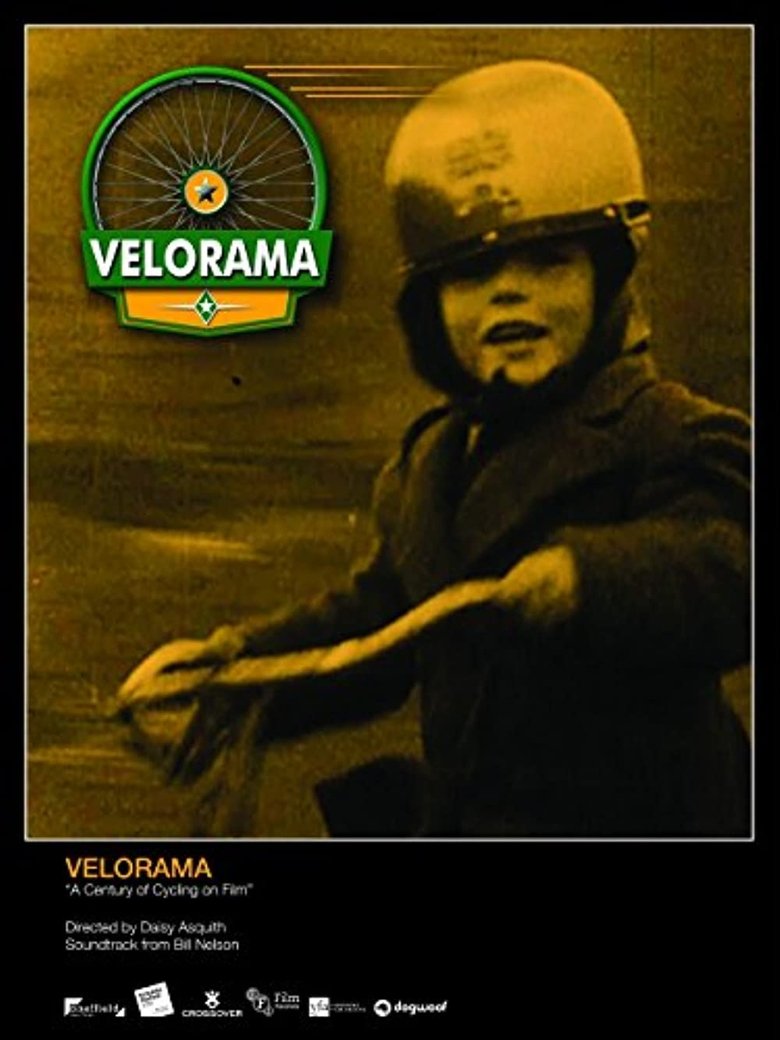
Documentary looking at a century of cycling. Commissioned to mark the arrival of the 2014 Tour de France in Yorkshire, the film makes full use of stunning British Film Institute footage to transport the audience on a journey from the invention of the modern bike, through the rise of recreational cycling, to gruelling competitive races. Award-winning director Daisy Asquith artfully combines the richly-diverse archive with a hypnotic soundtrack from cult composer Bill Nelson in a joyful, absorbing watch for both cycling and archive fans.
Details
Budget
$0
Revenue
$0
Runtime
60 min
Release Date
2014-07-06
Status
Released
Original Language
English
Vote Count
0
Vote Average
0
Cast
Meet the talented actors who bring the movie to life.
Similar Movies
Explore movies similar to this one that you might also enjoy.
6.9
A Suitable Girl
A Suitable Girl follows three young women in India struggling to maintain their identities and follow their dreams amid intense pressure to get married. The film examines the women's complex relationship with marriage, family, and society.
2017-04-22 | en
6.8
Olympia Part One: Festival of the Nations
Starting with a long and lyrical overture, evoking the origins of the Olympic Games in ancient Greece, Riefenstahl covers twenty-one athletic events in the first half of this two-part love letter to the human body and spirit, culminating with the marathon, where Jesse Owens became the first track and field athlete to win four gold medals in a single Olympics.
1938-04-21 | de
6.7
Olympia Part Two: Festival of Beauty
Part two of Leni Riefenstahl's monumental examination of the 1938 Olympic Games, the cameras leave the main stadium and venture into the many halls and fields deployed for such sports as fencing, polo, cycling, and the modern pentathlon, which was won by American Glenn Morris.
1938-06-02 | de
5.0
Seekers of Oblivion
Seekers of Oblivion explores the exciting life and adventures of Isabelle Eberhardt. Born in Geneva, Switzerland in 1877, Isabelle left Europe for North Africa at a young age. While there, she consorted with tramps, prostitutes, soldiers, murderers and thieves, at times masquerading as a man in orde.
2004-04-29 | ar
7.8
Zaineb Hates the Snow
When her mother remarries and her newly blended family moves to Canada, a 9-year-old Tunisia girl's life takes a profound turn as she struggles to find her place and maintain her Muslim identity in a new land.
2016-06-08 | fr
6.6
The Aryans
THE ARYANS is Mo Asumang's personal journey into the madness of racism during which she meets German neo-Nazis, the US leading racist, the notorious Tom Metzger and Ku Klux Klan members in the alarming twilight of the Midwest. In The ARYANS Mo questions the completely wrong interpretation of "Aryanism" - a phenomenon of the tall, blond and blue-eyed master race.
2014-04-29 | de
0.0
I Was Only 14
Filmmaker Froukje van Wengerden’s 86-year-old grandmother shares a powerful memory from 1944, when she was just 14. As her story unfolds, we see a group of contemporary 14-year-old girls. Their procession of portraits permits the spectator to see simultaneously forward and back, into the future and towards the past. A miraculous testimonial that uses eye contact to focus the viewer inward and evoke unexpected emotions.
2016-11-09 | nl
0.0
La Belle Epoque
Featuring Douglas Fairbanks Jr. and Diana Vreeland, La Belle Epoque evokes "the beautiful era" of 1890-1914, a time in which the wealthy upper classes of the Western world gave themselves over to a life of elegance and taste-making, their eyes closed to the increasing social and political turmoil fermenting beneath the surface of polite society. The program uses period motion pictures, photographs, and sound recordings, as well as the arts and fashions of the period to supplement the spoken memories of the participating interviewees who actually lived... La Belle Epoque.
1983-01-01 | en
7.1
The Story of the Weeping Camel
When a Mongolian nomadic family's newest camel colt is rejected by its mother, a musician is needed for a ritual to change her mind.
2003-06-29 | mn
6.8
Born Into Brothels: Calcutta's Red Light Kids
Documentary depicting the lives of child prostitutes in the red light district of Songachi, Calcutta. Director Zana Briski went to photograph the prostitutes when she met and became friends with their children. Briski began giving photography lessons to the children and became aware that their photography might be a way for them to lead better lives.
2004-12-08 | en
6.7
Full Metal Village
The film describes the microcosmos of the small village Wacken and shows the clash of the cultures, before and during the biggest heavy metal festival in Europe.
2007-04-19 | de
6.0
Die Dichter und die Räterepublik
Documentary film with play scenes about the rise and fall of the short-lived Bavarian Soviet Republic in 1919 from the perspective of various well-known poets and writers who experienced the events as contemporary witnesses.
1990-01-01 | de
3.1
Bukovyna, Ukrainian Land
Dovzhenko and Solntseva's documentary about the Bukovina region.
1939-04-01 | uk
4.7
Victory in Soviet Ukraine
A wartime documentary directed by Alexander Dovzhenko and Yuliya Solntseva, depicting the final campaigns that drove Nazi forces from Ukraine in 1944–45. Combining frontline footage, liberated cityscapes, and scenes of returning civilians, the film chronicles both the devastation of occupation and the triumph of Soviet arms. It stands as both a historical record of the Ukrainian front and a patriotic celebration of victory at the close of the Second World War.
1945-04-01 | ru
0.0
Tres instantes, un grito
2013-10-17 | es
5.2
Ukraine in Flames
A 1943 Soviet war propaganda film by Ukrainian director Oleksandr Dovzhenko and Yuliya Solntseva. It is Dovzhenko's second World War II documentary, and dealt with the Battle of Kharkiv. The film incorporates German footage of the invasion of Ukraine, which was later captured by the Soviets.
1943-04-01 | ru
6.3
Liberation
Wartime documentary by Dovzhenko and Solntseva.
1940-04-01 | uk
0.0
Wild Women Don't Have the Blues
Recaptures the lives and times of Ma Rainey, Bessie Smith, Ida Cox, Alberta Hunter, Ethel Waters, and the other legendary women who made blues music a vital part of American culture. The film brings together for the first time dozens of rare, classic renditions of the early blues.
1989-01-01 | en
0.0
The Head of a Pin
The Head of a Pin reveals the awkward ruminations of the filmmaker and her friends as they attempt to learn about nature. Starting out as an examination of the differences between urban and rural life, between the daily grind and summer vacations, the film turns unexpectedly into a portrait of what happens when city dwellers encounter a country spider.
2004-06-09 | en
0.0
The Odds of Recovery
After a twenty year period of multiple illnesses and injuries, the filmmaker turns the camera on herself as a way to analyze her chances for a happier, healthier life. In the process, she captures the frustration, tedium and petty annoyances of a revolving-door relationship with the medical establishment, while portraying the complicated web of emotions that accompany any medical problem. With humor and honesty, The Odds of Recovery uses the filmmaker's medical history as a means to address a perennial human problem: the desire to avoid conflict and deny the need for radical change.
2002-06-09 | en