Loading

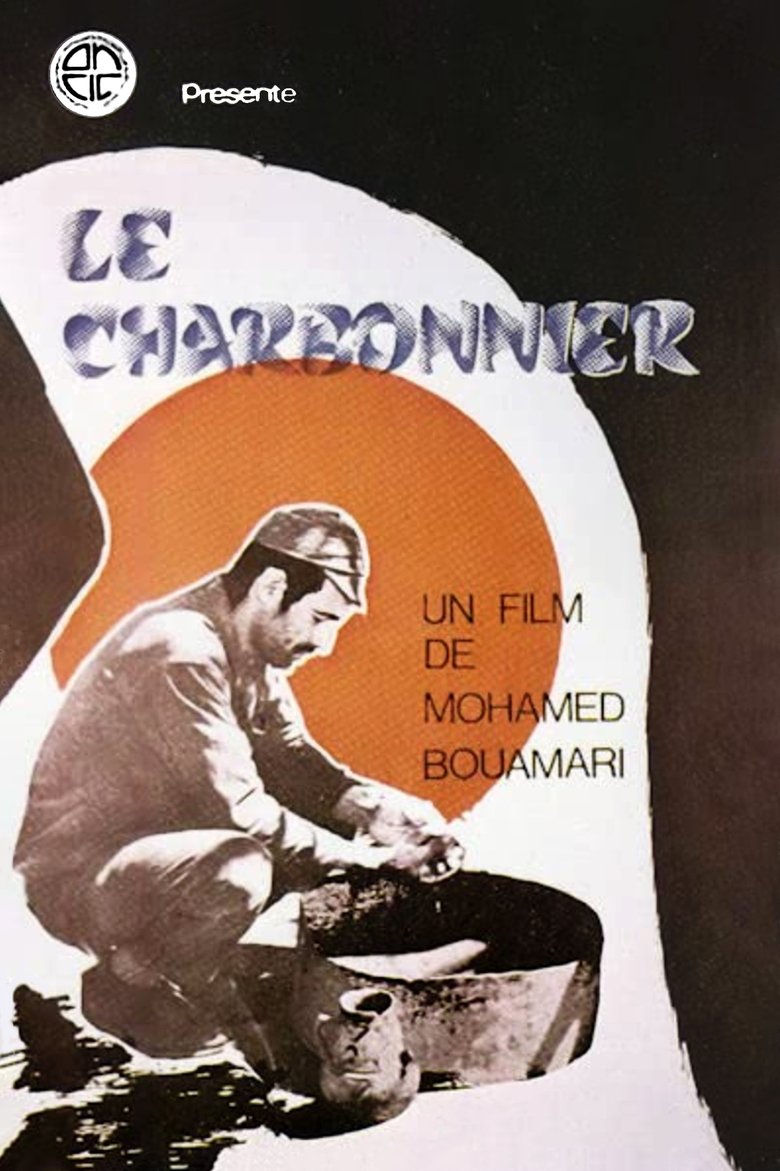
The Charcoal Maker
Genres
Drama
Overview
Film describes the miserable existence of a charcoal-burner who is barely able to feed his family. His search for work in town ends in failure and he is forced to return to his village.
Details
Budget
$0
Revenue
$0
Runtime
86 min
Release Date
1973-01-02
Status
Released
Original Language
Arabic
Vote Count
1
Vote Average
10
Cast
Meet the talented actors who bring the movie to life.
Fettouma Ousliha-Bouamari
L'Épouse
Youcef Hadjam
Belkacem
Mustapha El Anka
Ahmed Hamoudi
Mohamed Mahboub Stambouli
Similar Movies
Explore movies similar to this one that you might also enjoy.
0.0
Emak and Her Surroundings
Emak who wanted a new digital TV because her analog TV service had been cut off, but was not financially able to afford it until her granddaughter Rahma invited her to do Live Streaming on "TokTok".
| id
7.2
Dawn of the Damned
This excellent feature-length documentary - the story of the imperialist colonization of Africa - is a film about death. Its most shocking sequences derive from the captured French film archives in Algeria containing - unbelievably - masses of French-shot documentary footage of their tortures, massacres and executions of Algerians. The real death of children, passers-by, resistance fighters, one after the other, becomes unbearable. Rather than be blatant propaganda, the film convinces entirely by its visual evidence, constituting an object lesson for revolutionary cinema.
1965-07-05 | fr
4.4
Tempting the Devil
Two themes arise from the story, themes that are interlocked: the theme of love and of man's eternal submission to traditional symbols. The director Živko Nikolić continues his movie saga of human nature. Both themes develop the mythical idea of temptation. It is basic human relation: from the intimate to the families' vying with each other.
1989-06-27 | sh
7.7
The Outlaws
In prison in colonial Algeria, shortly after the end of the Second World War, three indigenous cellmates make out. Once free, they attack the authority represented by the triad of the boss, the gendarme and the administrator. “Living the colonial condition,” confided Tewfik Farès, “is something! It’s not sociologically or historically speaking. It’s life. And I think that’s all there in it. [...] For a hundred and thirty years, we wait. We hold back. We push back. We hope. At the same time, on different occasions, there are skirmishes, unrest.
1969-01-01 | fr
7.0
Jamila, the Algerian
Djamila, a young Algerian woman living with her brother Hadi and her uncle Mustafa in the Casbah district of Algiers under the French occupation of Algeria, sees the full extent of injustice, tyranny and cruelty on his compatriots by French soldiers. Jamila's nationalist spirit will be strengthened when French forces invade her university to arrest her classmate Amina who commits suicide by ingesting poison. Shortly after the prominent Algerian guerrilla leader Youssef takes refuge with her, she realizes that her uncle Mustafa is part of this network of anti-colonial rebel fighters. Her uncle linked her to the National Liberation Front (FLN). A series of events illustrate Jamila's participation in resistance operations against the occupier before she was finally captured and tortured. Finally, despite the efforts of her French lawyer, Jamila is sentenced to death...
1958-12-09 | ar
7.7
Fiddler on the Roof
In a pre-revolutionary Russia, a poor Jewish milkman struggles with the challenges of a changing world as his daughters fall in love and antisemitism grows.
1971-11-03 | en
5.9
The Jazz Singer
A young Jewish man is torn between tradition and individuality when his old-fashioned family objects to his career as a jazz singer.
1980-12-17 | en
8.1
Ni Jing: Thou Shalt Not Steal
Xiaofan, a young girl who works at a Karaoke Club, awakes one morning in a remote forest with her body covered in blood. As she struggles to find her way out, she tries to understand the drama circumstances which got her into the situation, events mainly related to her unpredictable boyfriend. She needs to make a decision that may change her life.
2013-11-09 | zh
10.0
Yasmina
"Yasmina" filmed in 1961 in the middle of the Algerian war tells the story of a little Algerian girl with her hen and her family whose father was killed in a bombing by the French colonial army of occupation. The family, after a long journey, heads towards the refugee camps on the Tunisian border. Produced by the Cinema Service of the Provisional Government of the Algerian Republic (GPRA) in the midst of the war of independence, these films were intended to re-inform the population and international public opinion on the abuses committed by the French colonial army: torture, arrests and arbitrary executions, napalm bombings, fires in douars, entire villages wiped off the map, etc. which the French media described as a "pacification" campaign. The latter censoring or reorienting any images that could harm the colonial narrative.
1961-01-01 | ar
7.0
The Storm
The Kuwaiti short film العاصفة (The Storm) explores Kuwait's social and economic shifts before and after the discovery of oil. Through the perspectives of an older father and his modernized son, it delves into the challenges of tradition versus rapid modernization.
1965-08-26 | ar
7.9
The Battle of Algiers
Paratrooper commander Colonel Mathieu, a former French Resistance fighter during World War II, is sent to Algeria to reinforce efforts to squelch the uprisings of the Algerian War. There he faces Ali la Pointe, a former petty criminal who, as the leader of the Algerian Front de Liberation Nationale, directs terror strategies against the colonial French government occupation. As each side resorts to ever-increasing brutality, no violent act is too unthinkable.
1966-09-08 | it
10.0
The Refusal
In 1971, the Algerian government nationalized hydrocarbons. The consequences of this decision on the community of Algerians in France are numerous. The Galti family is prey to these economic problems. The father, Khaled, former member of the F.L.N. in France, does not escape the sentence. Sharazade, his wife and comrade in combat, finds herself torn between her role as wife, mother and nostalgia for a country and a bygone past. As for his son Karim, a victim of socio-cultural division, all he has left is refusal.
1982-01-02 | fr
6.8
Far from Men
A French teacher in a small Algerian village during the Algerian War forms an unexpected bond with a dissident who is ordered to be turned in to the authorities.
2015-01-14 | fr
10.0
Pas De Blanc À La Une
Pas De Blanc À La Une, by Youcef Bouchouchi, treatises the brutality of the conflict during the war of independence in Algeria from 1854 to 1962, and the systematic use of torture which pushes even the most hesitant to make up their minds.
1971-01-01 | ar
10.0
The Price of Freedom
In the midst of the Algerian liberation war, two characters, a meddah (traditional storyteller) and a guerrab (water distributor), having become aware of their subhuman condition in their own country, join the National Liberation Army (ALN) to fight against inhumane colonialism. They will climb the ranks to become political commissioners before falling on the field of honor, the first in a skirmish and the other in Barberousse prison (Serkadji) where he will be guillotined.
2007-07-07 | ar
10.0
The Unknown Hero
In the midst of the Algerian war for independence, a group of fighters is trapped in the mountains, surrounded by the colonial army. Cut off from their allies, they have only one hope: to transmit a vital message to save their unit. But crossing enemy lines is a suicide mission. Their only chance lies with an unexpected messenger: a courageous dog named Messaoud. Carrying the letter attached to his collar, he embarks on a perilous crossing, braving the hostile nature and the dangers of war. But when he is captured by the enemy, his courage and instinct become his only weapons. Prisoner, hunted, he must risk everything to escape and accomplish his mission before it is too late. Sacrifice, bravery and hope mingle in this breathtaking odyssey where the humblest of heroes can change the course of history. The Unknown Hero, a moving film which won first prize at the Arab World Festival in 2017.
2016-03-18 | ar
6.5
East Is East
In 1971 Salford fish-and-chip shop owner George Khan expects his family to follow his strict Pakistani Muslim ways. But his children, with an English mother and having been born and brought up in Britain, increasingly see themselves as British and start to reject their father's rules on dress, food, religion, and living in general.
1999-05-14 | en
7.2
War of the Buttons
For generations, two rival French villages, Longueverne and Velrans, have been at war. But this is no ordinary conflict, for the on-going hostilities are between two armies of young schoolboys. When he is beaten by his father for having lost his buttons, the leader of the Longueverne army, Lebrac, has an idea which will give his side the advantage: next time, he and his brave soldiers will go in battle without their clothes...
1962-04-18 | fr
10.0
Baya's Mountain
Set in the 1800s among the Berbers of North Africa, this 1997 Algerian feature concerns a noble widow who receives a customary purse of gold coins from the enemy tribe that murdered her husband; the gift puts her in conflict with her kinsmen, who want the money to buy back land taken by the enemy in cahoots with French colonials.
1997-12-03 | ar
8.5
The Forgotten Hill
At the outbreak of the Second World War, two friends, Mokrane and Menach, abruptly interrupt their studies and return to their remote native Kabylian village of Tagsa. While waiting to be drafted into the French Army they have time to woo. Mokrane falls for beautiful Aazi and soon marries her only to find out that she can bear no child. Menach, on his part, is stongly attracted to Davda, but the latter is already married to a rich merchant...Happiness does not seem to be in store for the two former students...
1996-05-19 | ar