Loading

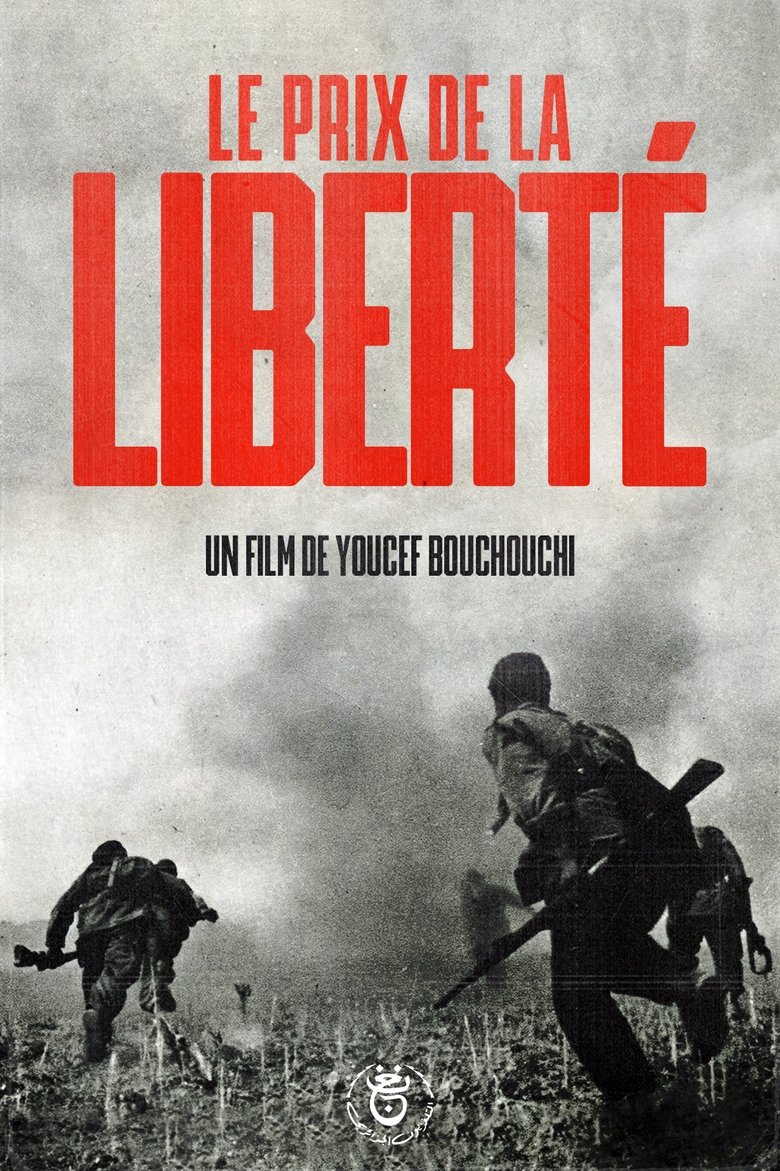
The Price of Freedom
Genres
WarDrama
Overview
In the midst of the Algerian liberation war, two characters, a meddah (traditional storyteller) and a guerrab (water distributor), having become aware of their subhuman condition in their own country, join the National Liberation Army (ALN) to fight against inhumane colonialism. They will climb the ranks to become political commissioners before falling on the field of honor, the first in a skirmish and the other in Barberousse prison (Serkadji) where he will be guillotined.
Details
Budget
$0
Revenue
$0
Runtime
90 min
Release Date
2007-07-07
Status
Released
Original Language
Arabic
Vote Count
1
Vote Average
10
Cast
Meet the talented actors who bring the movie to life.
Abdelhamid Gouri
Hamid Mesbah
Nader Hocine
Souad Sebki
Abdelhak Benmarouf
Similar Movies
Explore movies similar to this one that you might also enjoy.
7.3
Daughter of Keltoum
A 19 year-old Swiss woman travels to her birthplace—an isolated, barren Berber settlement in the mountainous desert landscape of Algeria—to find her biological mother, whom she has never met. The perilous journey immerses her in a world virtually untouched by contemporary society, one that still clings to tribal mores and strict religious codes of conduct.
2001-09-13 | fr
10.0
Paysans Noirs
In Ivory Coast, an administrator is appointed to replace a colleague who has just been assassinated. The newly appointed administrator, Guillon, clashes with a powerful elite that extorts money from farmers who refuse to cultivate the land. A peanut processing plant, nearing completion, unfolds against a backdrop of ethnic rivalries and resistance from the rural population to the changes imposed by the colonial regime, which is striving to modernize traditional agriculture to demand increased production. Aided by a doctor and an engineer, Guillon succeeds in restoring the confidence of the Black farmers after thwarting the schemes of those who dared to stand in his way.
1949-05-06 | fr
6.9
Le petit soldat
Despite his lack of political convictions, photojournalist Bruno Forestier is roped into a paramilitary group waging a shadow war in Geneva against the Algerian independence movement.
1963-01-25 | fr
6.0
The Call
The story of Charles de Foucauld, born September 15, 1858 in Strasbourg (France) and died December 1, 1916 in Tamanrasset in Algeria during the French colonial period, was a cavalry officer of the French army who became an explorer and geographer, then Catholic religious, priest, linguist and hermit in the Hoggar desert in Algeria.
1936-05-01 | fr
10.0
Black Sweat
During French colonization, a young Algerian boy is expelled from the French high school where he is able to study thanks to his father's position in the village. For his father, whose dream is to see his son climb the social ladder, this is a disaster, and the young man decides to go to work in the mines. A general strike that is severely repressed makes him aware of the class struggle, and he joins the resistance against discrimination and colonial oppression.
1971-01-02 | ar
10.0
Gates of Silence
In 1955, what was known as the "Algerian War" gradually escalated into all-out war, and the French army inexorably transformed into a soldiery accustomed to colonial humiliation and massacres. Amar is a young deaf and mute man who wants to join the resistance, but he is rejected because of his disability, despite all the training he received from his father, who was an expert in hunting and horses. The raid on his village, which he watches helplessly, drives him to seek revenge, he who had until then been locked away in "The Gates of Silence."
1987-01-02 | fr
8.0
Haïti, la rançon de l'indépendance
2025-04-11 | fr
6.7
Of Gods and Men
A group of Trappist monks reside in the monastery of Tibhirine in Algeria, where they live in harmony with the largely muslim population. When a bloody conflict between Algeria's army and Muslim Jihadi insurgents disrupts the peace, they are forced to consider fleeing the monastery and deserting the villagers they have ministered to. In the face of deadly violence the monks wrestle with their faith and their convictions, eventually deciding to stay and help their neighbours keep the army and the insurgents at bay.
2010-09-08 | fr
10.0
Les Sept Remparts De La Citadelle
The feature film “The seven ramparts of the citadel”, a fiction recounting the conflict between an Algerian family expropriated from its land and a bloodthirsty settler; by director Ahmed Rachedi. Adapted from the eponymous novel by Mohamed Maarafia, the film, whose plot begins in 1954, tells the story of two characters, Thebti and Lucien, “the fellaga and the colonist”, a story of crossed destinies. “After having engaged in a fight to the death, after having both traveled a long path of embers, (they) finally find themselves face to face and above all each face to themselves”.
2018-01-01 | fr
6.4
Chronicle of the Years of Fire
A meticulous chronicle of the evolution of the Algerian national movement from 1939 until the outbreak of the revolution on November 1, 1954, the film unequivocally demonstrates that the "Algerian War" is not an accident of history, but a slow process of suffering and warlike revolts, uninterrupted, from the start of colonization in 1830, until this "Red All Saints' Day" of November 1, 1954. At its center, Ahmed gradually awakens to political awareness against colonization, under the gaze of his son, a symbol of the new Algeria, and that of Miloud, half-mad haranguer, half-prophet, incarnation of Popular memory of the revolt, the liberation of Algeria and its people.
1975-11-26 | ar
5.9
A View of Love
Happily married with a daughter, Marc is a successful real estate agent in Aix-en-Provence. One day, he has an appointment with a woman to view a traditional country house. A few hours later, Marc finally puts a name to her face. It's Cathy, the girl he was in love with growing up in Oran, Algeria, in the last days of the French colonial regime. Marc hurries to her hotel. They spend the night together. Then she's gone again. And Marc's mother tells him Cathy never left Algeria. She was killed with her father in a bombing just before independence...
2010-12-15 | fr
10.0
December
In Algiers, during the Algerian War of Independence, one of the leaders of the FLN was arrested by the French colonial army, which used the most violent methods to make the prisoners speak. The use of torture poses a conscience problem for a French officer. Playing shot-reverse-shot, between the tortured and his torturer, in a suffocating camera, Mohammed Lakhdar-Hamina approaches torture by drawing inspiration from the story of his father, who died of abuse.
1973-01-02 | fr
10.0
A Finger in the Works
The film mixes fiction, filmed documents and interviews which recounts the arrival in Paris of an Algerian immigrant lost in the metro. On December 27, 1968, France and Algeria signed an agreement which admitted each year 35,000 Algerian workers to French territory in the France of the Trente Glorieuses where the annual growth rate reached 5% and where factories lacked workers. Candidates obtain a residence permit valid for 5 years for themselves and their families. Paris is committed to improving professional training and housing conditions for immigrants, too often confined to the most thankless jobs and often housed in slums. A testimony on the living conditions of emigrant workers "economic cannon fodder" of neocolonialism which simultaneously develops its alter ego, institutionalized racism, as a tool of social stagnation and division of the proletarian class.
1974-01-02 | fr
10.0
Forbidden Zone
A revolutionary militant is killed during the repression of May 1945. His son, who is unaware of the real circumstances of the murder, ends up being attached to the ideal for which his father died.
1974-01-02 | ar
7.6
Opium and the Stick
In 1950, in Algeria, in a village in Kabylia, Algerian resistance fighters resisted the French occupation army. Bachir returns to the village to escape the clashes ravaging Algiers. In Thala, he has two brothers, Ali and Belaïd. The first is engaged with the ALN (The National Liberation Army) and fights against the colonizer. His second brother, Belaïd, the eldest, is convinced of a French Algeria. His family torn apart, Bachir decides to join the war and takes sides against the repression of the French army. The French army is trying in vain to turn the population against the insurgents by using disinformation. The more time passes, the more the inhabitants of the village and surrounding areas, oppressed, rally to the cause of the FLN, their houses and their fields will be burned... Adaptation to the cinema of the eponymous novel Opium and the Stick, published in 1965, by Mouloud Mammeri, the film was dubbed into Tamazight (Berber), a first for Algerian cinema.
1970-09-14 | fr
10.0
The Inheritance
A harrowing picture of the heritage of colonialism, focusing on a man driven mad by torture but saved by his wife, who restores his sanity and leads the progressive forces to rebuild the village.
1975-01-01 | ar
8.5
Autumn, October In Algiers
The story of a family in the instability and violence that shook Algeria during the riots of October 1988 in the midst of the rise of fundamentalism and intolerance, disappointments and prohibitions, corruption, nepotism and abuse of power. On October 5, 1988, young Algerians occupied the streets... Afterwards, Algeria would plunge into the chaos of the Black Decade which would last more than ten years and leave more than 150,000 dead.
1993-01-02 | fr
10.0
First Step
A modern couple seeks to find marital happiness in a context where Algerian society is taking the “first step” towards female emancipation. A woman becomes president of a popular municipal assembly. Will she find happiness ?
1980-01-02 | ar
10.0
We Will Return
The story of a young Palestinian who left his refugee camp to become a resistance fighter in the Palestine Liberation Organization.
1972-01-02 | ar
6.0
Oranges Amères
Recognizing no boundaries to her love, Angele manages to foment riots, rages and tragedy in colonial Algeria. Angele, an Algerian colonist with impeccably French origins, has fallen in love with Said, the assistant in her brother-in-law's bakery shop. Said is conscious of his Arab origins and traditions, and Angele has her work cut out for her if she wants to persuade him to marry her. Once she does, all hell breaks loose, as neither her European-origin peers nor Said's conservative Arab family approve of the union. When word of the proposed marriage gets out, strikes, violence and murder quickly follow, ruining not only Angele's life, but the lives of those around her. Her brother-in-law Paco, meanwhile, has been doggedly trying to get along and raise his family in an increasingly chaotic and difficult situation.
1997-04-16 | fr