Loading
We Were Children
Genres
Documentary
Overview
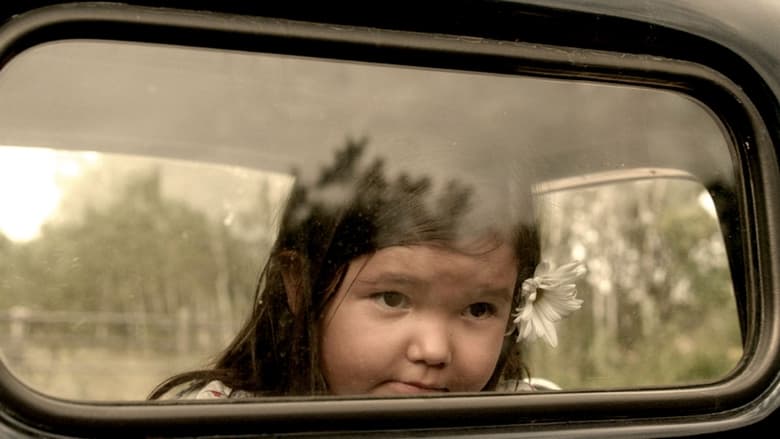
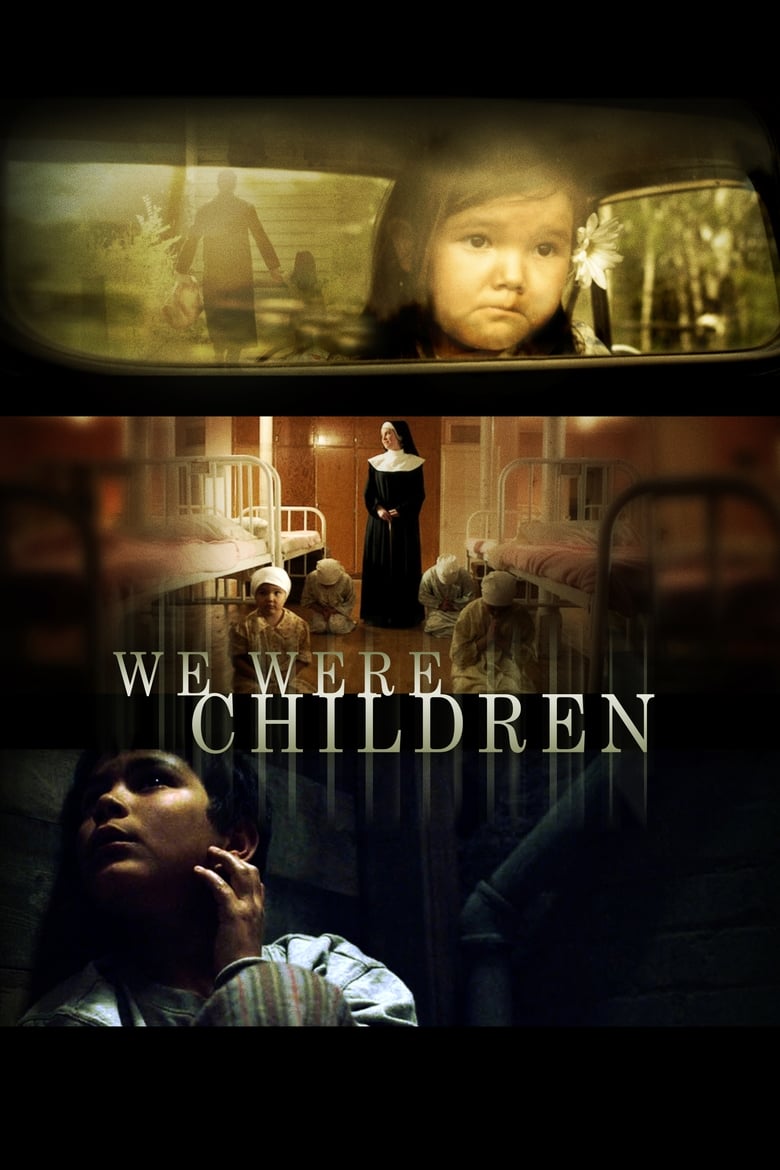
For over 130 years till 1996, more than 100,000 of Canada's First Nations children were legally required to attend government-funded schools run by various Christian faiths. There were 80 of these 'residential schools' across the country. Most children were sent to faraway schools that separated them from their families and traditional land. These children endured brutality, physical hardship, mental degradation, and the complete erasure of their culture. The schools were part of a wider program of assimilation designed to integrate the native population into 'Canadian society.' These schools were established with the express purpose 'To kill the Indian in the child.' Told through their own voices, 'We Were Children' is the shocking true story of two such children: Glen Anaquod and Lyna Hart.
Details
Budget
$0
Revenue
$0
Runtime
88 min
Release Date
2012-03-03
Status
Released
Original Language
English
Vote Count
8
Vote Average
7.5
Cast
Meet the talented actors who bring the movie to life.
Lyna Hart
Self
Ross McMillan
Father Y
Glen Anaquod
Self
Alicia Hamelin
Lyna (4 Yrs Old)
Jade Hamelin
Lyna (10 Yrs Old)
Jennie Morin
Lyna (18 Yrs Old)
Rebecca Gibson
Sister Mary
Rene Batson
Glen (6-7 Yrs Old)
Brun Montour
Glen (12 Yrs Old)
Justin Ducharme
Glen (18 Yrs Old)
Justin Courchene
Glen (Adult)
Tyrone Brooks
Glen's Cousin (6-7 Yrs Old)
Rachel Seenie
Glen's Aunt
Glenn Cochrane
Lyna's Grandfather
Fawnda Neckoway
Lyna's Mother
Maggie Nagle
Sister 1
Shawney Moar
Girl at Sink
Kohl Bohemier
Cree Speaking Altar Boy
Tasha Weight
Supervisor
Robert Kostyra
Black Robe Priest
John B. Lowe
Deputy Minister
Curtis Moore
Father X
Jon Ted Wynne
Inspector
Kayla Contois-Moar
Virginia
Kristen Harris
Saskatchewan Nun
Carlos Swampy
Timothy
Daina Leitold
Sister Margaret
Jeff Skinner
Principal - Saskatchewan
Janelle McPherson
Sewing Girl
Rivers Thomas
Second Boy
Darcy Fehr
Glen's Teacher (Priest)
Lois Brothers
Glen's Teacher
Ashley Hirt
Nurse
Darren Felbel
Priest - Saskatchewan
Ramsey Bruce
Glen's Cousin (12 Yrs Old)
Alice Dano
Nun 1
Similar Movies
Explore movies similar to this one that you might also enjoy.
0.0
One Heart: One Spirit
An Aboriginal Australian and Native American documentary narrated by award-winning actor Jack Thompson, One Heart-One Spirit tells the story of Kenneth Little Hawk, an elder Micmac/Mohawk performing artist, meeting the oldest surviving culture on the planet: the 40,000 year old Yolngu nation located in northern Australia.
2017-07-15 | en
0.0
Columbus Didn't Discover Us
The historic gathering of three hundred indigenous activists from North, South and Central America who met in Quito, Ecuador, in July 1990 to organize a cross-continental indigenous resistance to the Columbus Quincentennial.
1992-05-16 | en
0.0
The Fallen Feather: Indian Industrial Residential Schools and Canadian Confederation
Between 1879 and 1986, upwards of 100,000 children in Canada were forcibly removed and placed into Indian Industrial Residential Schools. Their unique culture was stripped away to be replaced with a foreign European identity. Their family ties were cut, parents were forbidden to visit their children, and the children were prevented from returning home.
2007-01-01 | en
0.0
The Eyes of Children
Christmastime at the Roman Catholic-run Kamloops Indian Residential School in British Columbia.
1962-12-25 | en
0.0
Bunk #7
Documentary about the production of Bunk #7.
2022-08-12 | en
5.7
Our People Will Be Healed
Legendary documentary filmmaker Alanis Obomsawin provides a glimpse of what action-driven decolonization looks like in Norway House, one of Manitoba's largest First Nation communities.
2017-09-07 | en
0.0
Muffins for Granny
Muffins for Granny is a remarkably layered, emotionally complex story of personal and cultural survival. McLaren tells the story of her own grandmother by combining precious home movie fragments with the stories of seven elders dramatically affected by their experiences in residential school. McLaren uses animation with a painterly visual approach to move the audience between the darkness of memory and the reality that these charismatic survivors live in today.
2006-01-01 | en
0.0
Box of Treasures
In 1921 the Kwakiut'l people of Alert Bay, British Columbia, held their last secret potlatch. In 1980 at Alert Bay, the U'mista Cultural Centre (U'mista means "something of great value that has come back") opened its doors to receive and house the cultural treasures which were seized decades earlier and only then returned to the people. The center also took up activities such as recording stories told by elders so that some part of the past would always be alive and teaching children about their heritage in order to make them feel connected to their ancestors. This film documents the cultural significance of these events for today's Kwakiut'l people. It is an eloquent testimony to the persistence and complexity of Kwakiut'l society and to the struggle for redefining cultural identity for them.
1983-01-01 | en
0.0
Stories Are in Our Bones
In this layered short film, filmmaker Janine Windolph takes her young sons fishing with their kokum (grandmother), a residential school survivor who retains a deep knowledge and memory of the land. The act of reconnecting with their homeland is a cultural and familial healing journey for the boys, who are growing up in the city. It’s also a powerful form of resistance for the women.
2020-03-08 | en
1.0
LaDonna Harris: Indian 101
A documentary film about Comanche activist LaDonna Harris, who led an extensive life of Native political and social activism, and is now passing on her traditional cultural and leadership values to a new generation of emerging Indigenous leaders.
2014-03-29 | en
8.0
The Secret Order
Phil Comeau shines a spotlight on the Ordre de Jacques-Cartier, a powerful secret society that operated from 1926 to 1965, infiltrating every sector of Canadian society and forging the fate of French-language communities. Through never-before-heard testimony from former members of the Order, along with historically accurate dramatic reconstructions, this film paints a gripping portrait of the social and political struggles of Canadian francophone-minority communities.
2022-11-14 | fr
0.0
Double M Country
Carrie Davis was part of the child removal system near the end of the Sixties Scoop. With guidance from her uncle Emmett Sack and the community, Carrie reconnects to their land, language, and culture.
2023-05-17 | en
5.0
Home from School: The Children of Carlisle
“Kill the Indian to save the man” was the catchphrase of The Carlisle Indian Industrial School, a boarding school opened in Pennsylvania in 1879. It became a grim epitaph for numerous native children who died there. In 2017, a delegation from the Wind River Indian Reservation in Wyoming attempts to retrieve the remains of three Northern Arapaho children buried far from home in the school cemetery, on a journey to recast the troubled legacy of Indian boarding schools, and heal historic wounds. This documentary film is produced by The Content Lab LLC, with support from The Wyoming Cultural Trust Fund, The Wyoming Humanities Council, and Wyoming PBS.
2021-11-23 | en
0.0
The Call of Fayu Ujmu
A 13-year-old Indian boy is found unconscious after being attacked in the jungle by the evil spirit Fayu Ujmu. A shaman attempts to ritually tame the spirit and advises the boy’s father to capture it. This story is based on a Chachi Indian legend; it was shot with indigenous inhabitants of the jungle community of Loma Linda, on the Rio Cayapas.
2002-01-01 | de
8.0
Povo da Floresta
2024-01-18 | pt
6.0
Northlore
Weaving animation and live action, Northlore delves into the transformational stories of people living in Canada’s North and their deep connection to the land and its wildlife.
2025-02-21 | en
0.0
The Colours of Pride
Tom Hill, a Seneca artist and curator, explores the works of four contemporary Indigenous artists.
1973-01-01 | en
0.0
Undermined: Tales from the Kimberley
Kimberley Traditional Owners question what meaningful negotiation looks like and offer humanising portraits of those at the centre of this battle in Australia’s spectacular north-west corner, which governments aspire to make "the future economic powerhouse of Australia". With the highest percentage of Aboriginal people living on Country in Australia, what will this mean for the Kimberley’s custodians, lands and cultures, and will they survive these pressures?
2018-08-08 | en
5.0
The Klondike Gold Rush
Renowned as the richest gold strike in North American mining history, the Klondike Gold Rush (1896-1899) set off a stampede of over 100,000 people on a colossal journey from Alaska to the gold fields of Canada's Yukon Territory. Filled with the frontier spirit, prospectors came and gave rise to what was one of the largest cities in Canada at that time - Dawson City. The boomtown, which became known as "the Paris of the North", earned the reputation as a place where lives could be revolutionized. Brought to life with excerpts from the celebrated book The Klondike Stampede - published in 1900 by Harper's Weekly correspondent Tappan Adney - and featuring interviews with award-winning author Charlotte Gray, and historians Terrence Cole and Michael Gates, The Klondike Gold Rush is an incredible story of determination, luck, fortune, and loss. In the end, it isn't all about the gold, but rather the journey to the Klondike itself.
2015-01-06 | en
0.0
Wandering Spirit Survival School
Wandering Spirit School, organized by concerned parents, broke with tradition by introducing subjects that are of particular relevance to its pupils. Traditional Indigenous stories, traditions, languages and crafts balance the program of academic subjects required by the Ontario Ministry of Education. The experience of the children at Wandering Spirit is contrasted with the very different life experienced by their parents, educated in the old residential schools.
1978-01-01 | en