Loading

Double M Country
Genres
Documentary
Overview
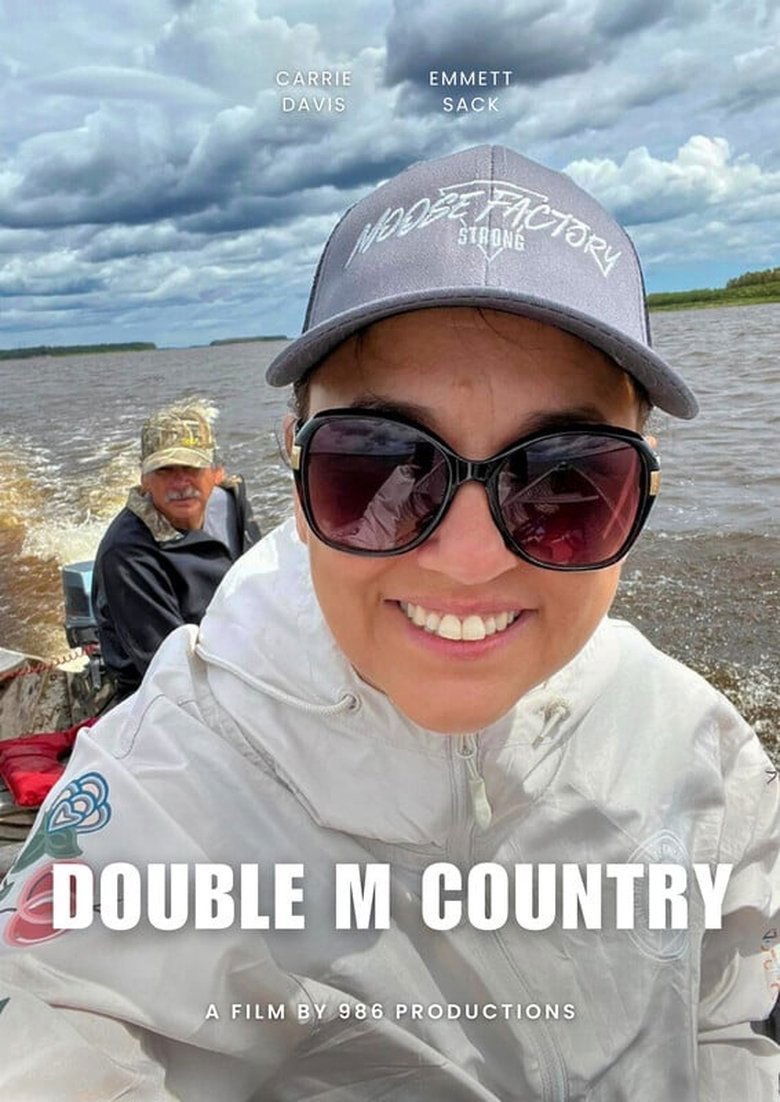
Carrie Davis was part of the child removal system near the end of the Sixties Scoop. With guidance from her uncle Emmett Sack and the community, Carrie reconnects to their land, language, and culture.
Details
Budget
$0
Revenue
$0
Runtime
24 min
Release Date
2023-05-17
Status
Released
Original Language
English
Vote Count
0
Vote Average
0
Cast
Meet the talented actors who bring the movie to life.
Carrie Davis
Self
Emmett Sack
Self
Similar Movies
Explore movies similar to this one that you might also enjoy.
10.0
Les 16 de Basse-Pointe
2009-04-22 | fr
0.0
J'aime toute
At the age of eight, José shows us his village, Nutashkuan, and everything he loves there.
2017-07-04 | fr
0.0
Birth of a Family
Over several decades, at least 20,000 Indigenous children were forcibly taken from their homes in Canada and adopted out to non-Indigenous families. Now, four siblings come together for the first time to build the family ties they were once denied.
2017-05-02 | en
0.0
Headdress
For First Nations communities, the headdress bears significant meaning. It's a powerful symbol of hard-earned leadership and responsibility. As filmmaker JJ Neepin prepares to wear her grandfather's headdress for a photo shoot she reflects on lessons learned and the thoughtless ways in which the tradition has been misappropriated.
2017-05-06 | en
0.0
The Eyes of Children
Christmastime at the Roman Catholic-run Kamloops Indian Residential School in British Columbia.
1962-12-25 | en
0.0
Saints And Warriors
Throughout the course of the Haida basketball season, leaders of iconic rez ball team the Skidegate Saints compete for two titles - defending their All Native Basketball Championship, while also battling for title to their land and waters with the government that stole it from them with the Indian Act.
2025-02-22 | en
9.0
Sweetheart Dancers
Sean and Adrian, a Two-Spirit couple, are determined to rewrite the rules of Native American culture through their participation in the “Sweetheart Dance.” This celebratory contest is held at powwows across the country, primarily for heterosexual couples … until now.
2019-02-23 | en
0.0
Tshiuetin
Take a breathtaking train a ride through Nothern Quebec and Labrador on Canada’s first First Nations-owned railway. Come for the celebration of the power of independence, the crucial importance of aboriginal owned businesses and stay for the beauty of the northern landscape.
2016-09-08 | fr
0.0
this river
Join a grassroots collective of volunteers as they search Winnipeg’s Red River and its banks for clues to find out what happened to their missing family and friends. The documentary demonstrates the devastating experience of searching for a loved one who didn't come home with profundity and humanity.
2016-10-05 | en
10.0
Maximón: Devil or Saint
MAXIMÓN - Devil or Saint is a documentary about the controversial Maya deity, also known as San Simon or the drinking and smoking saint of Guatemala. He is a mixture of ancient Maya beliefs and Christianity. The movie concentrates on the people who surround Maximón with their strong personalities, opinions and faith. The documentary gives us a rare view into the rituals and fiestas honoring Maximón. The cult of Maximón is flourishing because he performs miracles. He is also feared and despised because he is used to cast curses that can result in death. Ultimately, Maximón transcends the duality of good and evil, reflecting the Maya cosmovision in which everything in the universe co-exists.
2014-02-06 | es
0.0
Stories Are in Our Bones
In this layered short film, filmmaker Janine Windolph takes her young sons fishing with their kokum (grandmother), a residential school survivor who retains a deep knowledge and memory of the land. The act of reconnecting with their homeland is a cultural and familial healing journey for the boys, who are growing up in the city. It’s also a powerful form of resistance for the women.
2020-03-08 | en
7.2
Dawn of the Damned
This excellent feature-length documentary - the story of the imperialist colonization of Africa - is a film about death. Its most shocking sequences derive from the captured French film archives in Algeria containing - unbelievably - masses of French-shot documentary footage of their tortures, massacres and executions of Algerians. The real death of children, passers-by, resistance fighters, one after the other, becomes unbearable. Rather than be blatant propaganda, the film convinces entirely by its visual evidence, constituting an object lesson for revolutionary cinema.
1965-07-05 | fr
0.0
Shamanic Visions: Forgotten Territories
This film is an initiatory journey among the Fangs of Gabon and the Shipibos of Peru. With the sound of traditional instruments like the mogongo (arc in the mouth), the holy harp, and the Icaros, we discover the traditional peoples’ wisdom.
2020-01-22 | fr
8.0
Keep Talking
Three Alaska Native women work to save their endangered language, Kodiak Alutiiq, and ensure the future of their culture while confronting their personal demons. With just 41 fluent Native speakers remaining, mostly Elders, some estimate their language could die out within ten years. The small community travels to a remote Island, where a language immersion experiment unfolds with the remaining fluent Elders. Young camper Sadie, an at-risk 13 year old learner and budding Alutiiq dancer, is inspired and gains strength through her work with the teachers. Yet PTSD and politics loom large as the elders, teachers, and students try to continue the difficult task of language revitalization over the next five years.
2017-03-16 | en
7.0
Anti-Objects, or Space Without Path or Boundary
The title of this video, taken from the texts of the architect Kengo Kuma, suggests a way of looking at everything as “interconnected and intertwined” - such as the historical and the present and the tool and the artifact. Images and representations of two structures in the Portland Metropolitan Area that have direct and complicated connections to the Chinookan people who inhabit(ed) the land are woven with audio tapes of one of the last speakers of chinuk wawa, the Chinookan creole. These localities of matter resist their reduction into objects, and call anew for space and time given to wandering as a deliberate act, and the empowerment of shared utility.
2017-04-22 | en
0.0
Timuti
In Inukjuak, an Inuit community in the Eastern Arctic, a baby boy has come into the world and they call him Timuti, a name that recurs across generations of his people, evoking other Timutis, alive and dead, who will nourish his spirit and shape his destiny.
2012-01-01 | iu
8.2
Baraka
A paralysingly beautiful documentary with a global vision—an odyssey through landscape and time—that attempts to capture the essence of life.
1992-09-15 | en
0.0
The Navel of the World
“Te Pito o Te Henua” (The Navel of the World) tells the story of the community behind Rapa Nui’s largest and most colorful annual Indigenous celebration, the Tāpati Rapa Nui Festival. Honoring ancient rites and competitions, Rapa Nui families participate in nine days of athletic feats, cultural demonstrations and ceremonies paying respect to the land, water and other natural beings of the island. They also crown a Queen to represent her people for a year throughout Polynesia and on the world stage. The film traces the journey of 19-year-old candidate Vaitiare and her family as they join work to earn her the crown and represent this small but well-known island as its people fight for increased autonomy and recognition on the world stage. Through intimate character portraits, behind-the-curtain moments and heartfelt musical performances, “Te Pito o Te Henua” reveals the true meaning of Tāpati and the deep connections the Rapa Nui share with their lands and waters.
2024-06-14 | en
0.0
Indian Rights for Indian Women
Three intrepid women battle for Indigenous women's treaty rights.
2018-09-25 | en
0.0
Land der Bitterkeit und des Stolzes
A polemic against Werner Herzog and the making of "Fitzcarraldo", exploring the question of the filmmaker's ethical and moral responsibility.
1982-09-06 | de