Loading

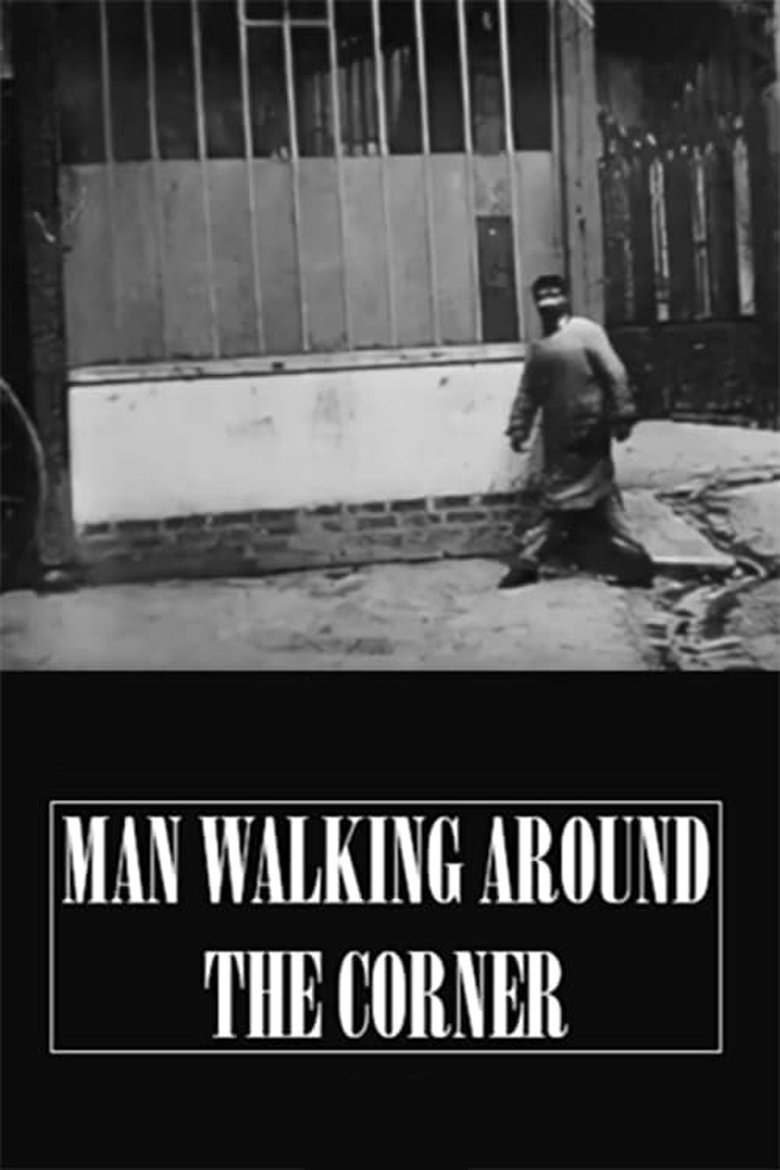
Man Walking Around a Corner
Genres
Documentary
Overview
The last remaining production of Le Prince's LPCC Type-16 (16-lens camera) is part of a gelatine film shot in 32 images/second, and pictures a man walking around a corner. Le Prince, who was in Leeds (UK) at that time, sent these images to his wife in New York City in a letter dated 18 August 1887.
Details
Budget
$0
Revenue
$0
Runtime
1 min
Release Date
1887-08-18
Status
Released
Original Language
Vote Count
88
Vote Average
4.977
Cast
Meet the talented actors who bring the movie to life.
Similar Movies
Explore movies similar to this one that you might also enjoy.
8.2
Night and Fog
Filmmaker Alain Resnais documents the atrocities behind the walls of Hitler's concentration camps.
1959-04-27 | fr
0.0
Thriving with Cerebral Palsy: The Cordell Brown Story
This documentary chronicles the inspirational story of a man who would not accept "no" for an answer. Born with cerebral palsy, Cordell Brown faced many challenges and most believed he would amount to nothing. Despite the odds stacked against him, Cordell proves that with heartfelt determination he can make a difference in the world.
2018-05-02 | en
5.8
6-18-67
6-18-67 is a short quasi-documentary film by George Lucas regarding the making of the Columbia film “Mackenna's Gold”. This non-story, non-character visual tone poem is made up of nature imagery, time-lapse photography, and the subtle sounds of the Arizona desert.
1967-07-07 | en
0.0
Anonymous
A short film about the changing face of London Soho and the implications of gentrification on Mimi, an aging transvestite.
2017-01-09 | en
6.0
Empty
The impact of the pandemic has left a void in places that were once teeming with people. Spaces for education, sports, religion, culture and entertainment were desolate, waiting for humanity to fill these spaces again.
2022-10-14 | es
6.0
Visit to Death
Four experts in different areas such as religion, philosophy and thanatology, share their wisdom when it comes to death.
2022-10-14 | es
6.0
Decade for Decision
Short news featurette produced by Pathe-RKO after the Russians launched the first orbiting satellite, Sputnik. It is a patriotic 'call to arms' from the threat posed by this and the need for Americans to spend more on education in general and a college education in particular. A visit to the University of Buffalo highlights its science programs and the need for more graduates from all technical disciplines if America is to rise to the challenge. It bemoans the fact the PhDs earn less than a mechanic and the need to re-order priorities.
1957-12-31 | en
0.0
Begegnung in Berlin
Short documentary directed by Günter Schlesinger
1965-01-01 | de
7.1
Land Without Bread
An exploration —manipulated and staged— of life in Las Hurdes, in the province of Cáceres, in Extremadura, Spain, as it was in 1932. Insalubrity, misery and lack of opportunities provoke the emigration of young people and the solitude of those who remain in the desolation of one of the poorest and least developed Spanish regions at that time.
1933-12-01 | es
0.0
Itapoa - Un proyecto que camina
| es
7.3
Daybreak Express
Set to a classic Duke Ellington recording "Daybreak Express", this is a five-minute short of the soon-to-be-demolished Third Avenue elevated subway station in New York City.
1953-01-01 | en
8.0
I Am a Truck
Worldy renowned for his masterpiece The Housemaid (1960), Kim Ki-young debuts with his first short film I Am a Truck (1953), which was sponsored by UN and made a year after the armistice of the Korean War. This film is a fascinating glimpse into the mind of a soon-to-be powerful auteur and influential filmmaker in the post-war Korean cinema, if not the whole history of Korean cinema.
1953-01-01 | ko
0.0
An Imminent Threat
“An Imminent Threat” follows a fisherman activist, Yngve Larsen, who fights against oil and gas drilling activities in north of Norway. Will Yngve succeed in avoiding the extinction of many species of fish and thus irreversible damage to our planet?
| en
0.0
The Water Dwellers
This short documentary introduces us to a town where no one pays rent: Simoom Sound in central British Columbia, where loggers live on sturdy river craft. Every week there are visitors: the general storekeeper, the flying postman and most importantly, the forest ranger, who is ever alert to the threat of fire.
1963-01-01 | en
0.0
Martha
"I can get closer to God only through love for a man," says 75-year-old sculptor Marta, who still retains the ability to fall in love. And with each falling in love, experience your new birth - A WOMAN AND AN ARTIST. Her life dramatically combines old age, approaching death with a thirst for love and creativity…
2004-10-06 | ru
10.0
La Trifulca I. Five Billion Dollar. A Trilogy
An exodus of migrants settled in Tijuana and they hope to cross each day regardless of the consequences, the children tell us what they see, want and what they are willing to pay.
2019-10-25 | en
7.1
Nanook of the North
This pioneering documentary film depicts the lives of the indigenous Inuit people of Canada's northern Quebec region. Although the production contains some fictional elements, it vividly shows how its resourceful subjects survive in such a harsh climate, revealing how they construct their igloo homes and find food by hunting and fishing. The film also captures the beautiful, if unforgiving, frozen landscape of the Great White North, far removed from conventional civilization.
1922-06-11 | en
6.7
Workers Leaving the Lumière Factory
Working men and women leave through the main gate of the Lumière factory in Lyon, France. Filmed on 22 March 1895, it is often referred to as the first real motion picture ever made, although Louis Le Prince's 1888 Roundhay Garden Scene pre-dated it by seven years. Three separate versions of this film exist, which differ from one another in numerous ways. The first version features a carriage drawn by one horse, while in the second version the carriage is drawn by two horses, and there is no carriage at all in the third version. The clothing style is also different between the three versions, demonstrating the different seasons in which each was filmed. This film was made in the 35 mm format with an aspect ratio of 1.33:1, and at a speed of 16 frames per second. At that rate, the 17 meters of film length provided a duration of 46 seconds, holding a total of 800 frames.
1895-03-22 | fr
7.1
The Arrival of a Train at La Ciotat
A group of people are standing along the platform of a railway station in La Ciotat, waiting for a train. One is seen coming, at some distance, and eventually stops at the platform. Doors of the railway-cars open and attendants help passengers off and on. Popular legend has it that, when this film was shown, the first-night audience fled the café in terror, fearing being run over by the "approaching" train. This legend has since been identified as promotional embellishment, though there is evidence to suggest that people were astounded at the capabilities of the Lumières' cinématographe.
1896-06-30 | fr
7.5
Berlin: Symphony of a Great City
A day in the city of Berlin, which experienced an industrial boom in the 1920s, and still provides an insight into the living and working conditions at that time. Germany had just recovered a little from the worst consequences of the First World War, the great economic crisis was still a few years away and Hitler was not yet an issue at the time.
1927-09-23 | de