Loading

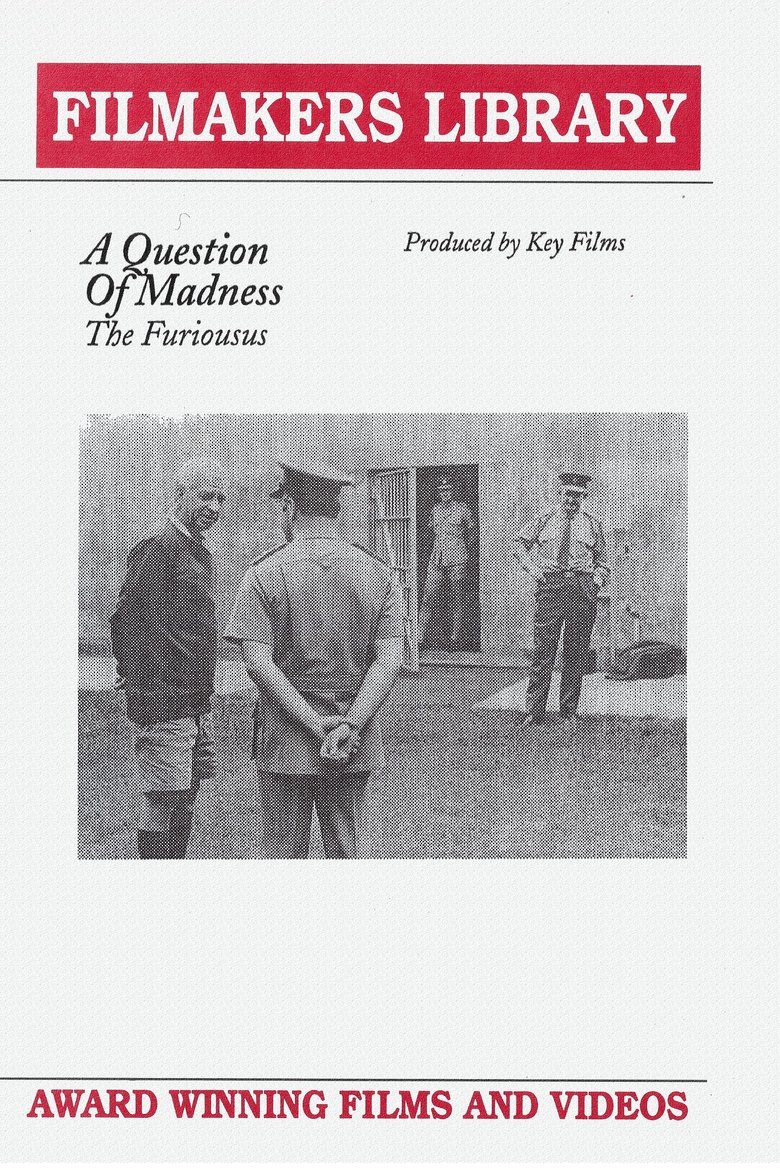
A Question of Madness: The Furiousus
Genres
Documentary
Overview
In Capetown, South Africa, in September 1966, Prime Minister Hendrik Verwoerd, the architect of apartheid, was stabbed to death in Parliament. The course of South African history was changed by the assassin, Dimitri Tsafendas, who was written off as mad and condemned to twenty-eight years of imprisonment. A Question of Madness tells the extraordinary human story of a man, born of a black mother, but classified white, who travelled the world in hopeless search of sanctuary - eventually returning to the land of apartheid to wreak vengeance on the one who symbolized the racism which had haunted his life.
Details
Budget
$0
Revenue
$0
Runtime
52 min
Release Date
1999-11-11
Status
Released
Original Language
English
Vote Count
0
Vote Average
0
Cast
Meet the talented actors who bring the movie to life.
Similar Movies
Explore movies similar to this one that you might also enjoy.
8.2
Silverback
Feature-length documentary following award-winning wildlife cameraman Vianet Djenguet as he documents a gruelling but vital mission to ‘habituate’ a notoriously protective 450lb silverback, in a last-ditch effort to save the critically endangered eastern lowland gorillas from extinction.
2024-01-07 | en
7.5
The Man Who Stopped the Desert
As a child in Burkina Faso, Yacouba was sent away from home to study the Qur'an, where he and his classmates were almost starving. The young boys would trek across miles of wilderness, only to fall and beg at a straw hut for meagre rations. It is from this harsh background that the young farmer became determined to develop techniques that would bring exhausted soil back into production. His efforts have outdone the work of the world's leading scientists and technological advances costing millions of pounds. They may also yet prove crucial to the future of the world's rapidly growing population and global food demands.
2010-06-02 | en
6.8
Pygmies: The Children of the Jungle
The adventurer, Ivan Bulík, traveled all through Africa. However, one of his dreams still eluded him: He desired to capture the life and customs of the smallest people on Earth, to find the undisturbed civilization of Pygmies.
2011-12-03 | en
0.0
Tears of Africa
2011-03-24 | ko
0.0
Yes-Ja! The Kwaito Documentary
A musical trip through southern Africa to the tunes of the post-apartheid generation. Kwaito music originated in the 1950's in the dusty streets of South Africa's townships such as Sophiatown, Pimville and subsequently in Soweto. It is inseparable from the Pantsuela culture of the rebellious youth gangs during the Apartheid regime. Since there was no money for musical instruments or for extravagant costumes, they concentrated on their dancing and singing skills and, turning the streets into their stage. Currently almost fifty years later - Kwaito culture is experiencing a renaissance in a manner completely inconceivable in those days.
2011-02-15 | en
6.0
Our Brand Is Crisis
A documentary on American political campaign marketing tactics and their consequences.
2005-03-12 | en
0.0
Amílcar
Poet, agricultural engineer and revolutionary Amílcar Cabral was born in Guinea-Bissau to Cape Verdean parents. After studying in Portugal, he emerged as the charismatic leader of the anti-colonial struggle against Portuguese rule. With his utopian ideas, he sparked a cultural and an armed uprising that went on to inspire other African liberation movements.
2025-11-16 | pt
0.0
The Tales from Kibera Radio
Kibera is the largest slum area in Nairobi, and the largest urban slum in Africa. This documentary depicts three important problems; violence, drugs (miraa) and albinos killing.The 2009 Kenya Population and Housing Census reports Kibera's population as 170,070, contrary to previous estimates of one or two million people .Most of Kibera slum residents live in extreme poverty, earning less than $1.00 per day. Unemployment rates are high. Persons living with HIV in the slum are many, as are AIDS cases. Cases of assault and rape are common. There are few schools, and most people cannot afford education for their children. Clean water is scarce. Diseases caused by poor hygiene are prevalent.
2012-01-01 | pl
0.0
Mission Gombessa - Die Jagd nach dem Methusalem der Meere
2010-12-29 | de
0.0
Gorilla
This fascinating film tells the story of one man's struggle to protect a small population of gorillas on the slopes of Mount Kahuzi in Zaire and of his incredible relationship with Kasimir, the great silver-backed male, and his family.
1974-12-23 | en
5.8
Africa, I Will Fleece You
This documentary of repressive political realities in Cameroon begins with the 1990 publication of an open letter to President Biya calling for a national conference - and the immediate arrest of the letter's author and publisher. The narration then examines the nation's colonial history, beginning with the first German missionary in 1901, the establishment of schools, French occupation following World War I, the paucity of books written by and published by Cameroonians, and the repression of the CPU, a leftist organization of the 1950s and 1960s. Cameroon and its people are the lark, its feathers plucked first by colonialism and then by native strongmen: 'Alouette, je te plumerai.'
1992-01-01 | fr
10.0
Die weiße Gefahr
1971-01-18 | fr
0.0
An Orange Waiting to Be Eaten
2023-01-27 | fr
10.0
Frantz Fanon, trajectoire d'un révolté
Frantz Fanon alone embodies all the issues of French colonial history. Martinican resistance fighter, he enlisted, like millions of colonial soldiers, in the Free Army out of loyalty to France and the idea of freedom that it embodies for him. A writer, he participated in the bubbling life of Saint-Germain with Césaire, Senghor and Sartre, debating tirelessly on the destiny of colonized peoples. As a doctor, he revolutionized the practice of psychiatry, seeking in the relations of domination of colonial societies the foundations of the pathologies of his patients in Blida. Activist, he brings together through his action and his history of him, the anger of peoples crushed by centuries of colonial oppression. But beyond this exceptional journey which makes sensitive the permanence of French colonialism in the Lesser Antilles at the gates of the Algerian desert, he leaves an incomparable body of work which has made him today one of the most studied French authors across the Atlantic.
2021-11-07 | fr
0.0
Science Breakthroughs: Homo Naledi
Science Breakthroughs: Homo Naledi Discovered in 2013, new and puzzling finding of small-skulled fossils of Homo Naledi has scientists trying to understand whether Homo Sapiens lived at the same time as Homo Naledi, and how Homo Naledi communities may have lived.
2017-12-25 | en
0.0
La commission de la vérité
The challenge of the "Truth and Reconciliation Commission" set up by Nelson Mandela in South Africa is to achieve a truly democratic society. Composed of 17 members and Desmond Tutu, this Commission will be relayed throughout the country by groups called "Khulumani" (literally: "Free the Word"). For a little over a year, it will invite victims, perpetrators and witnesses of apartheid to tell the truth about the past. The filmmakers have been authorized to follow this incredible process, which should lead to the re-founding of the nation, for its entire duration. The film focuses on the collective character of the Commission, crossed by ethical, political and philosophical questions, as well as on a few characters, victims and executioners, linked by a common history. They are filmed in their interrogations and their steps to re-establish a link between a past and a possible future.
1999-01-01 | fr
7.0
The Giant is Falling
The film documents the key political issues in recent years in South Africa that have marked the demise of the African National Congress (ANC). These include the Marikana massacre in August 2012, whereby 34 striking miners were gunned down by the ANC government's police force. Rehad Desai documented this historic event in his 2013 film MINERS SHOT DOWN. He refers to the incident once again in his latest film and shows how the ANC is undermining its close connections to the trade unions it set up as a freedom movement under Nelson Mandela, and how students have also turned on the party to protest against tuition fees under the motto #FeesMustFall. The film's compelling footage unmasks the cynical despotism of corrupt president Jacob Zuma, who is chiefly responsible for the ANC's demise and its catastrophic losses at the most recent elections. It also introduces opposition movements that are challenging his now-untenable position.
2016-11-03 | en
6.7
Mobutu, King of Zaire
This film is the result of more than two years of work tracking down archive material and witnesses close to Mobutu in Africa, Europe and the U.S. More than 950 hours of footage have been seen by the world. Among the 104 hours selected as the basis for this film, are 30 hours of archives recently discovered in Kinshasa and never before released. Completing these exceptional documents, are more than 50 hours of interviews with those close to the former president and the events surrounding his reign, conducted by the director in Kinshasa, Brussels, Paris and Washington. Like a vast historical puzzle, this film pieces together the tragic history of a country, and its self-styled leader - the dictator, Mobutu Sese Seko, "King of Zaïre".
1999-06-02 | fr
0.0
Memory Books
In Uganda, AIDS-infected mothers have begun writing what they call Memory Books for their children. Aware of the illness, it is a way for the family to come to terms with the inevitable death that it faces. Hopelessness and desperation are confronted through the collaborative effort of remembering and recording, a process that inspires unexpected strength and even solace in the face of death.
2008-05-01 | en
0.0
City Slickers: A tale of two African penguins
Fifteen years ago, a handful of African Penguins, normally found only on remote islands off the Southern African coast, stumbled across on of the Cape's most beautiful and popular tourist beaches. They swam, they saw, they conquered. And today, Boulders beach is home to more than 4,000 of these delightful, resourceful and entertaining seabirds who live side by side with their human neighbours -well, most of the time! These knee-high invaders not only share the beach, they dodge traffic, scale fences, and take over gardens, the golf course and even the occasional bedroom! For the two feathered stars, Henry and Margot, it's a tale of romance, the challenges of parenthood, separation and a penguin's worst nightmare, oil.
2002-06-01 | en