Loading

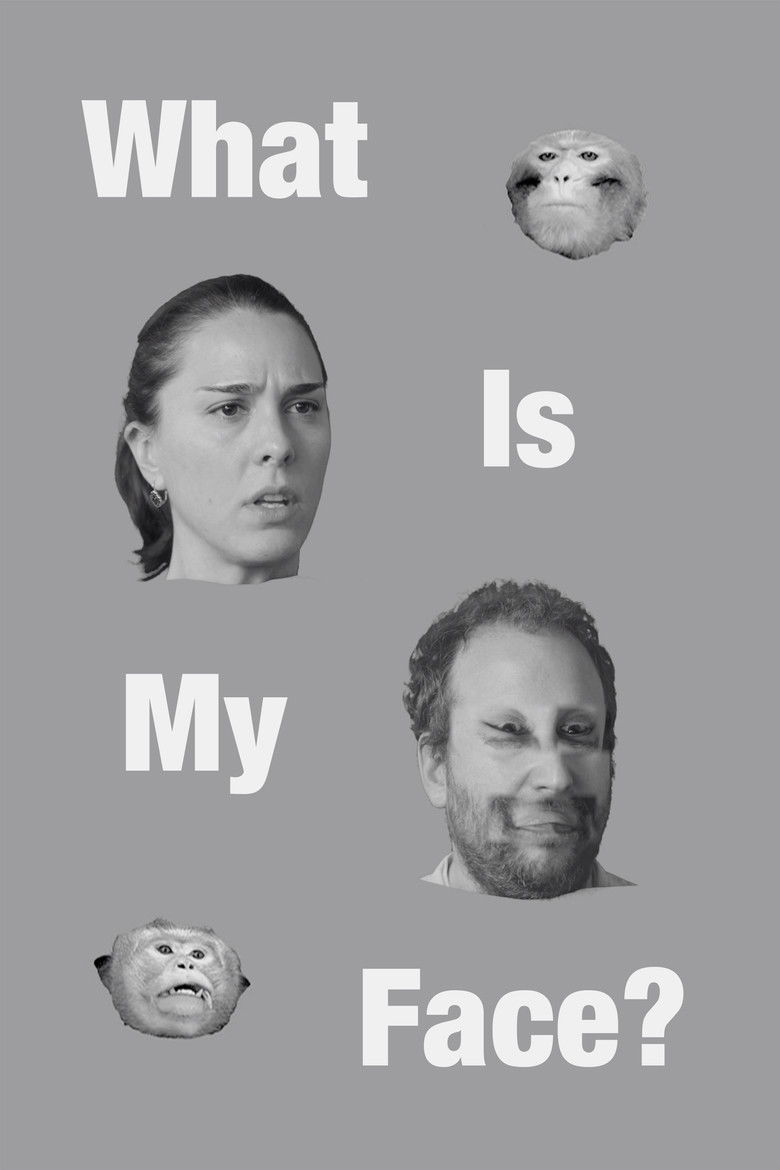
What Is My Face?
Genres
Documentary
Overview
A short doc about how faces are perceived: by scientists, by artists, by animals. How do we remember faces so well if we can barely describe them with words? Why do we see them everywhere? What even are they? What is my face?
Details
Budget
$0
Revenue
$0
Runtime
3 min
Release Date
Status
Released
Original Language
English
Vote Count
0
Vote Average
0
Cast
Meet the talented actors who bring the movie to life.
Similar Movies
Explore movies similar to this one that you might also enjoy.
4.8
Uncensored Science: Bill Nye Debates Ken Ham
Bill Nye and Ken Ham debate whether creation is a viable model of origins in today's modern scientific era.
2014-02-04 | en
7.2
Stem Cell Universe With Stephen Hawking
The use of embryonic stem cells has ignited fierce debate across the spiritual and political spectrum. But what if we could create manmade stem cells - or find super cells in adults that could forever replace embryonic cells and remove the controversy? Today, we are on the brink of a new era - an age where we may be able to cure our bodies of any illness. Stephen HAWKING has spent his life exploring the mysteries of the cosmos, now there is another universe that fascinates him - the one hidden inside our bodies - our own personal galaxies of cells.
2014-02-03 | en
5.0
Holy Land: Startup Nations
With the most tech startups and venture capital per capita in the world, Israel has long been hailed as The Startup Nation. WIRED’s feature-length documentary looks beyond Tel Aviv’s vibrant, liberal tech epicenter to the wider Holy Land region – the Palestinian territories, where a parallel Startup Nation story is emerging in East Jerusalem, Nazareth, Ramallah and other parts of the West Bank, as well as in the Israeli cybersecurity hub of Be’er Sheva. And we will learn how the fertile innovation ecosystem of Silicon Wadi has evolved as a result of its unique political, geographical and cultural situation and explore the future challenges – and solutions – these nations are facing.
2017-03-28 | en
0.0
Life 2,000 Meters Under the Sea
Deep down at the bottom of the ocean lies the mysterious world of the abyss. In the midst of boiling, toxic geysers, a rich ecosystem flourishes. This miracle is possible thanks to bacteria, micro-organisms crucial to all living beings. How can bacteria survive in such extreme conditions?
2014-06-23 | en
0.0
Tricky Memory
The lastest neuroscience discoveries show surprising results: false memories, distortion, modification, déjà vus. Our memory is affected in many ways, and deceives us every day. The very fact of recalling souvenirs modifies them. The everyday consequences are manyfold. To what extent can we rely on our souvenirs? How much credit can we give them during trials? Even more shocking, scientists have proved to be able to manipulate our memory: creating artificial souvenirs, deleting, emphasizing or restoring them on demand.
2016-01-01 | en
6.9
Coded Bias
Exploring the fallout of MIT Media Lab researcher Joy Buolamwini's startling discovery that facial recognition does not see dark-skinned faces accurately, and her journey to push for the first-ever legislation in the U.S. to govern against bias in the algorithms that impact us all.
2020-11-11 | en
7.1
The Truth Is in the Stars
William Shatner sits down with scientists, innovators and celebrities to discuss how the optimism of 'Star Trek' influenced multiple generations.
2017-05-01 | en
0.0
The Great Australian Fly
THE GREAT AUSTRALIAN FLY looks at how a national nuisance has shaped Australia and its people, confounding our scientists, influencing our lifestyle and defining the way we speak. But is its value misunderstood? The one-hour documentary explores how this much-maligned spoiler of the Australian summer is in fact a crime solver, healer, pollinator and street sweeper. We'd miss them if they were gone, yet we put huge amounts of energy into wiping them out. Is it time to call a truce? Directed by Tosca Looby and produced by Sally Ingleton, the amusing and intriguing film pays homage to a much-maligned invertebrate and the influence it has had on our world.
2014-03-25 | en
0.0
How the Telephone Talks
"All sounds travel in waves much the same as ripples in water." Educational film produced by Bray Studios New York, which was the dominant animation studio based in the United States in the years surrounding World War I.
1919-04-27 | en
7.0
An Inconvenient Truth
A documentary on Al Gore's campaign to make the issue of global warming a recognized problem worldwide.
2006-05-24 | en
5.1
Th (Part 11: Dr. Helen Caldicott)
Dr. Helen Caldicott is the most prominent anti-nuclear activist in the world. She's been featured on CNN, 60 Minutes, CBC and Democracy Now. In the 80s, Helen Caldicott campaigned against nuclear weapons testing in the pacific (still responsible today for the majority of tritium we're exposed to), and against the notion of a winnable nuclear war. She was nominated for a Nobel Peace Prize for her efforts. She has always made inaccurate statements regarding civilian nuclear power. But, since the Fukushima-Diachii radiation release has caused (and is projected to cause) zero fatalities... http://www.unis.unvienna.org/unis/en/... ...her tone has changed when speaking to supporters. This has not been acknowledged by prime-time media, as they continue to use her as a source. Any person or media outlet should check Caldicott's history of statements (on any subject) against a domain expert before using her as a source.
2014-05-28 | en
0.0
Mastodon in your Backyard
A documentary about the 1999 discovery of a Mastodon skeleton in a Hyde Park backyard.
2001-09-30 | en
7.2
Heal
A documentary film that takes us on a scientific and spiritual journey where we discover that by changing one's perceptions, the human body can heal itself from any disease.
2017-10-20 | en
0.0
Principles of Curiosity
Principles of Curiosity presents a general introduction to the foundations of scientific skepticism and critical thinking, focusing on a simple process we call the three Cs.
2017-06-14 | en
5.4
The Creeping Garden
An award-winning feature-length creative documentary exploring the extraordinary world of the plasmodial slime mould through the eyes of the fringe scientists, mycologists and artists. In recent years this curious organism has become the focus of much research in such areas as biological-inspired design, emergence theory, unconventional computing and robot engineering.
2014-07-27 | en
6.6
Earth: Seen From The Heart
For more than twenty years, Hubert Reeves has put science, his media influence, and his energy at the service of a cause: biodiversity.
2018-04-27 | fr
0.0
Magic Myxies
Short film showing (with limited accuracy) the life-cycle of myxomycetes.
1931-02-01 | en
6.6
Resistance
Are the medicines and every day products we use putting us at risk RESISTANCE sheds light on the global crisis of antibiotic resistance and uncovers how our extensive use of bacteria-killing antibiotics has created a new kind of disease, resistant to the medicines created to destroy it.
2015-03-15 | en
7.7
Charles Darwin and the Tree of Life
Darwin's great insight – that life has evolved over millions of years by natural selection – has been the cornerstone of all David Attenborough’s natural history series. In this documentary, he takes us on a deeply personal journey which reflects his own life and the way he came to understand Darwin’s theory.
2009-02-01 | en
0.0
The Silent Epidemic
Every month, an estimated 200,000 Australians deliberately hurt themselves. They cut, scratch, burn and sometimes even break bones. It's called self-harm, and it peaks in teenagers and young people. The Silent Epidemic explores this dark and often secret behaviour, asking why more and more people are turning to self-harm as a way to cope with life. Interweaving their personal stories with scientific enquiry, The Silent Epidemic casts a unique lens onto what is fast becoming a problem that can no longer remain hidden. In response to the growing numbers, a group of Melbourne scientists are hunting for a radical solution to self-harm with a world-first experiment. The Silent Epidemic charts their progress: it is both a wake-up call, and ultimately, a story of hope. Written by Mark Hamlyn
2010-12-12 | en