Loading

Colonial Times
Genres
Documentary
Overview
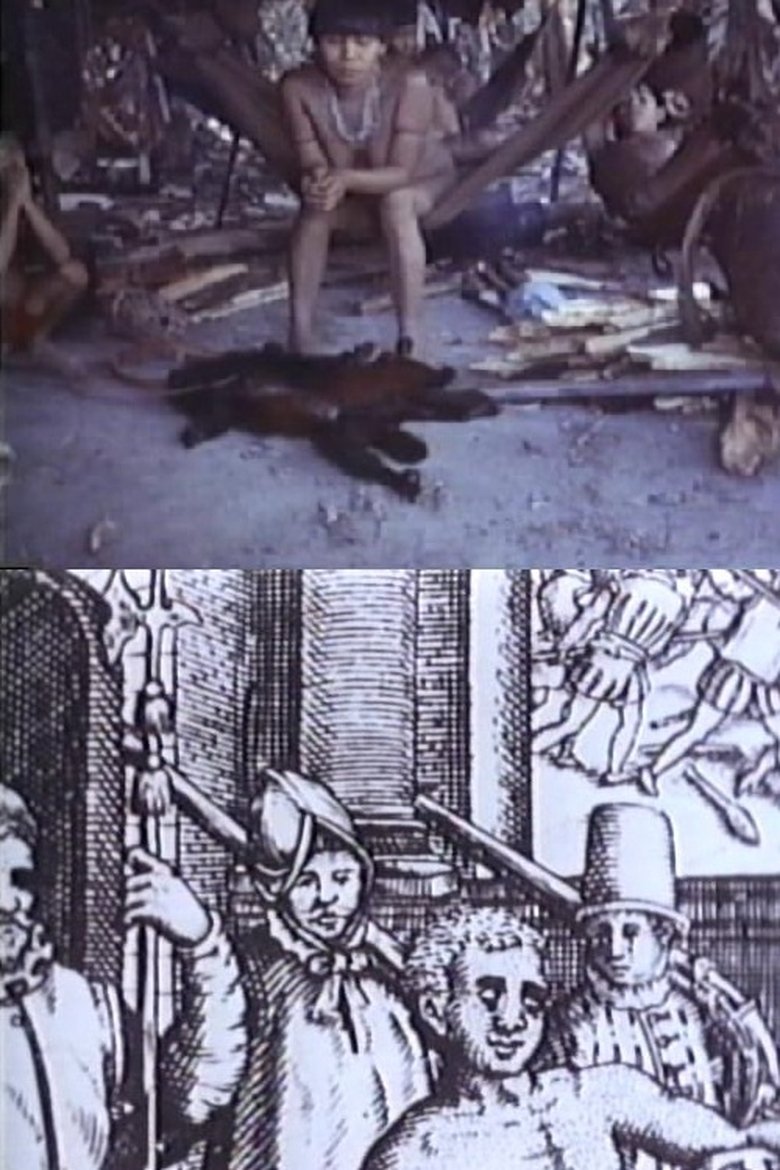
Three centuries of Venezuela's history as a Spanish colony are considered from economic, political and social standpoints; evocations of the past are compared to the present. Based on the ideas and research of Federico Brito Figueroa, Alfredo A. Alfonso, Miguel A. Saignes, Josefina Jordan, and Thaelman Urgelles among others.
Details
Budget
$0
Revenue
$0
Runtime
28 min
Release Date
1976-01-01
Status
Released
Original Language
Spanish
Vote Count
0
Vote Average
0
Cast
Meet the talented actors who bring the movie to life.
José Ignacio Cabrujas
Narrator
Carles Canut
Narrator
Similar Movies
Explore movies similar to this one that you might also enjoy.
10.0
Les 16 de Basse-Pointe
2009-04-22 | fr
7.0
Ka Ho‘ina: Going Home
Ka Hoʻina documents members of Hui Mālama I Nā Kūpuna O Hawaiʻi Nei's final repatriation of over 140 sets of iwi kupuna and provides an intimate look into the legacy forged by these committed and passionate few, ensuring that Hawaiians will mālama or care for kupuna for generations to come.
2014-11-07 | en
0.0
Etched in Bone
Drawing on original footage from National Geographic, Etched in Bone explores the impact of one notorious bone theft by a member of the 1948 American-Australian Scientific Expedition to Arnhem Land. Hundred of bones were stolen and deposited in the Smithsonian Institution in Washington DC, until it became known to Arnhem elders in the late 1990s. The return of the sacred artefacts was called for, resulting in a tense standoff between indigenous tribespeople and the Department of Anthropology at the Smithsonian.
2018-10-04 | en
0.0
The Country Upside Down
Returning to the island that her father left 50 years earlier, the filmmaker goes back in time to retrace the history of her name.
2009-04-29 | fr
0.0
Viva Venezuela: Fighting for Socialism
We live in a world dominated by crisis, imperialist war and exploitation. We're told there is no alternative to cuts, privatisation, hunger and homelessness. The Bolivarian Revolution illustrates what can be achieved when governments and people working together, put human need before capitalist profits. Despite Chavez's death in 2013, the process is being built every day by President Maduro and millions of Venezuelans working to create a society built on collective socialist organisation and production. Venezuela provides an inspiring example of how the fight against austerity can develop into a fight for socialism. This film takes you on that journey through the barrios, universities and workplaces to meet the political activists, students and workers who are changing their future. Alongside the achievements of socialist Cuba, Venezuela shows that not only is another world possible, but this world is being built today in Latin America.
| en
7.2
Dawn of the Damned
This excellent feature-length documentary - the story of the imperialist colonization of Africa - is a film about death. Its most shocking sequences derive from the captured French film archives in Algeria containing - unbelievably - masses of French-shot documentary footage of their tortures, massacres and executions of Algerians. The real death of children, passers-by, resistance fighters, one after the other, becomes unbearable. Rather than be blatant propaganda, the film convinces entirely by its visual evidence, constituting an object lesson for revolutionary cinema.
1965-07-05 | fr
10.0
PsiQuis: Un Giro Decolonial
PsiQuis: Un Giro Decolonial is a documentary that presents and discusses the psychological impact that colonialism has had on the Puerto Rican people. The director analyzes the traumas generated in Puerto Rican society by that colonial experience.
2023-08-14 | es
0.0
Almost Arcady
Educational film about Cyprus - landscape, people, work, traditions etc.
| en
6.4
The Writer from a Country Without Bookstores
The ruthless dictator Teodoro Obiang has ruled Equatorial Guinea with an iron hand since 1979. Juan Tomás Ávila Laurel is the most translated Equatoguinean writer, but he had to flee the country in 2011, after starting a hunger strike denouncing the crimes of the dictatorship. Since then, he has lived in Spain, feeling that, despite the risks, he must return and fight the monster with words.
2019-12-13 | es
0.0
Timuti
In Inukjuak, an Inuit community in the Eastern Arctic, a baby boy has come into the world and they call him Timuti, a name that recurs across generations of his people, evoking other Timutis, alive and dead, who will nourish his spirit and shape his destiny.
2012-01-01 | iu
10.0
Sawt Echaâb
“La Voix du Peuple,” composed of archival photographs by René Vauthier and others, exposes the root causes of the armed conflict of the Algerian resistance. Participating in a war of real images against French colonial propaganda, these images aimed to show the images that the occupier had censored or distorted, by showing the extortions of the French occupation army: torture, arrests and arbitrary executions, napalm bombings, roundabout fires, erasing entire villages from the map, etc. This is what the French media described as a “pacification campaign”.
1961-01-01 | ar
10.0
Five Directors On The Battle of Algiers
This 17-minute documentary is featured on the 3-Disc Criterion Collection DVD of The Battle of Algiers (1966), released in 2004. An in-depth look at the Battle of Algiers through the eyes of five established and accomplished filmmakers; Spike Lee, Steven Soderbergh, Oliver Stone, Julian Schnabel and Mira Nair. They discuss how the shots, cinematography, set design, sound and editing directly influenced their own work and how the film's sequences look incredibly realistic, despite the claim that everything in the film was staged .
2004-08-01 | en
0.0
Hacking at Leaves
Hacking at Leaves documents artist and hazmat-suit aficionado Johannes Grenzfurthner as he attempts to come to terms with the United States' colonial past, Navajo tribal history, and the hacker movement. The story hones in on a small tinker space in Durango, Colorado, that made significant contributions to worldwide COVID relief efforts. But things go awry when Uncle Sam interferes with the film's production.
2024-04-06 | en
9.0
The Rumba Kings
In the fifties, when the future Democratic Republic of Congo was still a Belgian colony, an entire generation of musicians fused traditional African tunes with Afro-Cuban music to create the electrifying Congolese rumba, a style that conquered the entire continent thanks to an infectious rhythm, captivating guitar sounds and smooth vocals.
2021-05-06 | en
0.0
Gardens of the Orient
This portait of life on the tea plantations is decidedly rosy – clearly, there are no exploited workers here. However, the film provides an intriguing overview of tea production – from the planting of tea seeds to the final shipping of the precious leaves across the globe.
1936-01-01 | en
7.7
The Revolution Will Not Be Televised
Hugo Chavez was a colourful, unpredictable folk hero who was beloved by his nation’s working class. He was elected president of Venezuela in 1998, and proved to be a tough, quixotic opponent to the power structure that wanted to depose him. When he was forcibly removed from office on 11 April 2002, two independent filmmakers were inside the presidential palace.
2003-03-07 | en
0.0
In the Shadow of the Serengeti
A Maasai human rights lawyer fights to stop the evictions of his people from their homelands in Tanzania. On the outskirts of Serengeti National Park in East Africa, Maasai face eviction from their land to make way for international tourism and hunting grounds. Human rights lawyer Joseph Oleshangay campaigns for his community to remain on its homeland as it has done for generations. While he represents Maasai communities in court, Joseph also remains close to his traditions among the cattle at his rural home near the Ngorongoro Crater. Risking his life to gather evidence from recently depopulated villages, Joseph battles in court where he leads the fight to resist the evictions.
| en
0.0
Cao Bang, les soldats sacrifiés d'Indochine
2014-04-27 | fr
7.0
Under the Cloud
An investigation into the unfolding history of nuclear testing, uranium mining, and nuclear waste disposal on indigenous lands in the US. It raises the voices of those who witnessed and experienced the consequences of nuclear colonialism and those who still resist.
2023-08-30 | en
7.6
The Zerda or the Songs of Forgetting
“La Zerda and the songs of oblivion” (1982) is one of only two films made by the Algerian novelist Assia Djebar, with “La Nouba des femmes du mont Chenoua” (1977). Powerful poetic essay based on archives, in which Assia Djebar – in collaboration with the poet Malek Alloula and the composer Ahmed Essyad – deconstructs the French colonial propaganda of the Pathé-Gaumont newsreels from 1912 to 1942, to reveal the signs of revolt among the subjugated North African population. Through the reassembly of these propaganda images, Djebar recovers the history of the Zerda ceremonies, suggesting that the power and mysticism of this tradition were obliterated and erased by the predatory voyeurism of the colonial gaze. This very gaze is thus subverted and a hidden tradition of resistance and struggle is revealed, against any exoticizing and orientalist temptation.
1983-02-27 | fr