Loading

Tóxico, Texaco, Tóxico
Genres
Documentary
Overview
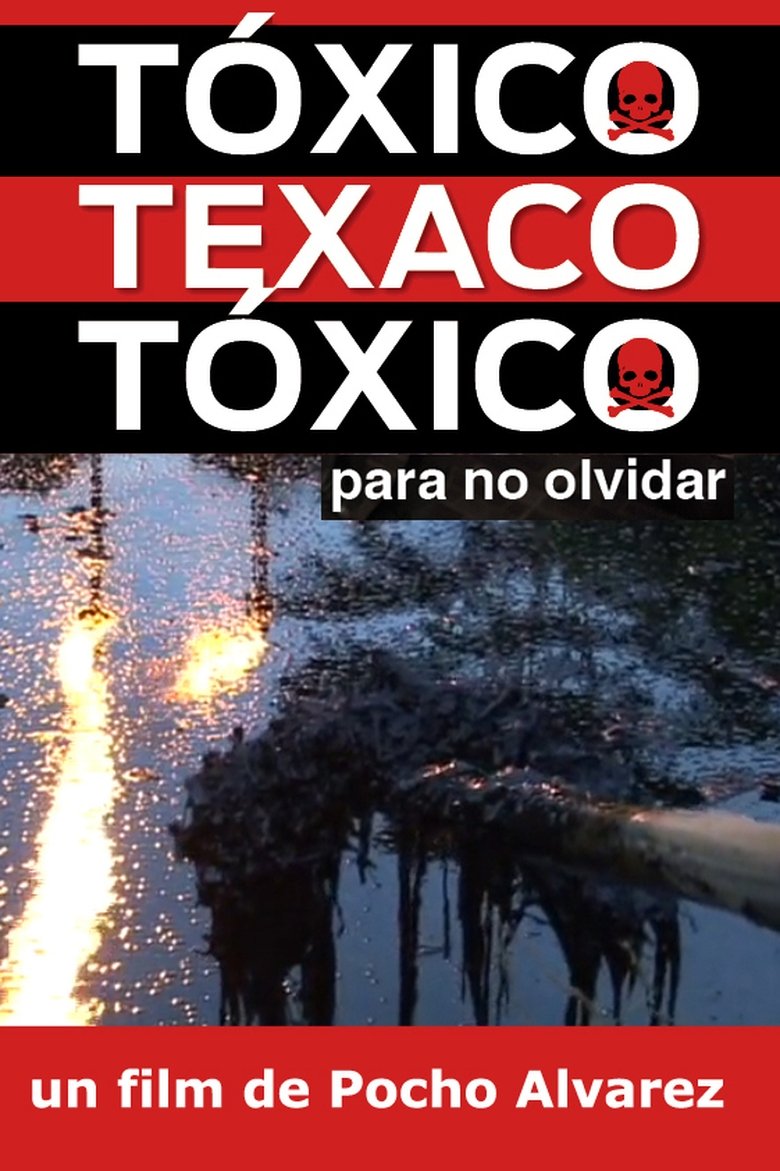
The imagination of history in Ecuador never thought that oil, “its redeeming hope”, discovered in the Lago Agrio No. 1 well, was going to mean the beginning of the worst environmental catastrophe on the planet. Thirty years of operation and exploitation of the Texaco company, forever transformed the rivers and estuaries, the forests and the life of the indigenous communities in the northern Amazon of Ecuador.
Details
Budget
$0
Revenue
$0
Runtime
40 min
Release Date
2007-11-25
Status
Released
Original Language
Spanish
Vote Count
0
Vote Average
0
Cast
Meet the talented actors who bring the movie to life.
Diana Borja
Narrator
Similar Movies
Explore movies similar to this one that you might also enjoy.
0.0
Itapoa - Un proyecto que camina
| es
0.0
Oil Springs
The story will mostly take place in the town Oil Springs, Ontario, where the oil industry in North America was born. By making a case study of this town, we can better understand how the industry operates today. The documentary will explore themes of colonialism, climate change and Canadian identity.
2025-06-13 | en
0.0
Testimonio de un obrero petrolero
Trade union leader Manuel Taborda, a pioneer of workers' organisations in the oil industry, recounts his experiences and those of his colleagues from 1920 to 1936, with an emphasis on the struggles against foreign companies and the government.
1978-01-01 | es
7.2
The End of Suburbia: Oil Depletion and the Collapse of the American Dream
Since World War II North Americans have invested much of their newfound wealth in suburbia. It has promised a sense of space, affordability, family life and upward mobility. As the population of suburban sprawl has exploded in the past 50 years Suburbia, and all it promises, has become the American Dream. But as we enter the 21st century, serious questions are beginning to emerge...
2004-01-12 | en
10.0
Antonio y Piti
Thirty years ago, a rubber company enslaved a group of Asháninka people, manipulating them into tapping the trees in the lush borderland between Peru and Brazil. The company was expelled by a coalition of Indigenous and non-Indigenous people, led by one mixed race couple. Now the adult children of this marriage combat political corruption and ongoing environmental disaster.
2019-11-24 | pt
6.8
Amazon
Explore the mysterious Amazon through the amazing IMAX experience. Amazon celebrates the beauty, vitality and wonder of the rapidly disappearing rain forest.
1997-01-01 | en
0.0
Motherland Memories
Ompung Putra Boru, a sixties indigenous Batak woman from Humbang Hasundutan, North Sumatra, retraces her life stories through photographs that interweave her past and present as a wife, mother, healer and indigenous land defender in two neighboring villages. Her multi-layered stories are juxtaposed with visual records of everyday life in the two villages, where people’s living space is still increasingly threatened by a giant pulp expansion.
2022-11-19 | id
0.0
Timuti
In Inukjuak, an Inuit community in the Eastern Arctic, a baby boy has come into the world and they call him Timuti, a name that recurs across generations of his people, evoking other Timutis, alive and dead, who will nourish his spirit and shape his destiny.
2012-01-01 | iu
8.5
Le Mystère des rivières volantes d'Amazonie
Discovered about twenty years ago, the immense masses of water vapor that fly over the Amazon, called "flying rivers", fascinate researchers. Their future could be intimately linked to climate change.
2022-11-12 | fr
8.0
Povo da Floresta
2024-01-18 | pt
0.0
Katurãma: uma história de luta e resistência
2023-01-23 | pt
7.1
Fahrenheit 9/11
Michael Moore's view on how the Bush administration allegedly used the tragic events on 9/11 to push forward its agenda for unjust wars in Afghanistan and Iraq.
2004-06-25 | en
0.0
Beyond Pollution
Barker White documents the environmental impact of the massive BP spill.
2012-01-01 | en
8.0
The Invention of the Other
In 2019, the Brazilian government coordinates the largest and riskiest expedition of the last decades into the Amazon rainforest to search for a group of isolated indigenous people in vulnerability and promote their first contact with non-indigenous. Bruno Pereira, who would later be murdered in the same region and turned into an international symbol in favor of the indigenous and the forest, leads the expedition.
2022-11-19 | pt
0.0
Box of Treasures
In 1921 the Kwakiut'l people of Alert Bay, British Columbia, held their last secret potlatch. In 1980 at Alert Bay, the U'mista Cultural Centre (U'mista means "something of great value that has come back") opened its doors to receive and house the cultural treasures which were seized decades earlier and only then returned to the people. The center also took up activities such as recording stories told by elders so that some part of the past would always be alive and teaching children about their heritage in order to make them feel connected to their ancestors. This film documents the cultural significance of these events for today's Kwakiut'l people. It is an eloquent testimony to the persistence and complexity of Kwakiut'l society and to the struggle for redefining cultural identity for them.
1983-01-01 | en
0.0
Make Mine Service
Training and Customer Service information film sponsored by the Marketing Retail Sales Department of the Standard Oil Company. Features product placement for brands like Atlas and Chevron.
1952-03-28 | en
7.0
Woven Songs of the Amazon
The Shipibo-Konibo people of Peruvian Amazon decorate their pottery, jewelry, textiles, and body art with complex geometric patterns called kené. These patterns also have corresponding songs, called icaros, which are integral to the Shipibo way of life. This documentary explores these unique art forms, and one Shipibo family's efforts to safeguard the tradition.
2007-01-01 | en
0.0
Reclamation: The Rise at Standing Rock
Nominated for an Emmy® Award in 2021 for best non fiction special. Winner of 35 grand jury awards. Filmed in 2016 at Standing Rock, North Dakota, this powerful documentary follows the Indigenous leaders as they unite the Native Nations for the first time in 150 years in order to rise up in spiritual solidarity against the unlawful Dakota Access Pipeline which threatens their treaty lands, sacred burial sights and clean water. These young Native Leaders honor their destiny by implementing a peaceful movement of resistance which awakens the world.
| en
0.0
Bontok, Rapeless
Two Filipina victims of sexual abuse search the truth behind the finding of a renowned anthropologist: that merely a few generations ago, the Bontok Igorot lived in what seems an unthinkable utopia—a rape-less society.
2014-09-24 | tl
0.0
Attiuk
The people of Unamenshipu (La Romaine), an Innu community in the Côte-Nord region of Quebec, are seen but not heard in this richly detailed documentary about the rituals surrounding an Innu caribou hunt. Released in 1960, it’s one of 13 titles in Au Pays de Neufve-France, a series of poetic documentary shorts about life along the St. Lawrence River. Off-camera narration, written by Pierre Perrault, frames the Innu participants through an ethnographic lens. Co-directed by René Bonnière and Perrault, a founding figure of Quebec’s direct cinema movement.
1963-07-19 | fr