Loading

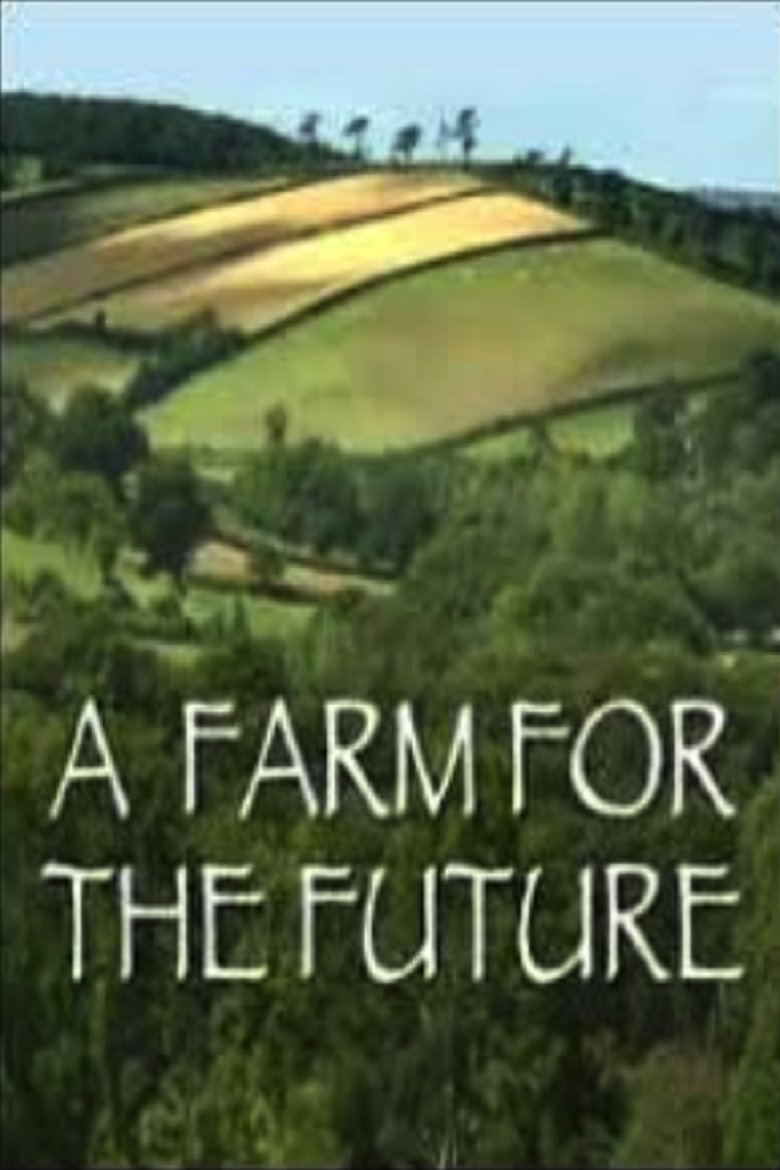
A Farm for the Future
Genres
Documentary
Overview
Wildlife film maker Rebecca Hosking investigates how to transform her family's farm in Devon into a low energy farm for the future, and discovers that nature holds the key. With her father close to retirement, Rebecca returns to her family's wildlife-friendly farm in Devon, to become the next generation to farm the land. But last year's high fuel prices were a wake-up call for Rebecca. Realising that all food production in the UK is completely dependent on abundant cheap fossil fuel, particularly oil, she sets out to discover just how secure this oil supply is. Alarmed by the answers, she explores ways of farming without using fossil fuel. With the help of pioneering farmers and growers, Rebecca learns that it is actually nature that holds the key to farming in a low-energy future.
Details
Budget
$0
Revenue
$0
Runtime
50 min
Release Date
2005-09-30
Status
Released
Original Language
English
Vote Count
0
Vote Average
0
Cast
Meet the talented actors who bring the movie to life.
Rebecca Hosking
Presenter
Similar Movies
Explore movies similar to this one that you might also enjoy.
5.0
Mossville: When Great Trees Fall
As a centuries-old black community, contaminated and uprooted by petrochemical plants, comes to terms with the loss of its ancestral home, one man standing in the way of a plant's expansion refuses to give up.
2019-04-06 | en
7.5
Chasing Ice
When National Geographic photographer James Balog asked, “How can one take a picture of climate change?” his attention was immediately drawn to ice. Soon he was asked to do a cover story on glaciers that became the most popular and well-read piece in the magazine during the last five years. But for Balog, that story marked the beginning of a much larger and longer-term project that would reach epic proportions.
2012-10-01 | en
5.8
A Fierce Green Fire
It is the largest movement the world has ever seen, it may also be the most important - in terms of what's at stake. Yet it's not east being green. Environmentalists have been reviled as much as revered, for being killjoys and Cassandras. Every battle begins as a lost cause and even the victories have to be fought for again and again. Still, environmentalism is one of the great social innovations of the twentieth century, and one of the keys to the twenty-first. It has arisen at a key juncture in history, when humans have come to rival nature as a power determining the fate of the earth.
2013-03-01 | en
0.0
Voices From the Landscape
This docucumentary by John Brett conveys the impressions of cultural loss felt by an elderly Acadian man living on the south shore of Nova Scotia after his homestead has been deserted.
1976-01-01 | en
7.5
The City Dark
When filmmaker Ian Cheney moves to New York City and discovers skies almost completely devoid of stars, a simple question – what do we lose, when we lose the night? – spawns a journey to America's brightest and darkest corners. Astronomers, cancer researchers, ecologists and philosophers provide glimpses of what is lost in the glare of city lights. Blending a humorous, searching tone with poetic footage of the night sky, what unravels is an introduction to the science of the dark, and an exploration of the human relationship to the stars.
2012-01-20 | en
0.0
The Life and Legend of Jane Goodall
Born in London in 1934, Jane Goodall spent decades in Tanzania’s Gombe Stream National Park, studying the social and family structures of chimpanzees and helping to bring their ecological vulnerability into the public consciousness. She also founded and remains integral to the Jane Goodall Institute, which encourages environmental activism and stewardship among young people. In this program, the famous scientist reflects on her many years spent observing and learning about our primate cousins.
1990-01-01 | en
0.0
Empty Oceans, Empty Nets
Examines the global fisheries crisis and the forces pushing many marine fish stocks toward commercial extinction. Documents some promising and innovative efforts to restore fisheries and protect essential fish habitat. Examines new market initiatives giving consumers a powerful vote in deciding how our oceans are fished. Commentary is provided by fishermen and by many of the world's most respected marine and fisheries scientists.
2002-04-22 | en
0.0
Time to Change
Angolan director and screenwriter Pocas Pascoal reminds us that it’s time for a change, proposing through this film a look at colonialism, capitalism, and their impact on global biodiversity. We observe that the destruction of the ecosystem goes back a long way and is already underway through land exploitation, big game hunting, and the exploitation of man by man.
2024-07-19 | pt
0.0
Battle Over Bears Ears
At its heart, it’s a battle for homeland and sovereignty. Bears Ears, a remote section of land lined with red cliffs and filled with juniper sage, is at the center of a fight over who has a say in how Western landscapes are protected and managed.
2018-11-12 | en
0.0
The Wheat Harvest
The rhythms of a typical day during the summer wheat harvest in Kansas.
2023-03-24 | en
6.5
Harvesting Water the Permaculture Way
Permaculture teacher Geoff Lawton designs and builds a dam and water harvesting system on a farm.
2007-09-04 | en
6.5
Introduction to Permaculture Design
Geoff Lawton takes you into the world of Permaculture and explains the basic concepts for beginners.
2009-09-01 | en
7.3
Surviving Progress
Humanity’s ascent is often measured by the speed of progress. But what if progress is actually spiraling us downwards, towards collapse? Ronald Wright, whose best-seller, “A Short History Of Progress” inspired “Surviving Progress”, shows how past civilizations were destroyed by “progress traps”—alluring technologies and belief systems that serve immediate needs, but ransom the future. As pressure on the world’s resources accelerates and financial elites bankrupt nations, can our globally-entwined civilization escape a final, catastrophic progress trap? With potent images and illuminating insights from thinkers who have probed our genes, our brains, and our social behaviour, this requiem to progress-as-usual also poses a challenge: to prove that making apes smarter isn’t an evolutionary dead-end.
2011-11-04 | en
0.0
Cadillac Desert: Water and the Transformation of Nature
Documentary on water usage, money, politics, the transformation of nature, and the growth of the American west, shown on PBS as a four-part miniseries.
1997-06-24 | en
0.0
Fragile Harvest
How safe is the future of the world’s food? This documentary explores a growing crisis in world agriculture. Plant breeding has created today’s crops, which are high yielding but vulnerable to disease and insects. To keep crops healthy, breeders tap all the genetic diversity of the world’s food plants. But that rich resource is quickly being wiped out. (NFB)
1986-02-05 | en
0.0
Revolution Green: A True Story...
Revolution Green takes an uncompromised and revealing look at the energy crossroads America faces today through the lens of independent cinema, with the focus being on the individual choices we make.
2007-04-22 | en
0.0
Milk Men
As the global economics of dairy farming has winnowed out most small and medium-sized dairies, the surviving farmers confront pressures to intensify production, even as they find that getting bigger presents new problems.
2016-10-05 | en
0.0
Climate Change on Trial
Nick Beake travels to Norway to meet the young people taking on their government in an attempt to prevent further drilling for oil and gas. They believe their country's export of fossil fuels is putting the planet in peril, and it's one of many similar fights emerging across Europe.
2021-10-18 | en
7.0
The Secret Life of Landfill: A Rubbish History
In a unique science experiment, Dr George McGavin and Dr Zoe Laughlin chronicle the history of rubbish and explore how what we throw away tells us about the way we live our lives. With unprecedented access to one of the UK's largest landfill sites, the team of experts spend three days carrying out tests all over the site, revealing the secret world of rubbish. They also carry out three other 'archaeological' digs into historic landfills to chart the evolution of our throwaway society. Ultimately, their quest is to discover whether the items we throw away today have any value for tomorrow's world.
2018-08-23 | en
0.0
Hard Oil!
The story of the early Canadian oil industry from its start in Petrolia and Oil Springs, Ontario, from about 1850 to 1900. Dramatic re-creations blend with archival photographs and diaries to tell the rags-to-riches-to-rags tale of a boom that went bust.
1980-01-01 | en