Loading

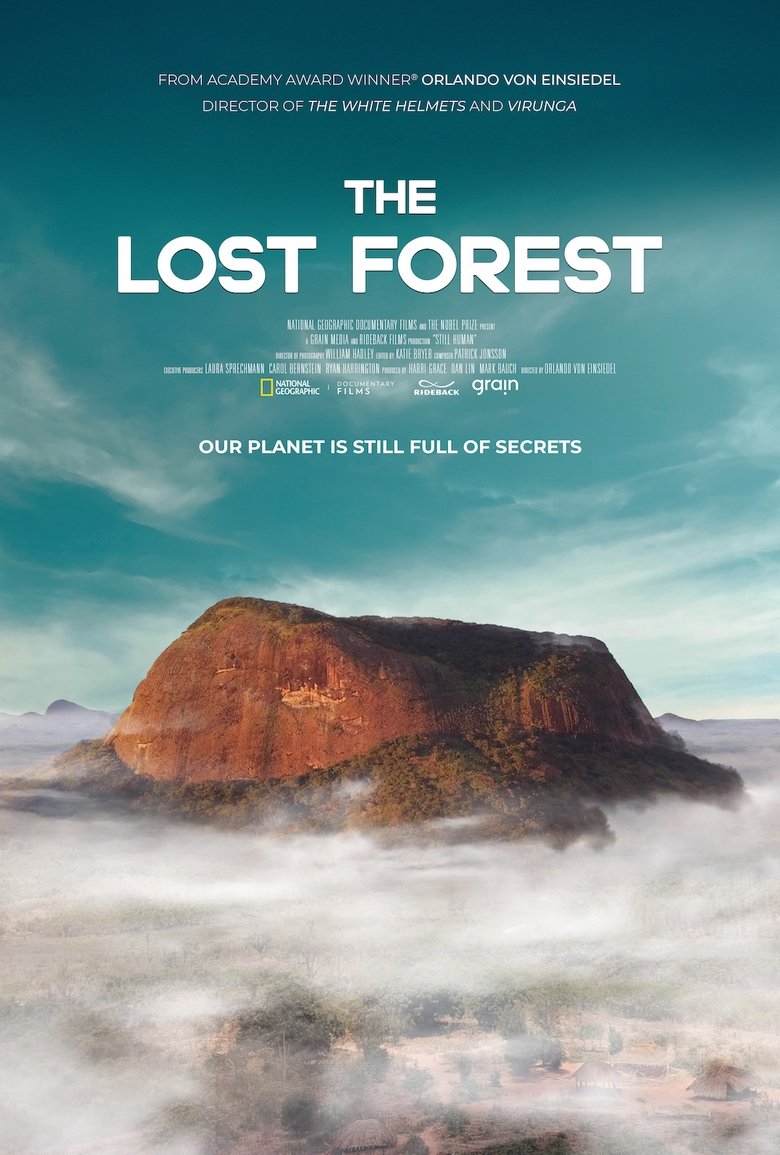
The Lost Forest
THE LOCAL PEOPLE KNOW OF NOBODY IN THE SURROUNDINGS COMMUNITIES WHO HAVE EVER BEEN UP TO THE FOREST
Genres
Documentary
Overview
How would natural habitats develop without human interference? In this documentary we follow an international team of scientists and explorers on an extraordinary mission in Mozambique to reach a forest that no human has set foot in. The team aims to collect data from the forest to help our understanding of how climate change is affecting our planet. But the forest sits atop a mountain, and to reach it, the team must first climb a sheer 100m wall of rock.
Details
Budget
$0
Revenue
$0
Runtime
22 min
Release Date
2020-05-22
Status
Released
Original Language
English
Vote Count
0
Vote Average
0
Cast
Meet the talented actors who bring the movie to life.
Julian Bayliss
Himself
Simon Willcock
Himself
Gabriela Bittencourt
Herself
Hermenegildo Matimele
Himself
Ara Monadjem
Himself
Similar Movies
Explore movies similar to this one that you might also enjoy.
0.0
Nah dran - Der Kampf um die Kohle
The lives of Ruth, Philipp, and Anja are directly linked to coal. And so they are also directly affected by the debate surrounding the coal phase-out. They are concerned about their future, but from different perspectives and in different ways. The days of coal are numbered. A coal commission is currently working on a concept for phasing out coal that includes an end date for lignite mining and power generation while ensuring that the climate protection target for 2030 is achieved. Germany already generates almost 40 percent of its electricity needs from renewable energies.
2018-12-06 | de
8.0
Planète animale 2 : Survivre
2017-04-25 | fr
0.0
Dans les pas du Groupe
2019-10-08 | fr
0.0
Belgium - 20
What happens when a world that relies on traffic and the logistics that allow it comes to a standstill? What happens when sickness and even death are taken from us?
2021-08-28 | fr
0.0
Siberian Apocalypse
This astounding documentary delves into the mysteries of the Tunguska event – one of the largest cosmic disasters in the history of civilisation. At 7.15 am, on 30th June 1908, a giant fireball, as bright the sun, exploded in the sky over Tunguska in central Siberia. Its force was equivalent to twenty million tonnes of TNT, and a thousand times greater than that of the atomic bomb dropped on Hiroshima in 1945. An estimated sixty million trees were felled over an area of over two thousand square kilometres - an area over half the size of Rhode Island. If the explosion had occurred over London or Paris, hundreds of thousands of people would have been killed.
2006-12-28 | en
0.0
Frans Lanting: The Evolution of LIFE
A dazzling journey through time via the remarkable images of National Geographic photographer Frans Lanting and his epic "LIFE" project, which presents a stunning interpretation of life on Earth, from the Big Bang through the present.
2015-10-24 | en
9.0
The American Southwest
The American Southwest is a feature length blue chip natural history film narrated by indigenous environmentalist Quannah Chasinghorse. The movie journeys down the mighty Colorado River, examining the astonishing beauty and biodiversity of the region, while confronting the environmental destruction from dams and the perilous fate of the river. The story is told through never-before-seen wildlife sequences such as beavers building wetlands, condors recovering from the brink, and the potential return of Jaguars to American soil. The film beautifully advocates for better management of the river and increased wildlife conservation efforts in the iconic landscapes of The American Southwest.
2025-09-05 | en
10.0
A Vida ao Redor do Cemitério
2022-10-25 | pt
0.0
Tiger on the Rocks
The Tasmanian Tiger twists and turns depending on how it's seen. Sheep-killing beast or tragic victim of human induced extinction. Ancient painting on a rock or vivid ancestor spirit. Lost forever, or a timely reminder to respect the connection between human and animal, culture, nature and country. In stunning landscapes across Australia where Thylacines once roamed, people from wide-ranging traditions share their experiences: First Nations artists, rangers and custodians; biologists, bone hunters and archaeologists. Multiple insights combine to throw light on Australia's most wanted animal.
2022-09-20 | en
7.0
An Inconvenient Truth
A documentary on Al Gore's campaign to make the issue of global warming a recognized problem worldwide.
2006-05-24 | en
0.0
Wings of Change
The primary defender of Israeli nature is virtually the only person breaking ground in the talks between Israelis, Palestinians and Jordanians. A religious scholar who lives in the territories, Professor Yossi Leshem is waging an uncompromising battle for coexistence between the parties with the aid of birds. Through a project that he initiated, barn owls are used as exterminators in the fields to prevent pollution of the groundwater for everyone. But Prof. Leshem dreams of implementing the project even further in the entire Middle East, enabling the birds of prey to survive instead of becoming extinct while simultaneously bringing together the divided peoples.
2015-01-01 | he
7.3
King Tut: A Century of Secrets
The world's leading Egyptologists are on a quest to uncover the secrets of Howard Carter's history-making discovery of Tutankhamun's tomb on the 100th anniversary of its discovery. Now, as the treasures of Tut are being moved from the Cairo Museum to the brand new Grand Egyptian Museum at the foot of the pyramids, Zahi and others can examine them up close with the latest technology like never before. The result rewrites what we thought we knew about the Boy King.
2022-10-19 | en
6.0
Watershed: Exploring a New Water Ethic for the New West
As the most dammed, dibbed, and diverted river in the world struggles to support thirty million people and the peace-keeping agreement known as the Colorado River Pact reaches its limits, WATERSHED introduces hope. Can we meet the needs of a growing population in the face of rising temperatures and lower rainfall in an already arid land? Can we find harmony amongst the competing interests of cities, agriculture, industry, recreation, wildlife, and indigenous communities with rights to the water? Sweeping through seven U.S. and two Mexican states, the Colorado River is a lifeline to expanding populations and booming urban centers that demand water for drinking, sanitation and energy generation. And with 70% of the rivers’ water supporting agriculture, the river already runs dry before it reaches its natural end at the Gulf of California. Unless action is taken, the river will continue its retreat – a potentially catastrophic scenario for the millions who depend on it.
2012-03-24 | en
8.0
The Himalayas
The highest mountain range in the world, the Himalayan range is far reaching, spanning thousands of miles, and holds within it an exceptionally diverse ecology. Coniferous and subtropical forests, wetlands, and montane grasslands are as much a part of this world as the inhospitable, frozen mountaintops that tower above. The word Himalaya is Sanskrit for abode of snow, fitting for a stretch of land that houses the world’s largest non polar ice masses. Extensive glacial networks feed Asia's major rivers including the Ganges, Indus, and Brahmaputra. More than a billion people rely on these glacier-fed water sources for drinking water and agriculture. The Himalayas are not only a remarkable expanse of natural beauty. They're also crucial for our survival.
2011-03-13 | en
0.0
Itapoa - Un proyecto que camina
| es
0.0
Galapagos - Trauminsel im Pazifik
Following in the footsteps of Charles Darwin, Heinz Sielmann traveled to the bizarre volcanic islands of Galapagos. The multi-award-winning film shows the unique wildlife on the Pacific Noah's Ark.
1962-05-31 | de
7.0
I Invite You to My Execution
As Russian writer Boris Pasternak (1890-1960) thinks it is impossible that his novel Doctor Zhivago is published in the Soviet Union, because it supposedly shows a critical view of the October Revolution, he decides to smuggle several copies of the manuscript out of the country. It is first published in 1957 in Italia and the author receives the Nobel Prize in Literature in 1958, which has consequences.
2019-10-30 | fr
0.0
Deutschlands wilde Vögel
2013-10-10 | de
7.0
Flying Monsters 3D with David Attenborough
220 million years ago dinosaurs were beginning their domination of Earth. But another group of reptiles was about to make an extraordinary leap: pterosaurs were taking control of the skies. The story of how and why these mysterious creatures took to the air is more fantastical than any fiction. In Flying Monsters 3D, Sir David Attenborough the world’s leading naturalist, sets out to uncover the truth about the enigmatic pterosaurs, whose wingspans of up to 40 feet were equal to that of a modern day jet plane.
2011-05-06 | en
6.2
Return to the Wild: The Chris McCandless Story
Twenty years ago, a young American hiker named Chris McCandless, the accomplished son of successful middle class parents, was found dead in an abandoned bus in the Alaskan wilderness and became the subject of the best-selling book and movie “Into the Wild.” Now, PBS retraces Chris McCandless’ steps to try to piece together why he severed all ties with his past, burnt or gave away all his money, changed his name and headed into the Denali Wilderness. McCandless' own letters, released for the first time, as well as new and surprising interviews, probe the mystery that still lies at the heart of a story that has become part of the American literary canon and compels so many to this day.
2014-11-25 | en