Loading

Who's afraid of Huawei?
Genres
Documentary
Overview
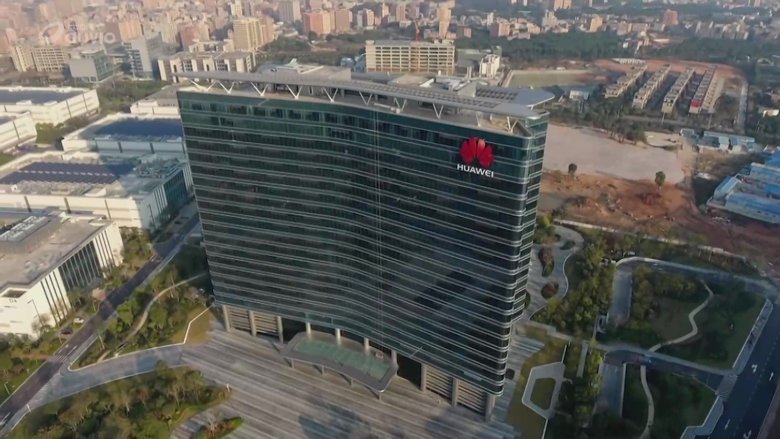
The Chinese company Huawei wants to expand 5G worldwide and is well advanced in the development of the technology. With the help of 5G, entire communities can function wirelessly, self-driving cars become possible and advanced medical care can be performed remotely in real time. However, many are worried that Huawei is incorporating backdoors that allow vast amounts of data to be collected and then used by China for espionage.
Details
Budget
$0
Revenue
$0
Runtime
50 min
Release Date
2020-01-14
Status
Released
Original Language
French
Vote Count
2
Vote Average
8
Cast
Meet the talented actors who bring the movie to life.
Similar Movies
Explore movies similar to this one that you might also enjoy.
8.0
A Day on the Grand Canal with the Emperor of China or: Surface Is Illusion But So Is Depth
Director Philip Haas and artist David Hockney invite you to join them on a magical journey through China via a marvelous 72-foot long 17th-century Chinese scroll entitled The Kangxi Emperor's Southern Inspection Tour (1691-1698), scroll seven . As Hockney unrolls the beautiful and minutely detailed work of art, he traces the Emperor Kangxi’s second tour of his southern empire in 1689.
1988-03-18 | en
8.0
Behind the Walls of the Forbidden City
Secluded from view by nine-meter-high walls and composed of 980 buildings, the Forbidden City in Beijing is the largest imperial palace ever built in the world. Three majestic structures form its center and host the city's ceremonies, each of which is considered an architectural masterpiece. In 1406, construction of the Forbidden City was launched at the initiative of one of China's most powerful sovereigns and founder of the Ming dynasty: Yongle. Endowed with divine power, the construction has already resisted more than 200 earthquakes.
2024-03-05 | fr
0.0
Technosexe
2015-11-30 | fr
6.3
People's Republic of Desire
In China’s popular live-streaming showrooms, three millennials – a karaoke singer, a migrant worker and a rags-to-riches comedian – seek fame, fortune and human connection, ultimately finding the same promises and perils online as in their real lives.
2018-11-30 | en
5.2
More Human Than Human
Stephen Hawking has warned that the creation of powerful artificial intelligence will be “either the best, or the worst thing, ever to happen to humanity”. Inspired by Brian Christian’s study The Most Human Human: What Artificial Intelligence Teaches Us About Being Alive, the filmmakers set out on an international investigation highlighting the effects of AI - scenes from our daily lives destructive and constructive.
2018-03-10 | en
10.0
Petzl RocTrip China 2011
During a reconnaissance trip, Olivier Balma, a guide and instructor at CMDI, accompanies Erwan Le Lann into the Getu Valley, in the heart of Guizhou Province. They discover a practically untouched site with a unique giant arch filled with limestone tufas. The project takes shape with the agreement of the government and the Chinese Mountaineering Association. It takes a group of climbers two trips to put up 250 new routes of all levels. During the Petzl RocTrip, hundreds of Chinese and visiting climbers get together to climb these routes. The highlight of the event is when the Spaniard Dani Andrada sends his project, Corazon de Ensueno. In front of a big crowd, he frees the extremely difficult eight pitches, all tied in with his partner, Chris Sharma. Since then, the Getu Valley has become a prime climbing destination, thanks to the magnificent routes and to the warm and authentic hospitality of the valley's inhabitants.
2011-10-30 | en
6.9
Jia Zhangke, A Guy from Fenyang
Chinese filmmaker Jia Zhangke returns to the shooting locations of his films, along with his actors, friends and close collaborators. Jia recalls the inspiration sources for his movies, such as Platform, Still Life and A Touch of Sin. The film is the memory of a filmmaker and of a country in convulsion, China, which reveals itself little by little.
2014-10-20 | pt
9.0
Secrets of the Forbidden City
The Forbidden City is the world’s biggest and most extravagant palace complex ever built. For five centuries, it was the power center of imperial China and survived wars, revolution, fires, and earthquakes. How did the Ming Emperor’s workforce construct its sprawling array of nearly 1,000 buildings and dozens of temples in a little over a decade?
2017-10-18 | en
8.0
Chinese Chariots Revealed
For over 1,000 years, chariots were indispensable weapons in ancient China. The art of chariot driving and special warfare were used there for longer than anywhere else. Their contribution to the unification of the Chinese empire is undisputed. New archaeological discoveries reveal how the Chinese developed and perfected this sophisticated weapon. In the Bronze Age, over 3,000 years ago, chariots and other war equipment arrived in China from Central Asia via the Hexi Corridor. In addition to trade and new alliances, their spread was mainly due to the Zhou dynasty's incessant military campaigns against rebellious vassal states and the constant attacks by the mobile cavalries of its northern neighbors. Manned with spearmen or archers, the chariots were a decisive weapon in battle.
2017-05-17 | en
5.0
Telezonia
Four children want to invite their friends to a picnic, but they don't know how to use the telephone. Suddenly, the room goes dark and the phone becomes large enough for them to climb into. They walk through a tunnel and meet a man named Telly, who takes them into the world of Telezonia, where they are shown various kinds of telephones. They meet several costumed characters, such as Question Mark, who teaches them how to answer the phone; Q and Z, who show them how to use the phone book; and Exclamation Point, who teaches them how to place a call. By the time they leave Telezonia, they are full-fledged telephone users.
1974-11-01 | en
8.0
Treasures of the Terracotta Army
2017-07-19 | en
8.0
The Tea Explorer
The Tea Explorer documentary follows the journey of tea enthusiast Jeff Fuchs along the Tea Horse Road, a 1300-year-old trade route in the Himalayas. It combines the author's passion for both tea and mountains, tracing the route's history, meeting the people who live along it, and exploring the significance of tea in the region.
| en
3.0
Final Warning
Host Grant Jeffrey discusses how technology and government activities are changing the way our information is handled. How is this shaping our lives?
1995-01-01 | en
0.0
Testerep
A team of scientists search for the lost island of Testerep in front of the Belgian coast, venturing into artificial landscapes and virtual realities.
2024-03-21 | en
0.0
Draussen bleiben
2007-10-24 | de
0.0
The Last Chinese Laundry
A documentary from 1987 featuring the life of early Chinese immigrants to the island of Newfoundland.
1987-01-01 | ab
8.0
China's Lost Pyramids
In China, there exists an astonishing place. A burial ground to rival Egypt’s Valley of the Kings, where pyramid tombs of stupendous size are full of astonishing riches. In 221 BC, China's first Emperor united warring kingdoms into a nation that still exists today. To memorialise this achievement, he bankrupted the national treasury and oppressed thousands of workers to build one of the world’s biggest mortuary complexes. China's second dynasty, the Han, inherited the daunting challenge of building larger tombs to command respect and establish their right to rule without running the nation into the ground. Although no Han emperor's tomb has been opened, the tombs of lesser Han aristocrats have revealed astonishing things: complete underground palaces (including kitchens and toilets) and at least one corpse so amazingly well-preserved some believe Han tomb-builders knew how to "engineer immortality".
2010-09-24 | en
6.6
Nokia Mobile: We Were Connecting People
Once upon a time there was a large Finnish company called Nokia that manufactured the world’s best and most innovative mobile phones. Nokia’s annual budget was larger than that of the Government of Finland and their phones spread everywhere and changed the whole culture of communication. But then something changed. Film portrays the rise and fall of Nokia and the Finnish mobile phone industry. Nokia engineers, designers and managers tell their story about the creation, success and downfall of the Finnish mobile phone.
2017-09-29 | fi
6.9
Nothing to Hide
NOTHING TO HIDE is an independent documentary dealing with surveillance and its acceptance by the general public through the "I have nothing to hide" argument. The documentary was produced and directed by a pair of Berlin-based journalists, Mihaela Gladovic and Marc Meillassoux. It was crowdfunded by over 400 backers. NOTHING TO HIDE questions the growing, puzzling and passive public acceptance of massive corporate and governmental incursions into individual and group privacy and rights. After the emotion initially triggered by the Snowden revelations, it seems that the general public has finally accepted to live in a monitored digital world.
2017-09-06 | en
6.1
How William Shatner Changed The World
William Shatner presents a light-hearted look at how the "Star Trek" TV series have influenced and inspired today's technologies, including: cell phones, medical imaging, computers and software, SETI, MP3 players and iPods, virtual reality, and spaceship propulsion.
2005-11-13 | en