Loading
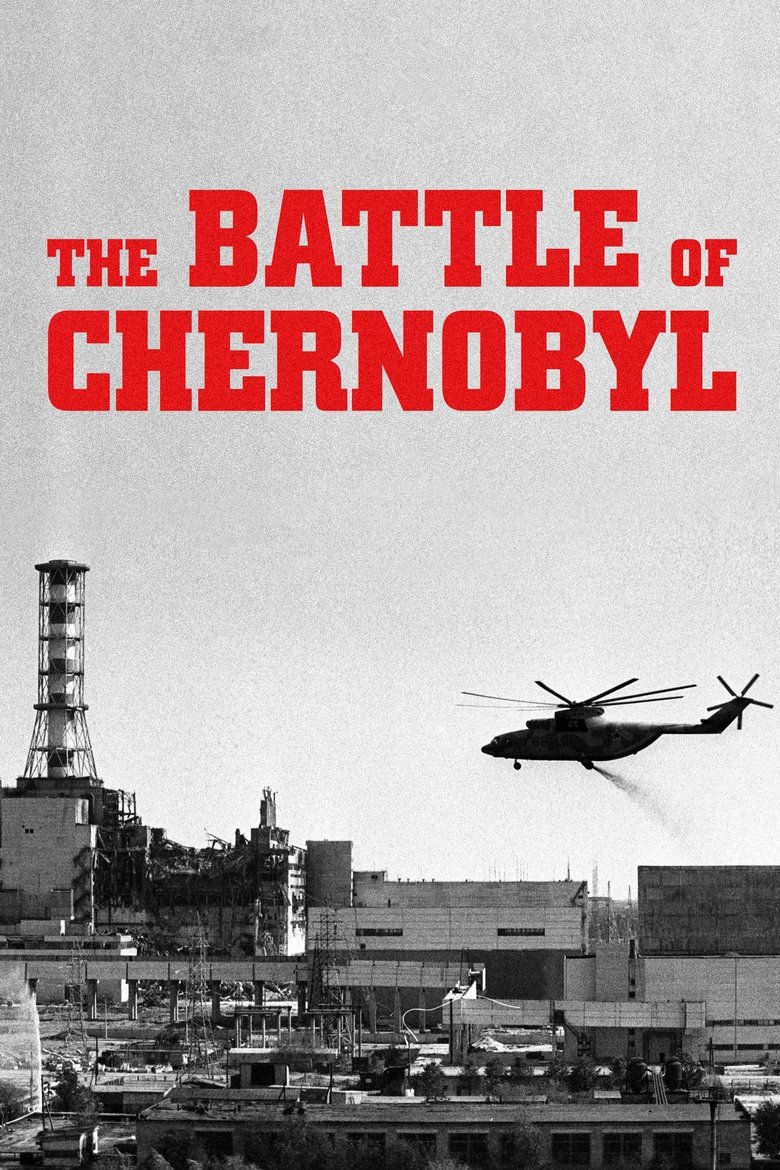
The Battle of Chernobyl
A disaster that shall never be forgotten.
Genres
DocumentaryHistory
Overview
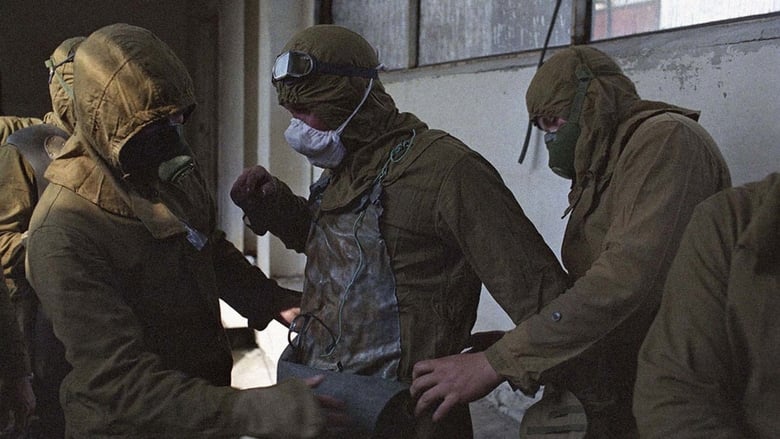
On April 26, 1986, a 1,000 feet high flame rises into the sky of the Ukraine. The fourth reactor of the Chernobyl nuclear power plant just exploded. A battle begins in which 500,000 men are engaged throughout the Soviet Union to "liquidate" the radioactivity, build the "sarcophagus" of the damaged reactor and save the world from a second explosion that would have destroyed half of Europe. Become a reference film, this documentary combines testimonials and unseen footage, tells for the first time the Battle of Chernobyl.
Details
Budget
$0
Revenue
$0
Runtime
94 min
Release Date
2007-01-28
Status
Released
Original Language
French
Vote Count
50
Vote Average
7.5
Cast
Meet the talented actors who bring the movie to life.
Tim Birkett
Narrator
Mikhail Gorbachev
Self
Hans Blix
Self
Oleg Mirochnikov
Self - Translator
Similar Movies
Explore movies similar to this one that you might also enjoy.
6.8
Burning
Follows the deadly Australian bushfires of 2019-2020, known as ‘Black Summer’. Burning is an exploration of what happened as told from the perspective of victims of the fires, activists and scientists.
2021-09-09 | en
5.1
Th (Part 11: Dr. Helen Caldicott)
Dr. Helen Caldicott is the most prominent anti-nuclear activist in the world. She's been featured on CNN, 60 Minutes, CBC and Democracy Now. In the 80s, Helen Caldicott campaigned against nuclear weapons testing in the pacific (still responsible today for the majority of tritium we're exposed to), and against the notion of a winnable nuclear war. She was nominated for a Nobel Peace Prize for her efforts. She has always made inaccurate statements regarding civilian nuclear power. But, since the Fukushima-Diachii radiation release has caused (and is projected to cause) zero fatalities... http://www.unis.unvienna.org/unis/en/... ...her tone has changed when speaking to supporters. This has not been acknowledged by prime-time media, as they continue to use her as a source. Any person or media outlet should check Caldicott's history of statements (on any subject) against a domain expert before using her as a source.
2014-05-28 | en
0.0
Quintinshill: Britain's Deadliest Rail Disaster
Neil Oliver describes the worst ever railway accident in the UK, which happened a hundred years ago on 22 May 1915, in which three trains collided at Quintinshill near Gretna Green. One of the trains was a troop train taking soldiers to fight in World War I at the Battle of Gallipoli: many of the dead were in this train which caught fire due to escaped gas from the archaic gas lighting in the carriages. The cause of the crash was attributed to a catastrophic signalman's error, but Neil examines whether there were other contributory factors and whether there was a cover-up to prevent investigation of them, making convenient scapegoats of the signalmen.
2015-05-20 | en
7.1
Parmanu: The Story of Pokhran
A look at India's second confidential nuclear test series at Pokhran lead by Dr. APJ Abdul Kalam, during the time of PM Atal Bihari Vajpayee's tenure.
2018-05-25 | hi
6.0
The Red Tent
Torn by personal guilt, Italian General Umberto Nobile reminisces about his 1928 failed Arctic expedition aboard the airship Italia.
1969-12-23 | ru
0.0
Inferno: The Burning of the SS Morro Castle
A documentary covering the harrowing tragedy of the SS Morro Castle.
2025-01-20 | en
5.2
The Horses of Fukushima
Fukushima's Minami-soma has a ten-centuries-long tradition of holding the Soma Nomaoi ("chasing wild horses") festival to celebrate the horse's great contribution to human society. Following the meltdown of the Fukushima Daiichi Nuclear Power Plant in the wake of the March 11, 2011 earthquake and tsunami, local people were forced to flee the area. Rancher Shinichiro Tanaka returned to find his horses dead or starving, and refused to obey the government's orders to kill them. While many racehorses are slaughtered for horsemeat, his horses had been subjected to radiation and were inedible. Yoju Matsubayashi, whose "Fukushima: Memories of the Lost Landscape" is one of the most impressive documentaries made immediately after the disaster, spent the summer of 2011 helping Tanaka take care of his horses. In documenting their rehabilitation, he has produced a profound meditation on these animals who live as testaments to the tragic bargain human society made with nuclear power.
2013-12-01 | ja
0.0
Uranium Drive-In
A new uranium mill -- the first in the U.S. in 30 years -- would re-connect the economically devastated rural mining community of Naturita, Colorado, to its proud history supplying the material for the first atomic bomb. Some view it as a greener energy source freeing America from its dependence on foreign oil, while others worry about the severe health and environmental consequences of the last uranium boom.
2013-05-25 | en
6.0
Dams: The Lethal Water Bombs
Documentary short about the disastrous dangers of aging, ailing dams.
2011-06-25 | en
0.0
Wolsong: Vanishing Town
2019-12-12 | ko
0.0
I'm So Sorry
In a quiet forest, a sign warns of radiation hazard. “Is this the past or the future?” muses the masked figure who appears like a kind of ghost in nuclear disaster areas. At a time when nuclear power may be re-emerging as an alternative to fossil fuels, this calmly observed and compelling tour takes us to places that may serve as a warning.
2025-07-13 | fr
7.6
Chernobyl 30 Years On: Nuclear Heritage
Thirty years after the Chernobyl disaster, which occurred on the night of April 26, 1986, its causes and consequences are examined. In addition, a report on efforts to strengthen the structures covering the core of the nuclear plant in order to better protect the population and the environment is offered.
2015-05-06 | en
7.5
Apollo 13
The true story of technical troubles that scuttle the Apollo 13 lunar mission in 1970, risking the lives of astronaut Jim Lovell and his crew, with the failed journey turning into a thrilling saga of heroism. Drifting more than 200,000 miles from Earth, the astronauts work furiously with the ground crew to avert tragedy.
1995-06-30 | en
0.0
Anatomy of a Disaster: Explosion at BP Texas City Refinery
This U.S. Chemical Safety Board (CSB) video uses expert testimony and computer-animated reenactments to describe and discuss its detailed investigation into the March 23 2005 explosion of the ISOM (isomerization) unit at the BP (British Petroleum) refinery at Texas City, Texas. The explosion killed 15 workers, injured 180 others, and cost BP billions of dollars.
2008-03-21 | en
0.0
With Sea Views
After consolidating itself as a tourist destination in the mid-1960s, this small coastal village has become the dormitory town for the workers of a Nuclear Power Plant. With the liberal promise of prosperity and socioeconomic wellfare, many workers left their homes to move to the small city and started working at the new Nuclear Power Plant. The collective unrest and the silence, cut off by the great gusts of wind, articulate the landscape of the village that is now under the aid of the Nuclear Power Plant.
2021-09-17 | es
6.6
Titanic: The Complete Story
The "unsinkable" Titanic was a dream come true: four city blocks long and a passenger list worth 250 million dollars. But on her maiden voyage in April 1912, that dream became a nightmare when the giant ship struck an iceberg and sunk in the cold North Atlantic. More than 1,500 lives were lost in one of the greatest disasters of the 20th century. Now, using newsreels, stills, diaries, and exclusive interviews with survivors, Titanic: The Complete Story recounts the sensational history of the premier liner. In Part I: Death of a Dream, the largest ship ever built is christened in Ireland before a cheering crowd of 100,000. Witness the disaster this trek becomes as numerous iceberg warnings go unheeded and the ship sinks in the icy North Atlantic. In Part II: The Legend Lives On, over-packed lifeboats edge away from the crippled liner as a futile SOS signals flare into the night--leaving 1,500 passengers to a watery grave.
1994-07-24 | en
8.0
Versprechen Kernfusion? - Der Wettlauf um die Energie der Zukunft
In October 2023, a European research team succeeded in generating an enormous amount of energy from very little fuel. A success that fusion research had been working towards for around 70 years. Now the competition for a fusion reactor has been reignited. What role can electricity from nuclear fusion play in the future?
2023-06-01 | de
0.0
Sista varningen!
About the question of whether we should proceed in developing and using nuclear power and the breakdown at Three Mile Island, Harrisburg, Pennsylvania, in March 28, 1979.
1980-03-10 | sv
4.4
Inside Costa Concordia: Voices of Disaster
An in-depth look at how Italy's largest cruise ship ran aground off the Italian coast.
2012-02-26 | en
8.0
Catastrophe
A film cataloguing some of the world's largest catastrophes.
1977-04-20 | en