Loading

Stargazing Challenges
Genres
Documentary
Overview
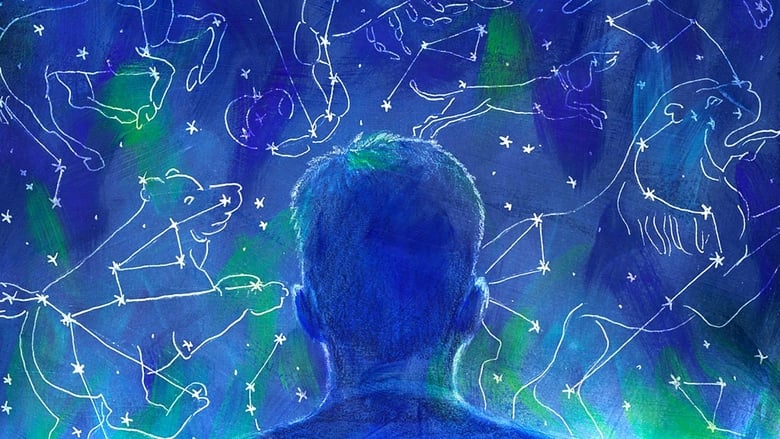
Blue Peter presenters Helen Skelton and Barney Harwood want to learn more about the solar system so they challenge scientists Helen Czerski and Jem Stansfield to find out more. They look at how to make telescopes and rockets, and use a toilet roll to measure the distances between planets.
Details
Budget
$0
Revenue
$0
Runtime
29 min
Release Date
2012-01-10
Status
Released
Original Language
English
Vote Count
0
Vote Average
0
Cast
Meet the talented actors who bring the movie to life.
Helen Skelton
Herself - Presenter
Barney Harwood
Himself - Presenter
Helen Czerski
Herself
Jem Stansfield
Himself
Similar Movies
Explore movies similar to this one that you might also enjoy.
7.5
Cassini's Grand Finale
To help visualize the dramatic final chapter in Cassini's remarkable story, NASA's Jet Propulsion Laboratory produced this short film that features beautiful computer-generated animation, thoughtful narration and a rousing score. Producers at JPL worked with filmmaker Erik Wernquist, known for his 2014 short film "Wanderers," to create a stirring finale video befitting one of NASA's most successful missions of exploration.
2017-04-07 | en
8.5
New Horizons
A brief visualisation of NASA’s historic spacecrafts Mariner, Pioneer, Voyager, and Dawn, exploring the solar system, culminating in the New Horizons mission.
2015-06-30 | en
10.0
Prehistoric Astronomers
Cave paintings and lunar calendars exist in the caves and remains of prehistoric hunters studied recently. What if Prehistoric Man were clever enough to develop in depth scientific knowledge? As unlikely as it may seem, new data tend to prove that Prehistoric Man actually invented Astronomy!
2007-01-01 | en
5.0
Miniverse
What if you could get behind the wheel and race through space? We scale down the Solar System to the continental United States and place the planets along the way to better appreciate the immense scale of the Universe. See space as never before, with Mars looming over the Freedom Tower and Jupiter towering above the Lincoln Memorial. Join former astronaut Chris Hadfield - a YouTube sensation for his performance of David Bowie’s “Space Oddity” aboard the International Space Station - and his interstellar hitchhikers Michio Kaku and astronomers Derrick Pitts and Laura Danly. It’s a joyride from coast to coast - and from the sun to Pluto.
2017-04-17 | en
8.0
The Mystery of Chaco Canyon
Chaco Canyon, located in northwest New Mexico, is perhaps the only site in the world constructed in an elaborate pattern that mirrors the yearly cycle of the sun and the 19-year cycle of the moon. How did an ancient civilization, with no known written language, arrange its buildings into a virtual celestial calendar, spanning an area roughly the size of Ireland?
1999-01-01 | en
7.6
In the Shadow of the Moon
Archival material from the original NASA film footage – much of it seen for the first time – plus interviews with the surviving astronauts, including Jim Lovell, Dave Scott, John Young, Gene Cernan, Mike Collins, Buzz Aldrin, Alan Bean, Edgar Mitchell, Charlie Duke and Harrison Schmitt.
2007-01-19 | en
0.0
Living Worlds
What forms might life take in the Solar System and beyond? In the Academy's newest original planetarium show, see how a deeper understanding of Earth might help us locate other living worlds, light years away.
2021-11-01 | en
0.0
The Once and Future Griffith Observatory
Documentary about the Griffith Observatory, shown at their Leonard Nimoy Event Horizon Theater
2006-05-31 | en
0.0
Worlds of Ice
From the territories of the Arctic to the farthest reaches of the universe, Worlds of Ice shows us the astonishing omnipresence of ice.
2022-12-14 | en
0.0
Shadow Chasers
This feature-length documentary is a portrait of eclipse chasers, people for whom solar eclipses - among nature's more spectacular phenomena – are a veritable obsession. The film follows 4 of them as they travel incredible distances to witness the last total eclipse of the millennium as it sweeps eastward across Europe to India. At various points along the way enthusiasts Alain Cirou in France, Paul Houde in Austria, Olivier Staiger in Germany and Debasis Sarkar in India offer their impressions of the historic event.
2000-09-23 | fr
7.7
Die Sonne
The sun is the miracle that makes everything possible - but also the greatest danger. For the first time, a feature-length documentary is dedicated to the search for the significance of our home star for mankind, science and nature. Thanks to the researchers from the American space agency NASA, who work at the Canary Islands observatories in the hottest and coldest places on the planet.
2024-02-10 | de
6.9
Cielo
The first feature from Alison McAlpine is a dialogue with the heavens—in this case, the heavens above the Andes and the Atacama Desert in northern Chile, where she alights on the desert- and mountain-dwelling astronomers, fishermen, miners, and cowboys who live their lives with reverence and awe for the skies.
2017-10-06 | en
0.0
The Silent Pulse of the Universe
Part of the Almost Famous series. Jocelyn Bell was a graduate student at Cambridge in 1967 when she pushed through the skepticism from her superiors to make one of the greatest astrophysical discoveries of the twentieth century. While Jocelyn was belittled and sexually harassed by the media, the Nobel Prize was awarded to her professor and his boss.
2021-07-24 | en
0.0
La Fusée Ariane : Le Défi français
2018-10-18 | fr
6.0
Ariane: A Space Epic
The history of the Ariane rocket is a space epic that has seen Europeans unite and innovate to make a place for themselves in the space race. Faced with Soviet and then American supremacy, men and women from the four corners of Europe have achieved the impossible. Ariane has become a true monument, thanks to the passion of those who dreamed of it and to their tenacity in the face of the various obstacles that stood in their way. This undeniable European success is now at a turning point in its history. The new Ariane 6 program is currently being developed to meet the challenges of tomorrow: will it be able to meet the challenges of a more competitive environment than ever before?
2021-09-16 | fr
8.0
From the Atoms to the Stars
An incredible travel through space and time between the walls of the Paris Observatory, which is celebrating its 350th birthday. Place of discoveries such as speed of light or Neptune’s existence, it is still today one of the oldest operating observatories and the greatest hub in the world for astronomy and astrophysics researches, second only to Harvard.
2017-09-29 | fr
6.0
Venus: Death of a Planet
Billions of years ago, Venus may have harbored life-giving habitats similar to those on the early Earth. Today, Earth's twin is a planet knocked upside down and turned inside out. Its burned-out surface is a global fossil of volcanic destruction, shrouded in a dense, toxic atmosphere. Scientists are now unveiling daring new strategies to search for clues from a time when the planet was alive.
2021-08-28 | en
7.2
Searching for Planet 9
At the edge of our solar system supposedly lies an immense planet. Five to ten times the size of the Earth. Several international teams of scientists have been competing in a frantic race to detect it, in uncharted territories, far beyond Neptune. The recent discovery of several dwarf planets, with intriguing trajectories, have put astronomers on the trail of this mysterious planet. Why is this enigmatic planet so difficult to detect? What would a ninth planet teach us about our corner of the universe? Could it help us unlock some of the mysteries of our solar system?
2022-09-17 | fr
0.0
Zero Gravity: Life on the International Space Station
European Space Agency astronaut Alexander Gerst and his NASA colleague Reid Wiseman are launched into space from the Baikonur Cosmodrome in Kazakhstan. Gerst and Wiseman spend six months in humanity's outpost in space and film many of their activities.
2022-01-01 | en
0.0
Europe to the Stars
To celebrate its 50th anniversary year, ESO in 2012 released the documentary Europe to the Stars — ESO's first 50 years of Exploring the Southern Sky. The movie tells the story of ESO — what scientific discoveries it has been making and how it designs, builds and operates some of the most powerful ground-based telescopes.
2012-01-01 | en