Loading
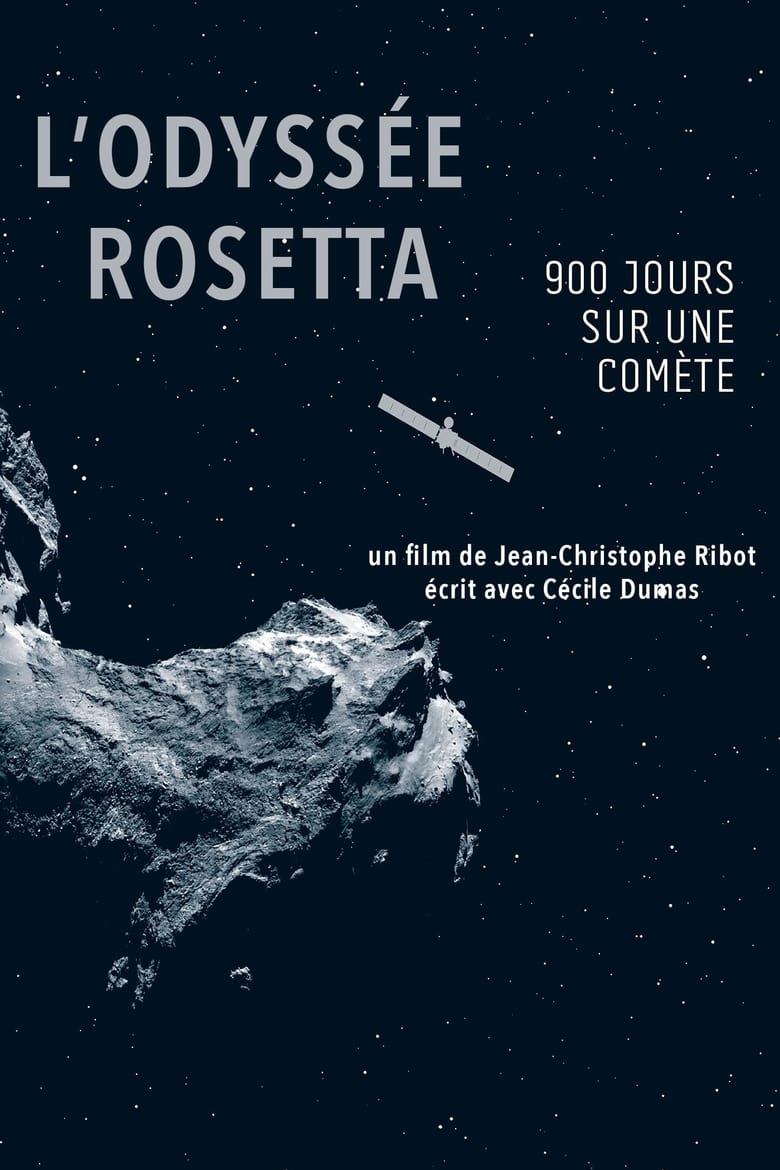
L'Odyssée Rosetta, 900 jours sur une comète
Genres
DocumentaryTV Movie
Overview
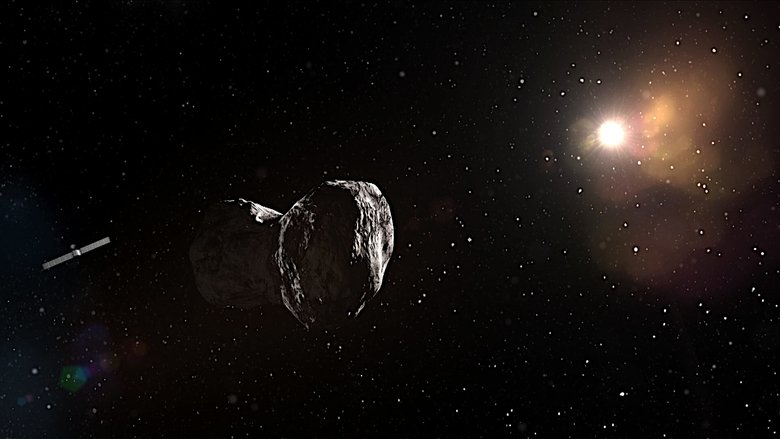
Several hundred million kilometers away, the space probe "Rosetta" and the small lander "Philae" orbit the sun on the comet "Churyumov-Gerasimenko", without any contact with Earth. On September 30, 2016 - two years after the launch of "Philae" - the landing of "Rosetta" on the comet marked the end of a space mission rich in discoveries, successes and setbacks. The documentary "Rendezvous with a comet: Mission Rosetta" revisits this extraordinary space adventure. After the landing of "Philae" on the comet "Churi" in November 2014 - probably one of the greatest successes in space research since the moon landing - the mission continued and provided a whole series of surprises.
Details
Budget
$0
Revenue
$0
Runtime
0 min
Release Date
2017-03-25
Status
Released
Original Language
French
Vote Count
4
Vote Average
7.8
Cast
Meet the talented actors who bring the movie to life.
Mohamed Rouabhi
Narrator (voice)
Andrea Accomazzo
Self
Jean-Pierre Bibring
Self
Louis d'Hendecourt
Self
Kathrin Altwegg
Self
Fred Goesmann
Self
Martin Hilchenbach
Self
Holger Sierks
Self
Philippe Gaudon
Self
Anny-Chantal Levasseur-Regourd
Self
Carsten Güttler
Self
Sylvain Lodiot
Self
Éric Jurado
Self
Cecilia Tubiana
Self
Similar Movies
Explore movies similar to this one that you might also enjoy.
6.4
Space Station 3D
Some 220 miles above Earth lies the International Space Station, a one-of-a-kind outer space laboratory that 16 nations came together to build. Get a behind-the-scenes look at the making of this extraordinary structure in this spectacular IMAX film. Viewers will blast off from Florida's Kennedy Space Center and the Baikonur Cosmodrome in Russia for this incredible journey -- IMAX's first-ever space film. Tom Cruise narrates.
2002-04-17 | en
7.0
Comet Collision
Comets pose one of the greatest threats to life on Earth - a threat that can only be countered if we find out more about them. In 2005, in an audacious bid to do just that, NASA scientists launched a space probe to collide with a comet in the emptiness of deep space. This film follows the amazing story of mission Deep Impact, from its inception through to the final nail-biting moments when the probe and comet Tempel 1 met head-on.
2006-05-24 | en
5.8
Under the Stars
Paying tribute to some of America's only surviving drive-ins – and those who keep them running – this heartfelt documentary captures efforts to preserve these nostalgic theaters in small-towns across the country.
2022-10-15 | fr
6.8
Ring of Fire
Ring of Fire is about the immense natural force of the great circle of volcanoes and seismic activity that rings the Pacific Ocean and the varied people and cultures who coexist with them. Spectacular volcanic eruptions are featured, including Mount St. Helens, Navidad in Chile, Sakurajima in Japan, and Mount Merapi in Indonesia.
1991-01-19 | en
6.8
Last Exit: Space
Documentary about space colonization: a voyage across our planet, into the stars and beyond.
2022-03-10 | en
7.0
Searching for Skylab, America's Forgotten Triumph
The first American space station Skylab is found in pieces scattered in Western Australia. Putting these pieces back together and re-tracing the Skylab program back to its very conception reveals the cornerstone of human space exploration.
2019-02-08 | en
8.0
Posthumans
Director Dominique Leclerc spent years depending on medical devices for her survival. Then, looking for alternative solutions, she entered the world of emerging technologies. Posthumans follows her as she meets with cyborgs, biohackers, and transhumanists who are trying to use these technologies to outsmart illness, aging—and even death. The documentary looks at pressing ethical and political questions that are sure to impact the future of our species.
2025-02-23 | fr
8.0
Plastic Odyssey, mission pacifique
2025-02-07 | fr
8.0
De l'eau dans le gasoil
2014-01-01 | fr
0.0
Long Island Joins the Space Race
The development of the Lunar Module, which took astronauts Neil Armstrong and Buzz Aldrin to the Moon in 1969. Using interviews with engineers, along with archival footage, and period recreation- the landing of the moon comes to vivid life.
2023-11-30 | en
7.5
Easter Island Origins
How were the giant stone heads of Rapa Nui – also known as Easter Island – carved and raised, and why? Since Europeans arrived on this remote Pacific island over 300 years ago, controversy has swirled around the iconic ancient statues and the history of the people who created them. Now, a new generation of researchers is overturning old theories, revealing the rich history, innovation, and resilience of the Rapanui people, and uncovering intriguing new evidence about where they – and their practice of monumental stone building – came from.
2024-02-07 | en
8.0
Le mystère Cléopâtre, la dernière reine d'Egypte
2019-07-24 | fr
8.0
Druids: The Mystery of Celtic Priests
Druids have existed far longer than hitherto assumed, since the 4th century BC. Their traces are found all over middle Europe: from the northern Balkans to Ireland. Their cultural achievements were equal in almost every way to those of the Romans and Greeks: They could read and write and spoke Greek and Latin - for centuries, they were the powerful elite of their culture. Only one single Druid is known by name to history: Diviciacos - an aristocrat of the Aedui and personal friend of Julius Caesar. Diviciacos was a politician, a judge and a diplomat, but he lived at a time when the Celtic lands of Gaul were conquered by the Romans. Greek and Roman contemporaries distrusted the actions of this forbear of the famous comic book druid Getafix: They imagined him in bloody rituals in somber woods.
2021-06-05 | de
6.0
"Best of the Best" Provides New Views, Commentary of Shuttle Launches
This video from the Glenn Research Center highlights in stunning, behind-the-scenes imagery the launches of three space shuttle missions: STS-114, STS-117, and STS-124. NASA engineers provide commentary as footage from the ground and from the orbiters themselves document in detail the first phase of a mission.
2010-12-16 | en
9.0
Nature : pour une réconciliation
Combining poetry, science and emotion, this film traces the history of life, from its cosmic origins to its evolution on our planet, through the wonders of biodiversity and the contemporary challenges it faces. Through spectacular images, Yann Arthus-Bertrand questions the paradoxes of our times and urges a collective transformation to reconcile humanity with nature.
2025-02-11 | fr
7.7
Die Sonne
The sun is the miracle that makes everything possible - but also the greatest danger. For the first time, a feature-length documentary is dedicated to the search for the significance of our home star for mankind, science and nature. Thanks to the researchers from the American space agency NASA, who work at the Canary Islands observatories in the hottest and coldest places on the planet.
2024-02-10 | de
0.0
Artemis 1: Going Back To The Moon
Follow the extraordinary inside story of NASA engineers as they race to build and launch Artemis I, the world's biggest rocket, as it prepares for missions that will transport humans to the moon, then launch an amazing journey to Mars and beyond.
2022-11-20 | en
0.0
Why Do We Bike?
2016-01-01 | en
7.9
What Killed the Roman Empire?
Why did the Roman Empire, which dominated Europe and the Mediterranean for five centuries, inexorably weaken until it disappeared? Archaeologists, specialists in ancient pathologies and climate historians are now accumulating clues converging on the same factors: a powerful cooling and pandemics. A disease, whose symptoms described by the Greek physician Galen are reminiscent of those of smallpox, struck Rome in 167, soon devastating its army. At the same time, a sudden climatic disorder that was underway as far as Eurasia caused agricultural yields to plummet and led to the westward migration of the Huns. Plagued by economic and military difficulties, attacked from all sides by barbarian tribes, the Roman edifice gradually cracked.
2022-11-19 | fr
0.0
The Seabees on Iwo Jima
Narrated by CBS Sports' Jim Nantz. The Seabees on Iwo Jima focuses on the United States Naval Construction Battalions in World War II, which built all the infrastructure for the Allies in Europe and the Pacific in WWII. The Seabees were construction workers by trade but had to fight at times. Their motto was "We Build, We Fight," and their biggest test came in the battle for Iwo Jima in 1945.
2023-05-05 | en