Loading
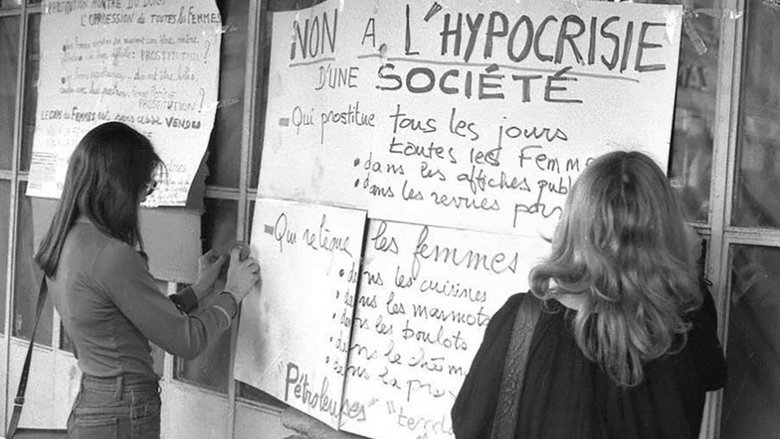
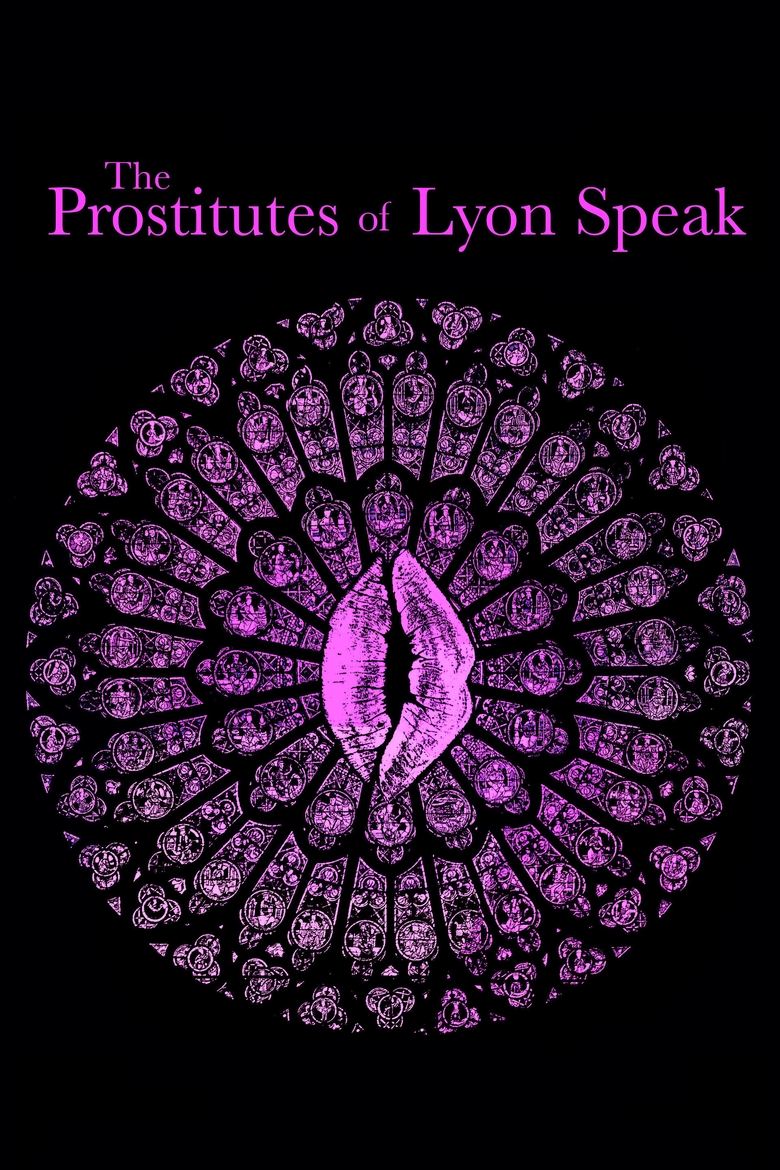
The Prostitutes of Lyon Speak
Genres
Documentary
Overview
Documentary about the Lyon sex workers who occupied the church of St. Nizier on June 3, 1975.
Details
Budget
$0
Revenue
$0
Runtime
46 min
Release Date
1975-01-01
Status
Released
Original Language
French
Vote Count
3
Vote Average
7.7
Cast
Meet the talented actors who bring the movie to life.
Similar Movies
Explore movies similar to this one that you might also enjoy.
0.0
La bataille de Florange
2016-10-26 | fr
6.7
Poly Styrene: I Am a Cliché
The death of punk icon and X-Ray Spex front-woman Poly Styrene sends her daughter on a journey through her mother's archives in this intimate documentary.
2021-02-27 | en
5.0
Silvana
A documentary about the Swedish rapper and artist Silvana Imam.
2017-09-15 | sv
10.0
Caos de tránsito
Through testimonies and images, the crude reality of human rights in Argentina in democracy is portrayed and the role of the hegemonic means of communication to make causes and protests invisible ...
2018-10-09 | es
1.0
Leninland
At the peak of Perestroika, in 1987, in the village of Gorki, where Lenin spent his last years, after a long construction, the last and most grandiose museum of the Leader was opened. Soon after the opening, the ideology changed, and the flow of pilgrims gradually dried up. Despite this, the museum still works and the management is looking for ways to attract visitors. Faithful to the Lenin keepers of the museum as they can resist the onset of commercialization. The film tells about the modern life of this amazing museum-reserve and its employees.
2013-11-30 | ru
6.8
Chauka, Please Tell Us The Time
An urgent and powerful documentary, shot in a detention centre where asylum seekers trying to reach Australian shores are indefinitely detained. Secretly shot on a mobile phone by Iranian journalist Behrouz Boochani while detained on Manus, in Papua New Guinea, the film is a collaboration with Dutch-Iranian filmmaker Arash Kamali Sarvestani. Boochani recounts, via the testimonies of fellow inmates, the abuse and violence inflicted and the precarious state of limbo they find themselves in. Chauka, the name of the dreaded solitary confinement unit within the detention centre, was originally the name of a beautiful bird and symbol of the Manus Island. By interweaving dialogue with two Manusian men and shots of daily life on the island, the film gives a much-needed voice to Manus inhabitants, understandably distressed by the current situation. With marked restraint, the film exposes lives broken by shocking immigration policies.
2017-06-16 | en
5.3
Town Bloody Hall
Norman Mailer and a panel of feminists — Jacqueline Ceballos, Germaine Greer, Jill Johnston, and Diana Trilling — debate the issue of Women's Liberation.
1979-04-03 | en
0.0
Perfect Image?
Two actresses take us through a series of 'raps' and sketches about what it means to be beautiful and black.
1989-01-02 | en
10.0
Big Charity: The Death of America's Oldest Hospital
This documentary film includes never-before-seen footage and exclusive interviews to tell the story of Charity Hospital, from its roots to its controversial closing in the wake of Hurricane Katrina. From the firsthand accounts of healthcare providers and hospital employees who withstood the storm inside the hospital, to interviews with key players involved in the closing of Charity and the opening of New Orleans’ newest hospital, “Big Charity” shares the untold, true story around its closure and sheds new light on the sacrifices made for the sake of progress.
2014-05-03 | en
6.6
The 50 Year Argument
Follows the waves of literary, political, and cultural history as charted by the The New York Review of Books, America’s leading journal of ideas for over 50 years. Provocative, idiosyncratic and incendiary, the film weaves rarely seen archival material, contributor interviews, excerpts from writings by such icons as James Baldwin, Gore Vidal, and Joan Didion along with original verité footage filmed in the Review’s West Village offices.
2014-06-07 | en
6.0
Storyville - The Naked Dance
The Naked Dance is the first documentary about America's legendary legal red-light district that thrived in New Orleans from 1898 until World War I. Storyville got its name when Alderman Sidney Story attempted to clear up the New Orleans waterfront by restricting prostitution to a specific neighborhood. To his chagrin, the area was dubbed "Storyville," and it was so known until the U.S. Navy closed it for good in 1917.
2001-07-10 | en
7.5
Fascism in Colour
After the World War I, Mussolini's perspective on life is severely altered; once a willful socialist reformer, now obsessed with the idea of power, he founds the National Fascist Party in 1921 and assumes political power in 1922, becoming the Duce, dictator of Italy. His success encourages Hitler to take power in Germany in 1933, opening the dark road to World War II. (Originally released as a two-part miniseries. Includes colorized archival footage.)
2006-01-01 | en
6.0
Brink of Disaster!
A student is held up in the library while a riot rages outside. As SDS protesters head to burn the library down, he has to fend them off with his baseball bat. This film opens with actual footage of civil disturbances in the 1960s, and moves on to images of historical American figures.
1972-01-01 | en
0.0
Albanian Heroic Women
Documentary about Congres VI of the Women's Union.
1967-06-14 | sq
7.7
Hiver 54 : L'Abbé Pierre et l'insurrection de la bonté
2024-01-20 | fr
0.0
Crazy Money
What is possible when we have guaranteed money to meet our basic needs? No requirements. No stipulations. No paybacks. We look to the village of Busibi to discover what’s possible when we give money directly to people. No strings attached. The answer lies in the residents’ personal stories. Their successes and tribulations illustrate the impact of one of the most daring projects in contemporary development cooperation. Their life stories unexpectedly prove to be all too familiar. They make us laugh. They move us. Blending in together, they create a colorful and poetic reality portrait, illustrating the big consequences of a small sum of money …
2021-09-03 | en
10.0
Bil'in Habibti
The Israeli filmmaker Shai Corneli Polak records the building of the 'security wall' through Palestinian territory at the village of Bil'in. The villagers protest mostly peacefully, while the Israeli army doesn't react peacefully. By now the Israeli High Court has ruled that the building of the wall was illegal.
2006-01-01 | en
0.0
Just what I Am
Short documentary about a transexual sex worker.
2016-12-01 | es
0.0
T'Ain't Nobody's Bizness: Queer Blues Divas of the 1920s
The 1920s saw a revolution in technology, the advent of the recording industry, that created the first class of African-American women to sing their way to fame and fortune. Blues divas such as Bessie Smith, Ma Rainey, and Alberta Hunter created and promoted a working-class vision of blues life that provided an alternative to the Victorian gentility of middle-class manners. In their lives and music, blues women presented themselves as strong, independent women who lived hard lives and were unapologetic about their unconventional choices in clothes, recreational activities, and bed partners. Blues singers disseminated a Black feminism that celebrated emotional resilience and sexual pleasure, no matter the source.
2013-01-27 | en
0.0
Brigitte macron, un roman français
2018-01-01 | fr