Loading
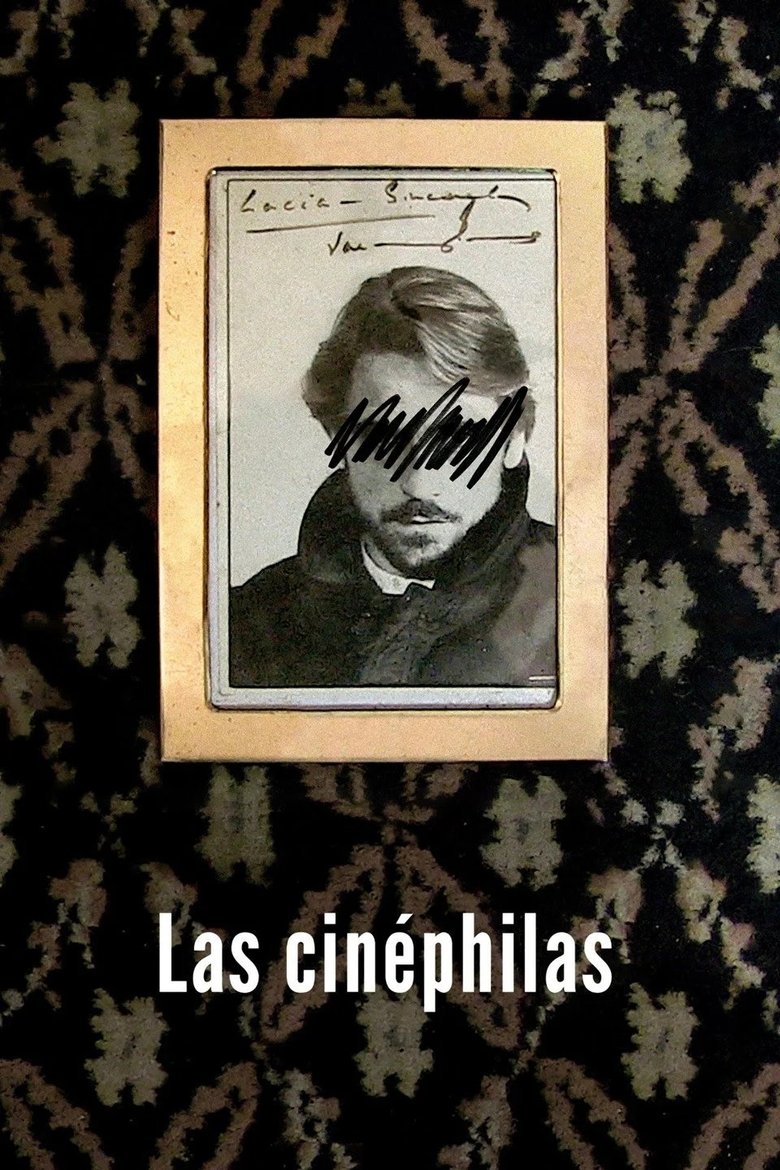
Las cinéphilas
Genres
Documentary
Overview
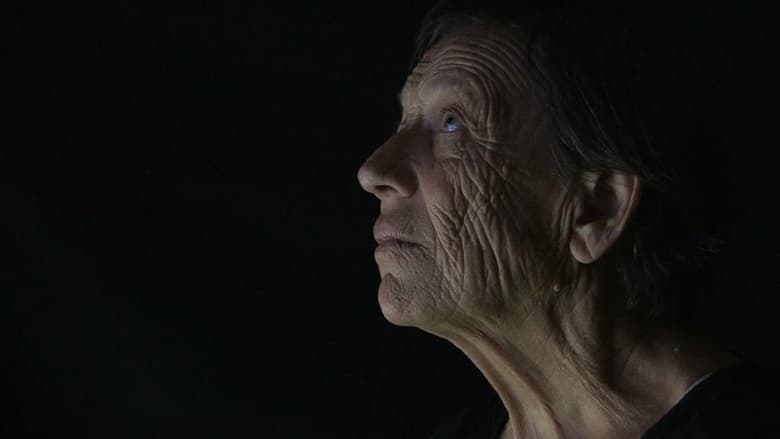
Six elderly retired women, two from Buenos Aires, Argentina; two from Montevideo, Uruguay; and two from Madrid, Spain, have something in common, despite their different interests and lives: they go to the movies almost every day.
Details
Budget
$0
Revenue
$0
Runtime
72 min
Release Date
2017-04-20
Status
Released
Original Language
Spanish
Vote Count
11
Vote Average
6.182
Cast
Meet the talented actors who bring the movie to life.
Norma Bárbaro
Self - Cinephile
Estela Clavería
Self - Cinephile
Lucía Aguirre
Self - Cinephile
Leopoldina Novoa
Self - Cinephile
Paloma Díez-Picasso
Self - Cinephile
Chelo Plaza Domínguez
Self - Cinephile
Similar Movies
Explore movies similar to this one that you might also enjoy.
0.0
Nos va la marcha
1979-05-04 | es
0.0
Więcej światła. Festiwal operatorów filmowych Camerimage '97
A film about the 5th International Film Festival of Cinematographers "Camerimage '97," which was held traditionally in Toruń from November 30 to December 6 last year. The author attempts to present the psychological and technical conditions of the cinematographer's profession and to sketch a collective portrait of those who practice it. The program includes interviews with the world's most outstanding cinematographers. Last year's festival brought together such great names as Ron Fortunato, Jack N. Green, and Vilmos Zsigmond. The film also shows workshops led by the best professionals in the field. Students exploring the secrets of this difficult art will talk about their expectations of the cinematographer profession. The individual sequences of the film have been composed by the director in such a way that they form a narrative sequence according to the growing emotions and moods, abstracting from the chronology of the festival events.
1998-01-01 | pl
6.5
Marisol: llámame Pepa
A portrait of the actress and singer Pepa Flores, an incarnation of the recent history of Spain, who, in just twenty-five years of intense career, went from being Marisol, child prodigy of the Franco dictatorship, to being one of the first communist militants, icon of the Transition; an idol of the masses who became a discreet person after having claimed her right to remain silent.
2024-05-10 | es
4.5
100 Years of the UFA
The intricate history of UFA, a film production company founded in 1917 that has survived the Weimar Republic, the Nazi regime, the Adenauer era and the many and tumultuous events of contemporary Germany, and has always been the epicenter of the German film industry.
2017-08-28 | de
6.0
Satan's Blood: recuerdos de «Escalofrío»
The story of the shooting of Satan's Blood (Escalofrío), a film directed by Carlos Puerto in 1978.
2016-10-15 | es
0.0
Il coraggio del leone
2021-06-03 | it
7.1
The Arrival of a Train at La Ciotat
A group of people are standing along the platform of a railway station in La Ciotat, waiting for a train. One is seen coming, at some distance, and eventually stops at the platform. Doors of the railway-cars open and attendants help passengers off and on. Popular legend has it that, when this film was shown, the first-night audience fled the café in terror, fearing being run over by the "approaching" train. This legend has since been identified as promotional embellishment, though there is evidence to suggest that people were astounded at the capabilities of the Lumières' cinématographe.
1896-06-30 | fr
8.6
The Dawn of Kaiju Eiga
Japan, 1954. A legend emerges from the ashes of Hiroshima and Nagasaki, devastated by atomic bombs in 1945. The creature's name is Godzilla. The film that tells its story is the first of kaiju eiga, the giant monster movies.
2019-04-02 | es
4.6
Nice Girls Don't Stay for Breakfast
In the late 1990s, iconic photographer Bruce Weber barely managed to convince legendary actor Robert Mitchum (1917-97) to let himself be filmed simply hanging out with friends, telling anecdotes from his life and recording jazz standards.
2019-02-27 | en
0.0
Phantoms of the Sierra Madre
A Danish writer travels to Mexico with the purpose of locating a mysterious Apache tribe that fervently seeks to remain in obscurity.
2024-09-20 | en
7.3
The Rebellious Olivia de Havilland
The legendary British-American actress Olivia de Havilland (1916-2020), who conquered Hollywood in the thirties, challenged the film industry when, in 1943, she took on the all-powerful producer Jack Warner in court, forever changing the ruthless working conditions that restricted the essential rights and freedom of artists.
2021-07-02 | fr
7.8
Zombies in the Sugar Cane Field: The Documentary
Tucumán, Argentina, 1965. Three years before George A. Romero's Night of the Living Dead was released, director Ofelio Linares Montt shot Zombies in the Sugar Cane Field, which turned out to be both a horror film and a political statement. It was a success in the US, but could not be shown in Argentina due to Juan Carlos Onganía's dictatorship, and was eventually lost. Writer and researcher Luciano Saracino embarks on the search for the origins of this cursed work.
2019-11-08 | es
6.3
Auge in Auge - Eine deutsche Filmgeschichte
This is not merely another film about cinema history; it is a film about the love of cinema, a journey of discovery through over a century of German film history. Ten people working in film today remember their favourite films of yesteryear.
2008-07-03 | de
0.0
The Andes's Odyssey
A documentary revolving around the 1972 crash of the plane carrying an Uruguayan rugby team; interviews with survivors and the families of victims.
1976-02-12 | es
0.0
Omnibus: François Truffaut
1973-12-02 | en
6.0
White Walls Say Nothing
Buenos Aires is a complex, chaotic city. It has European style and a Latin American heart. It has oscillated between dictatorship and democracy for over a century, and its citizens have faced brutal oppression and economic disaster. Throughout all this, successive generations of activists and artists have taken to the streets of this city to express themselves through art. This has given the walls a powerful and symbolic role: they have become the city’s voice. This tradition of expression in public space, of art and activism interweaving, has made the streets of Buenos Aires into a riot of colour and communication, giving the world a lesson in how to make resistance beautiful.
2017-05-02 | es
8.0
The Forbidden Reel
According to the official history of Afghanistan, ruthless destruction has always prevailed over art and creation; but there is another tale to be told, the forgotten account of a diverse and progressive country, seen through the lens of innovative filmmakers, a story that survives thanks to a few brave Afghans, a small but very passionate group that secretly fought to save a huge film archive that was constantly menaced by war and religious fanaticism.
2020-03-03 | en
5.2
Spain '68
Spain, 1968. An analysis of the political and social situation of the country, suffocated by the boot of General Franco's tyrannical regime. (Filmed clandestinely in Madrid and Barcelona during the spring of 1968.)
1968-01-01 | es
6.5
Journey to Somewhere
A young woman, who has inherited her grandparents' huge house, a fascinating place full of amazing objects, feels overwhelmed by the weight of memories and her new responsibilities. Fortunately, the former inhabitants of the house soon come to her aid. (An account of the life and work of Fernando Fernán Gómez [1921-2007] and his wife Emma Cohen [1946-2016], two singular artists and fundamental figures of contemporary Spanish culture.)
2021-11-23 | es
6.0
Dark Glamour: The Blood and Guts of Hammer Productions
The greatness, fall and renaissance of Hammer, the flagship company of British popular cinema, mainly from 1955 to 1968. Tortured women and sadistic monsters populated oppressive scenarios in provocative productions that shocked censorship and disgusted critics but fascinated the public. Movies in which horror was shown in offensive colors: dreadful stories, told without prejudices, that offered fear, blood, sex and stunning performances.
2017-08-06 | fr