Loading

Beatles Electroniques
Genres
Music
Overview
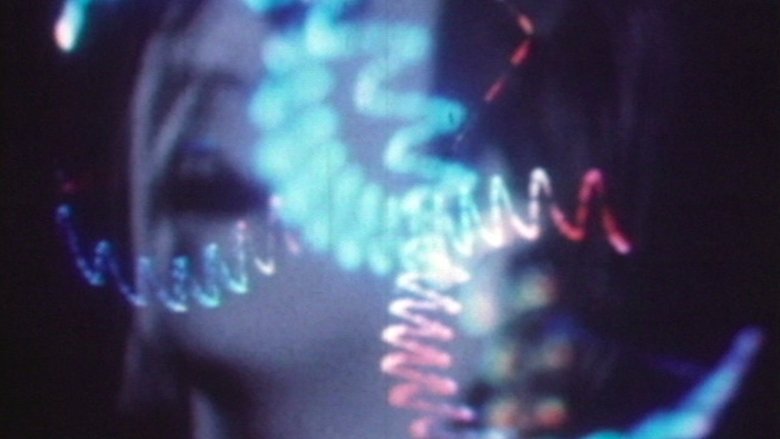
Part of a collection of restored early works by Nam June Paik, the haunting Beatles Electronique reveals Paik's engagement with manipulation of pop icons and electronic images. Snippets of footage from A Hard Day's Night are countered with Paik's early electronic processing.
Details
Budget
$0
Revenue
$0
Runtime
3 min
Release Date
1969-01-01
Status
Released
Original Language
English
Vote Count
2
Vote Average
8
Cast
Meet the talented actors who bring the movie to life.
John Lennon
Self (archive footage) (uncredited)
Paul McCartney
Self (archive footage) (uncredited)
Ringo Starr
Self (archive footage) (uncredited)
George Harrison
Self (archive footage) (uncredited)
Similar Movies
Explore movies similar to this one that you might also enjoy.
10.0
This Cacophony Runs Over Me
This cacophony runs over me, over everything I see, everything I want to see: it's me.
2017-06-04 | en
7.0
Moonwalker
This fantastical movie inspired by the music of Michael Jackson features imaginative interpretations of hit tracks from the iconic 1987 album “Bad”.
1988-10-29 | en
0.0
The Astronaut
A short film recounting the travels of a lonely astronaut confronted by the unknown. Unfolding as a mystery, it becomes a carefully subtle, autobiographical examination of the feeling of loneliness and the existential issue of not understanding life on earth and ones place among it.
2017-09-19 | en
0.0
The Beatles: John
One of four biopics—all to be released in April 2028—focusing on individual members of The Beatles, this one telling the story of the group from the perspective of John Lennon.
| en
0.0
The Beatles: George
One of four biopics—all to be released in April 2028—focusing on individual members of The Beatles, this one telling the story of the group from the perspective of George Harrison.
| en
0.0
The Beatles: Paul
One of four biopics—all to be released in April 2028—focusing on individual members of The Beatles, this one telling the story of the group from the perspective of Paul McCartney.
| en
0.0
The Beatles: Ringo
One of four biopics—all to be released in April 2028—focusing on individual members of The Beatles, this one telling the story of the group from the perspective of Ringo Starr.
| en
8.0
Mr. Moonlight: The Beatles Budokan Performance 1966 - A Dream We Had Together
The documentary about how Beatles went popular in Japan and did a concert in Budokan back in 1966.
2023-01-27 | ja
0.0
How I See Sunsets
A poetic, semi-autobiographical short film of the sun setting over a village, shot from behind the curtains of a small, dimly lit room.
2017-08-29 | en
10.0
Hiding Under a Copy of the Strokes' Single 'Under Cover of Darkness'
Hiding inside&out, writhing about, taken out&in.
2017-05-30 | en
10.0
Always Aching & Bending Back
Slowed, stowed, achingly retold.
2017-06-11 | en
5.9
Cremaster 5
Cremaster 5 is a five-act opera (sung in Hungarian) set in late-ninteenth century Budapest. The last film in the series, Cremaster 5 represents the moment when the testicles are finally released and sexual differentiation is fully attained. The lamenting tone of the opera suggests that Barney invisions this as a moment of tragedy and loss. The primary character is the Queen of Chain (played by Ursula Andress). Barney, himself, plays three characters who appear in the mind of the Queen: her Diva, Magician, and Giant. The Magician is a stand-in for Harry Houdini, who was born in Budapest in 1874 and appears as a recurring character in the Cremaster cycle.
1997-10-24 | hu
0.0
Roda Viva Roda Brasil
2019-01-06 | pt
10.0
Kinda Cool to Expend This Much Drool
Don't ask me why, but I feel we're about to cry trying.
2017-06-17 | en
10.0
Leafing You Behind
Abandoning the Abaddon-loathed abandoner opens plenty of reclaimed... everything(s).
2017-06-17 | en
10.0
What Was It Supposed to Be Like?
Rather pointless, rather stilted, fetid; not what we want us going after.
2017-06-19 | en
10.0
No Impersonator , Perpetrator
Pounding backbeats beaten by [(Don't Get)] warm[welcomes]th.
2017-06-10 | en
10.0
Revisited Remunerations Rapturously Collapse When Recompensed
Your raging romp results only in rescinded regret @ the hands of radder cadets.
2017-06-13 | en
0.0
All this Roughness
An unnamed passer-by is forced to trace a circular route inside an abandoned tram station, facing loss and time. The broken walls act as a channel, transmitting fragmentary, blurred and analogical memories.
2020-09-02 | es
0.0
Metaphysics of Sound
Adopting mainly hand contact printing with photographic enlarger, «Metaphysics of sound» started from September of 2006 and completed in July of 2007. With a 35mm soundtrack image, I made a hand-drawn soundtrack on the 16mm film strip. The sounds were made either by directly contact printing the 35mm sound tracks or collaging the scratch images. According to pattern of sound on the 20% blank of 16mm film strip (normally used as space for optical recording), I edited whole image and made structure of film. Hence the margin is a where image is sound, and vice versa. Later, I studied the sound patterns which varied according to the kinds of images used or the concentration of the image, and made various attempts at rearranging the structure of the sound with the image.
2008-01-01 | xx