Loading
The Universal Language
Genres
Documentary
Overview
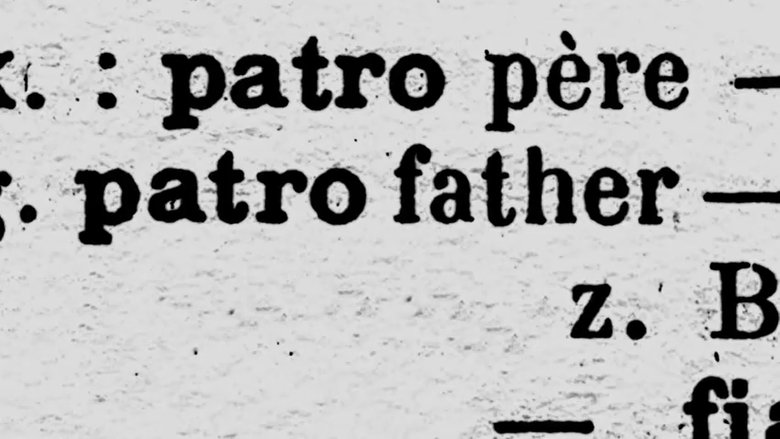
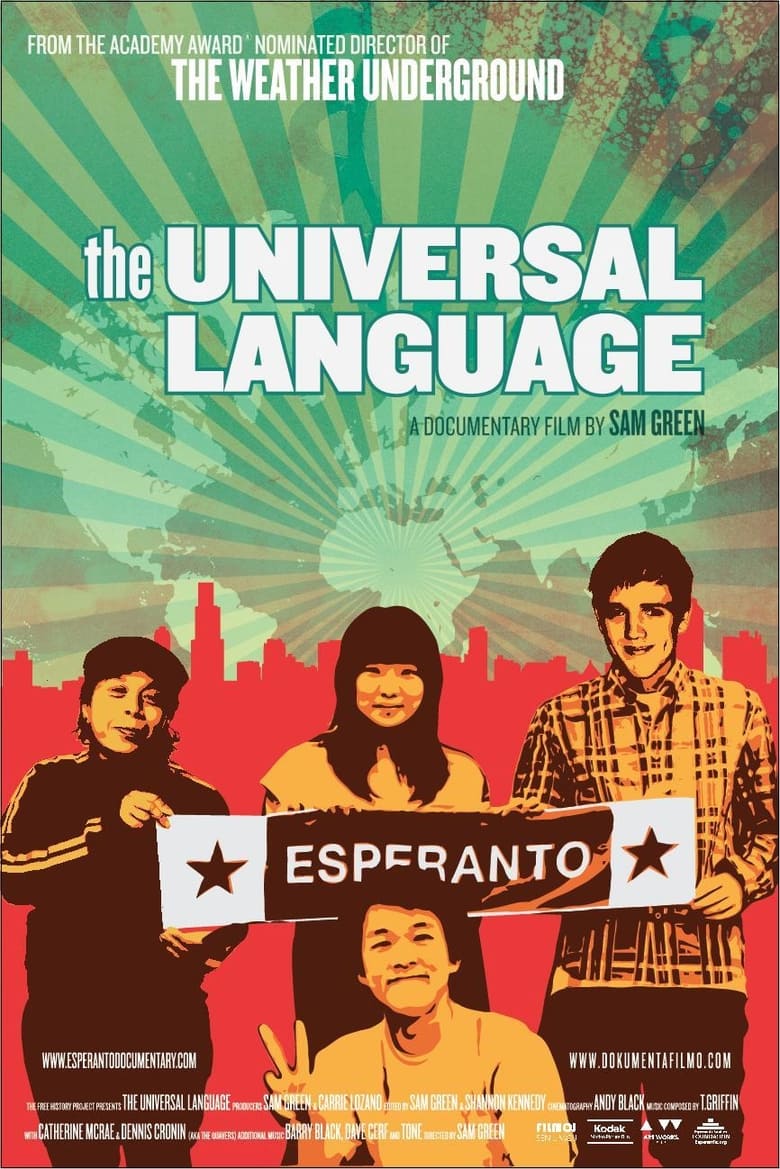
The Universal Language is a new documentary from Academy Award-nominated director Sam Green (The Weather Underground). This 30-minute film traces the history of Esperanto, an artificial language that was created in the late 1800s by a Polish eye doctor who believed that if everyone in the world spoke a common tongue, humanity could overcome racism and war. Fittingly, the word “Esperanto” means “one who hopes.” During the early 20th century, hundreds of thousands of people around the world spoke Esperanto and believed in its ideals. Today, surprisingly, a vibrant Esperanto movement still exists. In this first-ever documentary about Esperanto, Green creates a portrait of the language and those who speak it today that is at once humorous, poignant, stirring, and ultimately hopeful.
Details
Budget
$100000
Revenue
$0
Runtime
31 min
Release Date
2011-10-10
Status
Released
Original Language
English
Vote Count
1
Vote Average
6
Cast
Meet the talented actors who bring the movie to life.
Similar Movies
Explore movies similar to this one that you might also enjoy.
6.1
The Anti-Vax Conspiracy
Who are the people behind the international anti-Covid-vaccine movement and why are they doing it? This journey inside the astonishing world of the anti-vaxxers finds out.
2021-06-01 | en
8.0
Keep Talking
Three Alaska Native women work to save their endangered language, Kodiak Alutiiq, and ensure the future of their culture while confronting their personal demons. With just 41 fluent Native speakers remaining, mostly Elders, some estimate their language could die out within ten years. The small community travels to a remote Island, where a language immersion experiment unfolds with the remaining fluent Elders. Young camper Sadie, an at-risk 13 year old learner and budding Alutiiq dancer, is inspired and gains strength through her work with the teachers. Yet PTSD and politics loom large as the elders, teachers, and students try to continue the difficult task of language revitalization over the next five years.
2017-03-16 | en
0.0
The Navel of the World
“Te Pito o Te Henua” (The Navel of the World) tells the story of the community behind Rapa Nui’s largest and most colorful annual Indigenous celebration, the Tāpati Rapa Nui Festival. Honoring ancient rites and competitions, Rapa Nui families participate in nine days of athletic feats, cultural demonstrations and ceremonies paying respect to the land, water and other natural beings of the island. They also crown a Queen to represent her people for a year throughout Polynesia and on the world stage. The film traces the journey of 19-year-old candidate Vaitiare and her family as they join work to earn her the crown and represent this small but well-known island as its people fight for increased autonomy and recognition on the world stage. Through intimate character portraits, behind-the-curtain moments and heartfelt musical performances, “Te Pito o Te Henua” reveals the true meaning of Tāpati and the deep connections the Rapa Nui share with their lands and waters.
2024-06-14 | en
0.0
Perghuzat
Forced by the dangerous state of his homeland, Perghuzat moved to Berlin. He is alone, working small jobs day and night to survive. The profound clash of cultures, the linguistic barrier and the lack of spare time lead him into a condition of extreme isolation.
| en
10.0
Words From Home
WORDS FROM HOME is a poetic documentary that explores the kinds of affection and identity in the portuguese language spoken in Brazil. Through migrants' stories and their reflections, the movie reveals how expressions, accents and memories form emotional and cultural bonds, showing how speaking connects us, differentiates us and, above all, brings us closer together.
2025-04-08 | pt
7.0
Kampen om Grønland
The world's largest island has been part of Denmark since 1721, but a significant majority of the 56.000 inhabitants now want independence. They feel their culture and language is threatened and is the main reason for the many suicides among young people. But the Danish speaking Greenlanders feel discriminated and want to keep the ties to Denmark. The film follows four strong young Greenlanders, who each in their own way insist on taking responsibility for the future of their country. The documentary explores the difficult balance between the right to self-determination and xenophobic nationalism. Between traditional culture and globalization.
2020-03-17 | kl
6.0
Pidgin: The Voice of Hawai'i
What if you are made to feel ashamed when you speak your "mother tongue" or ridiculed because of your accent? "Pidgin: The Voice of Hawai'i" addresses these questions through its lively examination of Pidgin - the language spoken by over half of Hawai'i's people.
2009-10-18 | en
0.0
Cree Code Talker
CREE CODE TALKER reveals the role of Canadian Cree code talker Charles 'Checker' Tomkins during the Second World War. Digging deep into the US archives it depicts the true story of Charles' involvement with the US Air Force and the development of the code talkers communication system, which was used to transmit crucial military communications, using the Cree language as a vital secret weapon in combat.
2016-10-01 | en
6.7
The Brave Class
Three college students start a social experiment to prove that reality changes according to the words we use to describe it. Through research, activist actions, and artistic interventions, they analyze the importance of language in the way we understand the world. The documentary includes analysis from more than 20 international experts and leaders in the fields of political communication and information.
2017-06-02 | es
8.5
The Nightingale Sings
The movie explores the origin of the Ukrainian language and persecution of those who defended its authenticity. Using examples of other countries, creators of the film prove that a nation cannot exist without a language.
2019-11-05 | uk
10.0
Language Matters with Bob Holman
There are over 6,000 languages in the world. We lose one every two weeks. Hundreds will be lost within the next generation. By the end of this century, half of the world's languages will have vanished. Language Matters with Bob Holman is a two hour documentary that asks: What do we lose when a language dies? What does it take to save a language?
2015-01-25 | en
7.0
The Yes Men Fix the World
THE YES MEN FIX THE WORLD is a screwball true story about two gonzo political activists who, posing as top executives of giant corporations, lie their way into big business conferences and pull off the world's most outrageous pranks.
2009-01-18 | en
0.0
Colours of the Alphabet
It is estimated that 40% of the world’s population lack the opportunity to be educated in their own language. In Colours of the Alphabet we get an insight into the challenges this poses as we follow a group of first graders in Zambia – a country with 72 local languages where education is primarily offered in English.
2016-02-21 | en
9.0
Those Who Come, Will Hear
The documentary proposes a unique meeting with the speakers of several indigenous and inuit languages of Quebec – all threatened with extinction. The film starts with the discovery of these unsung tongues through listening to the daily life of those who still speak them today. Buttressed by an exploration and creation of archives, the film allows us to better understand the musicality of these languages and reveals the cultural and human importance of these venerable oral traditions by nourishing a collective reflection on the consequences of their disappearance.
2018-06-08 | iu
0.0
Mom n' Me
The filmmaker traces the loss of her ancestral language over three generations of her family, and her own desire to recover it.
2010-06-09 | en
0.0
Chasing Voices: The Story of John Peabody Harrington
For 50 years, controversial ethnographer John Peabody Harrington crisscrossed the United States, frantically searching and documenting dying Native American languages. Harrington amassed over a million pages of notes on over 150 different tribal languages. Some of these languages were considered dead until his notes were discovered. Today tribes are accessing the notes, reviving their once dormant languages, and bringing together a new generation of language learners in the hope of saving Native languages.
2021-04-30 | en
0.0
Grape Soda in the Parking Lot
Taqralik Partridge asks what if every language that had been lost to English — every word, every syllable — grew up out of the ground in flowers? Taqralik’s grandmother’s Scottish Gaelic and her father’s Inuktitut unfold in memories of her family, of pain, and of love.
2023-05-02 | en
0.0
Kuya Noy
Noy Pillora, once a Filipino rock legend, now lives in the slums of Tel-Aviv and works as a cleaner. At the age of 61, he picks up his old guitar and dares to dream of a new future.
2019-10-19 | en
2.8
Tonite Let's All Make Love in London
Peter Whitehead’s disjointed Swinging London documentary, subtitled “A Pop Concerto,” comprises a number of different “movements,” each depicting a different theme underscored by music: A early version of Pink Floyd’s “Interstellar Overdrive” plays behind some arty nightclub scenes, while Chris Farlowe’s rendition of the Rolling Stones’ “Out of Time” accompanies a young woman’s description of London nightlife and the vacuousness of her own existence. In another segment, the Marquess of Kensington (Robert Wace) croons the nostalgic “Changing of the Guard” to shots of Buckingham Palace’s changing of the guard, and recording act Vashti are seen at work in the studio. Sandwiched between are clips of Mick Jagger (discussing revolution), Andrew Loog Oldham (discussing his future) – and Julie Christie, Michael Caine, Lee Marvin, and novelist Edna O’Brien (each discussing sex). The best part is footage of the riot that interrupted the Stones’ 1966 Royal Albert Hall concert.
1967-09-26 | en
0.0
put the goat in the goat boat
“Let’s think of nature as a big room. Nature is a room you know you’ll have to leave some day, most likely not by choice”. Heather Phillipson’s hallucinatory video put the goat in the goat boat explores endless declinations of nature—natural, naturing, finding a better nature, the nature construction, nature on loan, nature’s lack of nudity...—while revealing humanity’s ambiguous relationship to it.
2014-10-03 | en