Loading

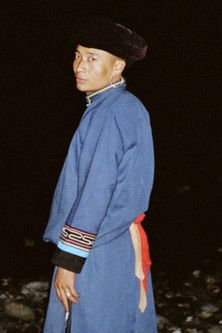
Young Masters: Shibi
Meet the young guardian of China’s ancient Qiang culture
Genres
Documentary
Overview
Young Masters is an original series commissioned by NOWNESS China focusing on traditional Chinese cultures, and how they continue to be defined by a new generation of the country's youth. High above the clouds in a village in Mao County in Sichuan Prefecture, a post-90’s generation of young cultural guardians work to uphold the values and traditions of ancient Qiang culture. These cultural guardians, known as a ‘Shibi’, remain especially vital for a culture whose knowledge and language exist merely through practice and in sound, and without script. The role of a Shibi involves that of a priest, alongside folk rap, singing, and dance performances, amongst others. As a result, Qiang people have endowed them with a sacred status, believing that they possess a psychic power.
Details
Budget
$0
Revenue
$0
Runtime
5 min
Release Date
2021-01-21
Status
Released
Original Language
Chinese
Vote Count
0
Vote Average
0
Cast
Meet the talented actors who bring the movie to life.
Erma Zex
Himself
Similar Movies
Explore movies similar to this one that you might also enjoy.
0.0
Jackie Chan Edition: Seine spektakulärsten Kämpfe
2009-07-30 | de
10.0
The American Folk Blues Festival 1962-1969, Vol. 3
Taken from the European tours organised for American blues musicians between 1962 and 1969, this release features performances by several popular blues artists, including: Big Mama Thornton, Roosevelt Sykes, Buddy Guy, Dr. Isaiah Ross, Big Joe Turner, Skip James, Bukka White, Son House, Hound Dog Taylor and Little Walter, Koko Taylor and Little Walter, Sonny Terry and Brownie McGhee, Helen Humes, Earl Hooker, and Muddy Waters.
2004-08-31 | en
2.0
Muxes
Highlighting the unique culture of the Zapotec people of Oaxaca, Mexico, this groundbreaking documentary chronicles the lives of those who identify as muxes, a widely recognized third gender.
2022-11-17 | es
7.2
The China Hustle
An unsettling and eye-opening Wall Street horror story about Chinese companies, the American stock market, and the opportunistic greed behind the biggest heist you've never heard of.
2018-03-30 | en
0.0
Wild Honey
| ru
7.1
Manufactured Landscapes
MANUFACTURED LANDSCAPES is the striking new documentary on the world and work of renowned artist Edward Burtynsky. Internationally acclaimed for his large-scale photographs of “manufactured landscapes”—quarries, recycling yards, factories, mines and dams—Burtynsky creates stunningly beautiful art from civilization’s materials and debris.
2006-09-09 | en
0.0
Essence of Healing: The Journey of American Indian Nurses
Essence of Healing is a documentary exploring the life journeys of 14 American Indian nurses - their experiences growing up, their experiences in nursing school, and their experiences on the job. They are part of a larger story - a historical line of care and compassion that has run through hundreds of indigenous tribes for thousands of years.
2017-10-02 | en
0.0
Cathedrals
The city of Ordos, in the middle of China, was build for a million people yet remains completely empty. Ordos is not so much a place but a symbol of babylonic hype. But nothing will change - as long as people believe.
2014-07-04 | de
0.0
Yulu
The film uses a documentary approach to tell the stories of 12 Chinese pioneers, chosen from the fields of business and the arts. The protagonists reflect upon their life journeys against the backdrop of modern China.
2011-01-01 | zh
9.0
In the Time of the Count
At the forests of Östergötland, where land meets sea, rests the old castle Herrborum. Here lives count Magnus Stenbock, 92, according to his own ideas about what is appropriate and what is not. Film-maker Helena Nygren is fascinated by the count and the castle, and is allowed to film on the condition that she takes the role of companion lady. Over one year, Helena returns several times to take part of count Magnus Stenbock and his servants life on castle Herrborum in Östergötland. Time stands still on the castle, and in the movie Helena wants to preserve the fairy tale feeling she gets when she steps into these ancient surroundings. The count is a strong personality with strong opinions and a great interest in history. All kinds of people come to his castle to savor the special atmosphere and follow the old fashioned rules of etiquette. Helena transforms from an observer to a lady who participates in the social games on the estate, where everything moves around its own time axis.
2004-12-29 | sv
9.0
Women 50 Minutes
A representation of queer and feminist imagery that was mainly shot in the Qinghai-Tibetan Plateau, remote and developing areas in southwest China, and metropolitan cities like Beijing from 2000 to 2004 to document the social changes in contemporary China. The director sympathetically and erotically represents a variety of women, including women as laborers, women as prayers, women in the ground, women in marriage, and women who lie on the funeral pyre with their dead husbands. Her camera juxtaposes the mountains and rivers in old times, the commercialized handicrafts as exposition, the capital exploitation of the elders’ living space, and the erotic freedom of the young people in a changing city.
2007-12-02 | zh
0.0
Return Home
After the near death of her grandfather, Chinese Canadian filmmaker Michelle Wong embarks on a personal journey back home to her small town of St. Paul, Alberta to speak to her grandparents about their journey from China to Canada.
1992-05-01 | en
0.0
HAND. LINE. COD.
In the coldest waters surrounding Newfoundland's rugged Fogo Island, "people of the fish"—traditional fishers—catch cod live by hand, one at a time, by hook and line. After a 20-year moratorium on North Atlantic cod, the stocks are returning. These fishers are leading a revolution in sustainability, taking their premium product directly to the commercial market for the first time. Travel with them from the early morning hours, spend time on the ocean, and witness the intricacies of a 500-year-old tradition that's making a comeback.
2016-09-14 | en
7.0
This Is My Body
Jérôme was sexually abused as a child by a priest. In a deeply personal film, he tries to search for clues in his memories and come to terms with the complicity of his former social environment.
2025-01-25 | fr
0.0
Ratamata
A portrait of the diverse opinions of Chicagoans as they reflect on the general state of affairs in America, the war in Vietnam, social and racial conflict, freedom and personal liberty, happiness, and social justice. Ratamata was made by future Tom Palazzolo collaborator Kreines when he was 16 years old, and was an award winner at the Young Chicago Filmmakers Festival.
1970-01-01 | en
8.0
China's Lost Pyramids
In China, there exists an astonishing place. A burial ground to rival Egypt’s Valley of the Kings, where pyramid tombs of stupendous size are full of astonishing riches. In 221 BC, China's first Emperor united warring kingdoms into a nation that still exists today. To memorialise this achievement, he bankrupted the national treasury and oppressed thousands of workers to build one of the world’s biggest mortuary complexes. China's second dynasty, the Han, inherited the daunting challenge of building larger tombs to command respect and establish their right to rule without running the nation into the ground. Although no Han emperor's tomb has been opened, the tombs of lesser Han aristocrats have revealed astonishing things: complete underground palaces (including kitchens and toilets) and at least one corpse so amazingly well-preserved some believe Han tomb-builders knew how to "engineer immortality".
2010-09-24 | en
8.2
Forbidden City: The Great Within
Amidst the grand walls of the Forbidden City, the film takes us on a deep journey through the ceremonial life of the Chinese emperor, unveiling the secrets and intrigues of concubines, eunuchs, and palace maids. As the West begins to influence China in the late 19th century, the dynamics within the city shift dramatically. The film highlights the preservation and restoration of invaluable treasures and paintings, culminating in the creation of the Palace Museum. With insights from renowned China scholar, Jonathan Spence, this is an intimate exploration of the rich cultural and historical tapestry that makes up the heart of ancient China.
1995-10-02 | en
7.0
Woven Songs of the Amazon
The Shipibo-Konibo people of Peruvian Amazon decorate their pottery, jewelry, textiles, and body art with complex geometric patterns called kené. These patterns also have corresponding songs, called icaros, which are integral to the Shipibo way of life. This documentary explores these unique art forms, and one Shipibo family's efforts to safeguard the tradition.
2007-01-01 | en
0.0
Stories Are in Our Bones
In this layered short film, filmmaker Janine Windolph takes her young sons fishing with their kokum (grandmother), a residential school survivor who retains a deep knowledge and memory of the land. The act of reconnecting with their homeland is a cultural and familial healing journey for the boys, who are growing up in the city. It’s also a powerful form of resistance for the women.
2020-03-08 | en
0.0
China: A Class By Itself
An inside look at China working towards the goal of becoming a superpower by the year 2000 via education as the key to modernization. Filmed in Peking, on a rural commune in central China, and in the industrial northeast region, Jack Reynolds interviews Vice Premier Fang Yi and the president of Peking University, as well as students, workers, and peasants.
1979-01-01 | en