Loading

Friends After 3.11
Genres
Documentary
Overview
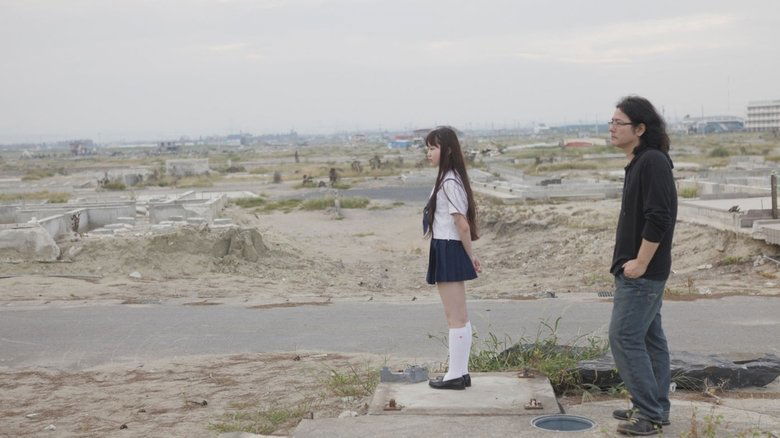
In March 2011, Japan was struck by a catastrophic earthquake, with the devastating tsunami that followed causing a meltdown at the Fukushima nuclear power station that sent ripples of discontent throughout the country. Director Iwai Shunji's Friends after 3.11 (2011) is a deeply personal documentary which uses the statements of some of his closest friends to express the views of a society in a state of political despondency.
Details
Budget
$0
Revenue
$0
Runtime
132 min
Release Date
2011-10-01
Status
Released
Original Language
Japanese
Vote Count
2
Vote Average
7
Cast
Meet the talented actors who bring the movie to life.
Eriko Kitagawa
Miyuki Matsuda
Taro Yamamoto
Takeshi Kobayashi
Takashi Uesugi
Cocoro Fujinami
Similar Movies
Explore movies similar to this one that you might also enjoy.
0.0
Inferno: The Burning of the SS Morro Castle
A documentary covering the harrowing tragedy of the SS Morro Castle.
2025-01-20 | en
7.0
Under the Cloud
An investigation into the unfolding history of nuclear testing, uranium mining, and nuclear waste disposal on indigenous lands in the US. It raises the voices of those who witnessed and experienced the consequences of nuclear colonialism and those who still resist.
2023-08-30 | en
5.2
The Horses of Fukushima
Fukushima's Minami-soma has a ten-centuries-long tradition of holding the Soma Nomaoi ("chasing wild horses") festival to celebrate the horse's great contribution to human society. Following the meltdown of the Fukushima Daiichi Nuclear Power Plant in the wake of the March 11, 2011 earthquake and tsunami, local people were forced to flee the area. Rancher Shinichiro Tanaka returned to find his horses dead or starving, and refused to obey the government's orders to kill them. While many racehorses are slaughtered for horsemeat, his horses had been subjected to radiation and were inedible. Yoju Matsubayashi, whose "Fukushima: Memories of the Lost Landscape" is one of the most impressive documentaries made immediately after the disaster, spent the summer of 2011 helping Tanaka take care of his horses. In documenting their rehabilitation, he has produced a profound meditation on these animals who live as testaments to the tragic bargain human society made with nuclear power.
2013-12-01 | ja
5.0
Reflection
Eerie images of landscapes after the Fukushima nuclear disaster shot on black and white 8mm.
2014-01-01 | ja
0.0
Record of Life: Those Who Fought in the Okawa Tsunami Trial
On March 11, 2011, Okawa Elementary School in Ishinomaki City was engulfed by a tsunami, and 74 children, or 70% of the school's children, were killed. 51 minutes elapsed between the earthquake and when the tsunami reached the school. The school was informed of the tsunami and a school bus was on standby, but students did not evacuate. Okawa Elementary was the only school that suffered a large number of casualties in this earthquake. This documentary follows the lawsuit that followed the disaster, where the parents sought the truth behind the tragedy.
2023-02-18 | ja
0.0
Wolsong: Vanishing Town
2019-12-12 | ko
0.0
Your Chance to Live: Nuclear Disaster
Portrays the challenges of creating a film about nuclear disaster amid public apathy. It captures behind-the-scenes moments as the crew discusses the gravity of nuclear threats, the importance of preparation, and the emotional impact of a nuclear attack. The narrative emphasizes the need for individuals to take responsibility for their safety and community in the event of an attack, blending factual information with a call to action.
1974-02-20 | en
0.0
Quintinshill: Britain's Deadliest Rail Disaster
Neil Oliver describes the worst ever railway accident in the UK, which happened a hundred years ago on 22 May 1915, in which three trains collided at Quintinshill near Gretna Green. One of the trains was a troop train taking soldiers to fight in World War I at the Battle of Gallipoli: many of the dead were in this train which caught fire due to escaped gas from the archaic gas lighting in the carriages. The cause of the crash was attributed to a catastrophic signalman's error, but Neil examines whether there were other contributory factors and whether there was a cover-up to prevent investigation of them, making convenient scapegoats of the signalmen.
2015-05-20 | en
0.0
I'm So Sorry
In a quiet forest, a sign warns of radiation hazard. “Is this the past or the future?” muses the masked figure who appears like a kind of ghost in nuclear disaster areas. At a time when nuclear power may be re-emerging as an alternative to fossil fuels, this calmly observed and compelling tour takes us to places that may serve as a warning.
2025-07-13 | fr
0.0
Nuclear Danger
2022-06-18 | ar
8.0
Catastrophe
A film cataloguing some of the world's largest catastrophes.
1977-04-20 | en
10.0
Gerboise Bleue
"Gerboise bleue", the first French atomic test carried out on February 13, 1960 in the Algerian Sahara, is the starting point of France's nuclear power. These are powerful radioactive aerial shots carried out in areas belonging to the French army. Underground tests will follow, even after the independence of Algeria. From 1960 to 1978, 30,000 people were exposed in the Sahara. The French army was recognized recognized nine irradiations. No complaint against the army or the Atomic Energy Commission has resulted. Three requests for a commission of inquiry were rejected by the National Defense Commission. For the first time, the last survivors bear witness to their fight for the recognition of their illnesses, and revealed to themselves in what conditions the shootings took place. The director goes to the zero point of "Gerboise Bleue", forbidden access for 47 years by the Algerian authorities
2009-02-11 | fr
8.0
Uncovering Fukushima
It follows a group of investigators as they return to the nuclear zone in Fukushima to uncover the secrets behind the wildlife that has claimed the toxic environment as its own.
2022-05-15 | en
0.0
Die Mächtigste Bombe der Welt
2011-10-15 | en
0.0
Atomic: History Of The A-Bomb
The smallest of sparks can lead to the largest of explosions. Such is the case of the Atomic Bomb and the minds who have conceived of the deadliest force the world has ever known. This new documentary Atomic: The History of the A-Bomb follows this weapon of mass destruction from inception to detonation.
2019-01-01 | en
0.0
Anatomy of a Disaster: Explosion at BP Texas City Refinery
This U.S. Chemical Safety Board (CSB) video uses expert testimony and computer-animated reenactments to describe and discuss its detailed investigation into the March 23 2005 explosion of the ISOM (isomerization) unit at the BP (British Petroleum) refinery at Texas City, Texas. The explosion killed 15 workers, injured 180 others, and cost BP billions of dollars.
2008-03-21 | en
0.0
Fukushima
The definitive account of Japan’s struggle as it faced a nuclear catastrophe while still reeling from the devastation of an earthquake and tsunami.
| en
9.0
Atomic Africa: Clean Energy's Dirty Secrets
Africa's development is being held back by poor infrastructure and undersized power plants. Countries like Uganda can only produce only 1/4 of the energy needed, leading to daily power cuts with disastrous economic impacts. It's a golden opportunity for nuclear giants who lobby aggressively for more power plants in Africa. But how safe are these new reactors? And what do they mean for the locals?
2013-06-06 | en
0.0
Mothers of Fukushima: Eiko & Yoshiko
Eiko Kanno is a 79 year old grandmother whose life has been completely changed by the nuclear disaster in Fukushima. Her life should have been with her grandchildren but because of the disaster which caused her entire village of Iitate to be evacuated. She now lives by herself in temporary housing. Yoshiko Kanno and her extended family are very important to her changed life. Yoshiko Kanno lost her parents in the evacuation and she found herself living next door to Eiko Kanno. They entertain themselves by telling jokes to each other like a comedic duo. They now live together.
2016-05-07 | ja
0.0
Kobe Shinbun no Nanokakan
Also known as the "Kobe earthquake," the massive earthquake struck the southern Hyogo prefecture on January 17, 1995 and resulted in more than 6,400 casualties. The drama will focus on the reporters working for the Kobe Shimbun, who were determined to keep the newspaper running without interruption, despite the damage suffered during the earthquake. The characters in the drama will all be based on real people, using their real names. Sakurai stars as the photo reporter Tomohiko Mitsuyama, who had joined Kobe Shimbun four years before the earthquake. The show will also have documentary segments such as interviews, including an appearance by Mitsuyama himself.
2010-01-16 | ja