Loading

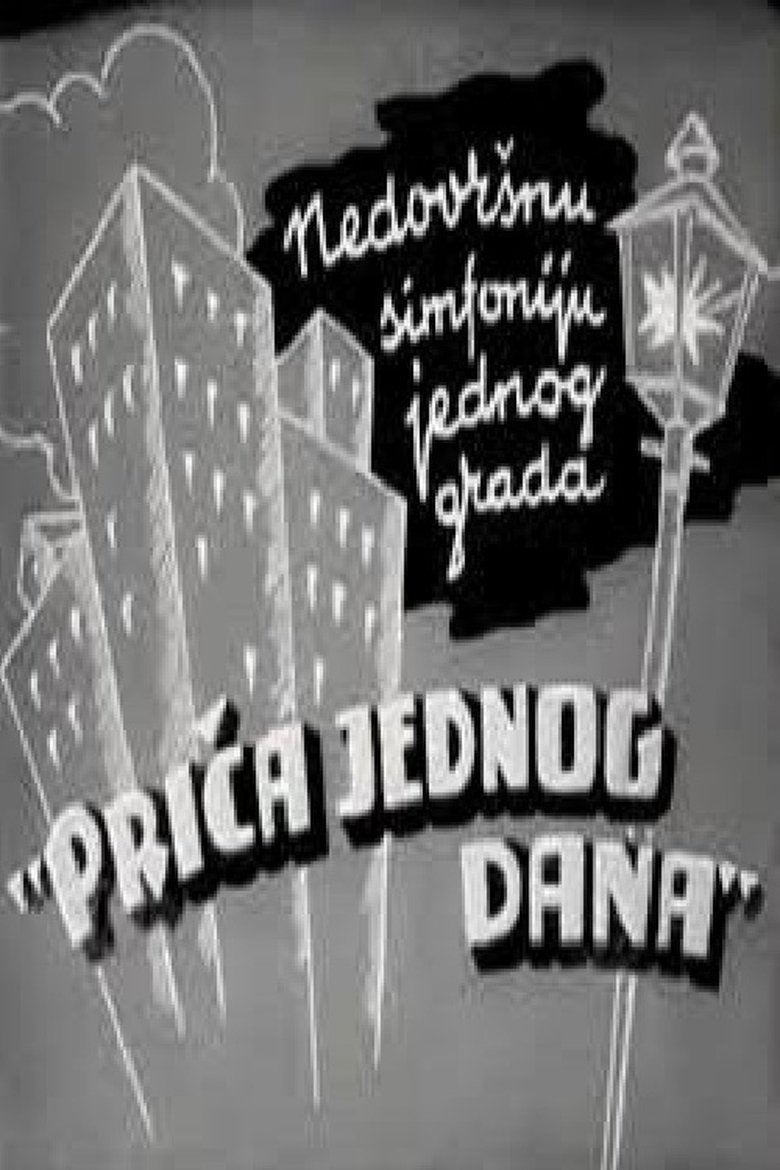
The Story of One Day
Genres
Documentary
Overview
A short film which documents a 24 hour period in the city of Belgrade, Yugoslavia.
Details
Budget
$0
Revenue
$0
Runtime
9 min
Release Date
1941-11-14
Status
Released
Original Language
Vote Count
17
Vote Average
5.6
Cast
Meet the talented actors who bring the movie to life.
Similar Movies
Explore movies similar to this one that you might also enjoy.
7.2
When My Knife Strikes You
Shot in various villages throughout Yugoslavia, this is a disturbing document of a time when people were stabbing each other with knives without any real reason. Murderers, people who witness these murders and the families of victims all talk about the senseless violence and the human condition.
1968-01-01 | sh
6.3
Yugoslavia: How Ideology Moved Our Collective Body
A research-based essay film, but also a very personal perspective on the history of socialist Yugoslavia, its dramatic end, and its recent transformation into a few democratic nation states.
2013-04-01 | sr
0.0
City of Splendour
A documentary about punk and subculture scene of Pula, Croatia from 1978 to 1991, the city that gave birth to one of the most vivid punk and alternative rock scenes in former Yugoslavia, despite having population of just over 60,000 residents.
2013-01-25 | hr
0.0
The Illness and Recovery of Buda Brakus
The protagonists of this docudrama are old farmers who migrated to Banat after the First World War, in 1922. The film is focused on a couple of important events in their impressive lives, which are woven into lively scenes and stories full of wise instances. Their statements become spontaneous recounts of the lives of people in this region.
1980-08-25 | sh
0.0
The Long Road Through Balkan History
Bosnian Croat writer Miljenko Jergović and Serbian writer Marko Vidojković replace one another by the steering wheel of Yugo, a symbol of their common past while driving on the Brotherhood and Unity Highway that stretched across five of six republics of Yugoslavia.
2009-01-01 | en
5.0
Ghetto - The Secret Life of the City
Belgrade in the 1990s seen through the eyes of Goran Čavajda 'Čavke', the late drummer of Serbian rock band "Electric Orgasm". Under dictatorship of Slobodan Milošević, his city became one of the worst places to live in Europe, while the country suffered highest inflation rate in its history, accompanied by mass poverty and political isolation. Documentary follows Čavke walking through the Belgrade streets where total chaos and decline of moral values rule. He finds his only shelter underground, where his friends - musicians and artists - live and work invisibly.
1996-01-01 | sr
6.0
The Happy Child
The Happy Child is a story of "New Wave" rock genre predominant in the ex-Yugoslavia during the socialist 70's and 80's.
2003-01-01 | hr
0.0
Akademija the Republic
Akademija Republika shows a group of people gathered around the club from 1981 until 1995 and how it changed and influenced the cultural and night life around them.
1995-01-01 | sr
0.0
NATO Targets Yugoslavia
An anti-war documentary featuring original on-the-ground footage and interviews from the 1999 NATO war against the Federal Republic of Yugoslavia. Watch the 78 days of untold destruction, bombing bridges, hospitals, schools, and dropping up to 11 tons of depleted uranium across the country that NATO considers a successful “humanitarian intervention” in Yugoslavia. Filmmaker Gloria La Riva lifts the veil of imperialist propaganda to reveal the humanitarian crisis caused by the war.
1999-12-31 | en
8.0
The Other Side of Everything
For Serbian filmmaker Mila Turajlic, a locked door in her mother's apartment in Belgrade provides the gateway to both her remarkable family history and her country's tumultuous political inheritance.
2017-09-11 | sr
10.0
Lost Button
A documentary about Goran Ivandic 'Ipe', the drummer of most popular Yugoslav rock band of all time, Sarajevo-based "Bijelo dugme" (White Button). Ivandic's fatal jump from the balcony of hotel Metropol in Belgrade in 1994 sparked much controversy around his fate.
2015-01-01 | hr
7.3
Once Brothers
Drazen Petrovic and Vlade Divac were two friends who grew up together sharing the common bond of basketball. Together, they lifted the Yugoslavian National team to unimaginable heights. After conquering Europe, they both went to USA where they became the first two foreign players to attain NBA stardom. But with the fall of the Soviet Union on Christmas Day 1991, Yugoslavia split up. A war broke out between Petrovic's Croatia and Divac's Serbia. Long buried ethnic tensions surfaced. And these two men, once brothers, were now on opposite sides of a deadly civil war. As Petrovic and Divac continued to face each other on the basketball courts of the NBA, no words passed between the two. Then, on the fateful night of June 7, 1993, Drazen Petrovic was killed in an auto accident. This film will tell the gripping tale of these men, how circumstances beyond their control tore them apart, and whether Divac has ever come to terms with the death of a friend before they had a chance to reconcile.
2010-10-12 | en
0.0
FC Dinamo: FC Red Star - The War of Liberation Began at Maksimir Stadium
A documentary that explores the events of the disrupted football match between Dinamo (Zagreb) and Crvena Zvezda (Beograd) on May 13th 1990. As fighting broke out the match was cancelled and the events are explored with testimonies from members of Bad Blue Boys and the police of the time. The event is considered by many as the start of the Croatian war for independence (Domovinski rat).
2014-05-13 | hr
0.0
Our Daily Bread Give Us Today
The film shows the work of the Red Cross in Sarajevo during socialist Yugoslavia. The Red Cross has been present in Bosnia and Herzegovina since 1912, and thanks to its work, many families had a hot meal every day.
1978-01-01 | sh
7.0
Bastards of Utopia
Three Croatian activists struggle to change the world. As children, they lived through the violent collapse of Yugoslavia. But now, amid the aftershocks of socialism's failure, they fight in their own way for a new leftism. In the middle of the struggle, a skeptical American is won over by their cause and even goes to jail with them. The activists, whether clashing with police or squatting in an old factory, risk everything to live their politics. But as the setbacks mount, will they give up the fight? The film, shot during years of fieldwork with a Croatian anarchist collective, applies EnMasseFilm's unique blend of observation, direct participation and critical reflection to this misunderstood political movement. Its portrayal of activism is both empathetic and unflinching -- an engaged, elegant meditation on the struggle to re-imagine leftist politics and the power of a country's youth.
2010-03-02 | en
7.1
Cinema Komunisto
This eye-opening and bittersweet chronicle of the Yugoslavian film industry recounts how the cinema was used—often with direct intervention from President Josip Broz Tito—to create and recreate the young nation’s history, replete with heroes and myths that didn’t always hew closely to reality.
2010-01-29 | sr
0.0
Fragments of Humanity
In the Kosovo War, human dignity was shattered by the terrors of the Serbian government and the Albanian liberation army. Truths about the victims’ fates faded away, which is why a Finnish forensic research group led by Helena Ranta got a mission to act as an unbiased agent and investigate the real course of events.
2022-01-31 | fi
0.0
Freedom from Despair
True stories of the Croatian People's struggle to overcome oppression from communist Yugoslavia and the 1990's fight to save their war ravaged homeland.
2004-10-05 | en
7.3
The Weight of Chains
The Weight of Chains is a Canadian documentary film that takes a critical look at the role that the US, NATO and the EU played in the tragic breakup of a once peaceful and prosperous European state - Yugoslavia. The film, bursting with rare stock footage never before seen by Western audiences, is a creative first-hand look at why the West intervened in the Yugoslav conflict, with an impressive roster of interviews with academics, diplomats, media personalities and ordinary citizens of the former Yugoslav republics. This film also presents positive stories from the Yugoslav wars - people helping each other regardless of their ethnic background, stories of bravery and self-sacrifice.
2010-12-17 | en
7.5
EKV: As It Once Was
"Kao da je bilo nekad" is a documentary about band Ekatarina Velika (1981 - 1994). The band had a profound influence on the ex-Yugoslav scene of the 1980s and ended unusually tragic five members of the creative core of the band died between 1992 and 2002 from heroin abuse. The film comprehensively presents the band career with a particular attention to individual destinies of its members while trying to pose the question - who is actually to blame for their early death.
2009-09-01 | sr