Loading
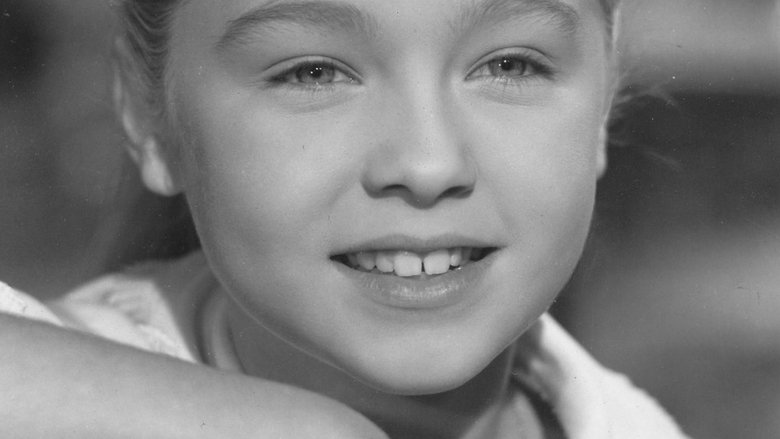

Marisol: llámame Pepa
Genres
DocumentaryHistory
Overview
A portrait of the actress and singer Pepa Flores, an incarnation of the recent history of Spain, who, in just twenty-five years of intense career, went from being Marisol, child prodigy of the Franco dictatorship, to being one of the first communist militants, icon of the Transition; an idol of the masses who became a discreet person after having claimed her right to remain silent.
Details
Budget
$0
Revenue
$0
Runtime
85 min
Release Date
2024-05-10
Status
Released
Original Language
Spanish
Vote Count
2
Vote Average
6.5
Cast
Meet the talented actors who bring the movie to life.
Irene Lázaro
Pepa Flores (voice)
Carla Gris
Marisol (voice)
Amaia Romero
Self
Vicky Flores
Self
César Lucas
Self
Cristina Almeida
Self
Luis García Gil
Self
Fernando Méndez-Leite
Self
Esperanza Aguirre
Self
Nines González
Self
Nativel Preciado
Self
Enrique Cerezo
Self
Cristina Hoyos
Self
Aintzane Rincón
Self
Milena Cervantes
Self
Elvira Lindo
Self
Marta Sanz
Self
Marisol
Self (archive footage)
Similar Movies
Explore movies similar to this one that you might also enjoy.
6.8
Salvador (Puig Antich)
The story of Salvador Puig Antich, one of the last political prisoners to be executed under Franco's Fascist State in 1974.
2006-05-23 | ca
7.2
El campo para el hombre
"El campo para el hombre" was a politically militant documentary about the small holdings of land in the north of Spain and the large estates in the south of the country. This film portrays the exploitation and misery of the Spanish peasants, but also their class-consciousness and their will to fight for their rights and freedom. The film was shot in the late years of Franco's dictatorship, so it was made in secrecy (the directors were connected to the Spanish Communist Party).
1975-01-01 | es
6.2
The Basque Ball: Skin Against Stone
An attempt to create a bridge between the different political positions that coexist, sometimes violently, in the Basque Country, in northern Spain.
2003-10-03 | es
6.5
El joven Berlanga
The early days of the future genius of Spanish cinema Luis García Berlanga, from his birth in Valencia in 1921 to his departure to Madrid in 1947 to become a filmmaker.
2022-10-26 | es
6.0
Kautela, Photographer
After the discovery of a suitcase hidden in the family home of Francisco Martínez Gascón, known as Kautela, a photojournalist who lived through the Spanish Civil War from the perspective of the rebel side, his granddaughter decides to carry out an investigation into his life and work.
2022-10-22 | es
7.1
Good Night, and Good Luck.
The story of journalist Edward R. Murrow's stand against Senator Joseph McCarthy's anti-communist witch-hunts in the early 1950s.
2005-09-16 | en
7.0
I Invite You to My Execution
As Russian writer Boris Pasternak (1890-1960) thinks it is impossible that his novel Doctor Zhivago is published in the Soviet Union, because it supposedly shows a critical view of the October Revolution, he decides to smuggle several copies of the manuscript out of the country. It is first published in 1957 in Italia and the author receives the Nobel Prize in Literature in 1958, which has consequences.
2019-10-30 | fr
8.0
Who's Afraid of Lady Chatterley?
England, 1960. The Crown sues the publisher Penguin Books in order to ban the publication of Lady Chatterley's Lover, a novel by the British writer D. H. Lawrence (1885-1930), published privately in Italy in 1928, which celebrates nature and deals with sex without taboos.
2020-03-18 | fr
7.0
Omar Sharif: Citizen of the World
Several high-budget epic films became Omar Sharif (1932-2015) a film star. He was an actor, but also a bridge player, a womanizer, a bon vivant; he was a man full of contradictions, who enjoyed card games more than movies; he was an eternal nomad who spent half his life in a hotel.
2020-02-15 | de
7.7
Iyobinte Pusthakam
Set in the backdrop of the picturesque Munnar, it tells the story of Iyob, a slave-turned-master.
2014-11-07 | ml
7.2
The Cinematograph: Birth of an Art
Throughout the 19th century, imaginative and visionary artists and inventors brought about the advent of a new look, absolutely modern and truly cinematographic, long before the revolutionary invention of the Lumière brothers and the arrival of December 28, 1895, the historic day on which the first cinema performance took place.
2021-10-17 | fr
5.3
A Forbidden Orange
Spain, 1970s. A Clockwork Orange, a film considered by critics and audiences as one of the best works in the history of cinema, directed by Stanley Kubrick and released in 1971, was banned by the strict Franco government. However, the film was finally premiered, without going through censorship, during the 20th edition of the Seminci, the Valladolid Film Festival, on April 24, 1975. How was this possible?
2021-10-23 | es
0.0
Tomas Ledin - Vart tog alla hjältar vägen?
Documentary about the Swedish artist Tomas Ledin where interview is mixed with performances from his new album and a look at the recording process.
1993-04-15 | sv
6.9
Little Rose
Pressured by his superiors to disgrace public intellectual Warczewski, a professor and respected writer whom they believe to be a "camouflaged Zionist," rough security-services colonel Rozek enlists his sexy but naive girlfriend, Kamila, to insinuate herself into the distinguished older man's life and report on his every move. Not particularly interested in serving communism but eager to please her domineering lover, Kamila accepts the mission, reporting under the code name "Little Rose." As quick scenes contrast Kamila's crude pleasures with Rozek and her more refined experiences with Warczewski, it becomes clear that the more time the unschooled young woman spends with the professor, the more she comes to have true feelings for him.
2010-03-12 | pl
4.8
Searching for Oscar
Óscar Peyrou is a veteran Spanish film critic who writes his reviews according to a very peculiar method: in his opinion, it is not really necessary to watch the films since it is possible to judge them simply by looking at their promotional poster.
2019-03-29 | es
5.7
Lynch (one)
Rare glimpse into the fascinating mind of one of cinema's greatest directors. Footage was gathered over a two year period and documents David Lynch's many creative interests as well as his passion for filmmaking. It’s “abstract trip” which reveals new aspects of the personality and the cinematographic vision of one of the exceptional authors of contemporary cinema. Personal portrait of David Lynch and his creative universe.
2007-10-26 | en
6.0
Bowie at the BBC
A look back at the long and brilliant career of legendary British singer and actor David Bowie (1947-2016) through his appearances on the BBC in interviews, talk shows, documentaries and performances in music programs.
2017-01-13 | en
8.1
The Silence of Others
The story of the tortuous struggle against the silence of the victims of the dictatorship imposed by General Franco after the victory of the rebel side in the Spanish Civil War (1936-1975). In a democratic country, but still ideologically divided, the survivors seek justice as they organize the so-called “Argentinian lawsuit” and denounce the legally sanctioned pact of oblivion that intends to hide the crimes they were subjects of.
2019-01-25 | es
5.8
100 Years of Japanese Cinema
The story of the first century of Japanese cinema from the point of view of the controversial Japanese filmmaker Nagisa Ōshima.
1995-09-01 | ja
7.8
Spain: The First Globalization
A new reading of the historical period that began with the reign of the Catholic Monarchs (1479-1516) and the discovery of America (1492), as well as an analysis of its undeniable influence on the subsequent evolution of the history of Spain and the world.
2021-10-15 | es