Loading
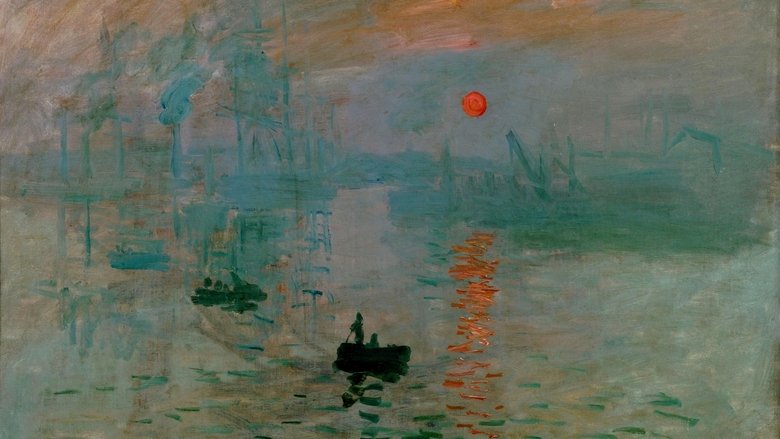
Ode to the Sun: An Art History
Genres
DocumentaryHistoryTV Movie
Overview
A look at the Sun, the star that revolves at the center of the Solar System, and its representation in art throughout history.
Details
Budget
$0
Revenue
$0
Runtime
52 min
Release Date
2023-03-05
Status
Released
Original Language
German
Vote Count
1
Vote Average
8
Cast
Meet the talented actors who bring the movie to life.
Emma Carenini
Self - Narrator (voice)
Similar Movies
Explore movies similar to this one that you might also enjoy.
6.9
Cielo
The first feature from Alison McAlpine is a dialogue with the heavens—in this case, the heavens above the Andes and the Atacama Desert in northern Chile, where she alights on the desert- and mountain-dwelling astronomers, fishermen, miners, and cowboys who live their lives with reverence and awe for the skies.
2017-10-06 | en
5.0
Achieving the Unachievable
M.C. Escher is among the most intriguing of artists. In 1956 he challenged the laws of perspective with his graphic Print Gallery and his uncompleted master-piece quickly became the most puzzling enigma of modern art. Fifty years later, can mathematician Hendrik Lenstra complete it? Should he?
2007-09-01 | en
8.0
James Ensor: Demons Teasing Me
This film explains what James Ensor (1860-1949) meant for the development of art and makes palpable where he got his inspiration from.
2010-10-14 | en
7.6
Riding Giants
Riding Giants is story about big wave surfers who have become heroes and legends in their sport. Directed by the skateboard guru Stacy Peralta.
2004-07-09 | en
6.0
Paco Roca: dibujando la vida
A portrait of Spanish comic book author Paco Plaza.
2023-10-25 | es
6.7
Miss Hokusai
A daughter is constantly overshadowed by her famous father, but she is determined to make her own mark in the world.
2015-05-09 | ja
0.0
Equipo Crónica. Arte de trinchera
2025-02-28 | es
6.2
The Hunt for Dark Matter
CERN and the University of California-Santa Barbara are collaborating in the search for the elusive substance that physicists and astronomers believe holds the universe together -- dark matter. Where is this search now in the realm of particle physics and what comes next?
2017-05-04 | en
7.0
Searching for Skylab, America's Forgotten Triumph
The first American space station Skylab is found in pieces scattered in Western Australia. Putting these pieces back together and re-tracing the Skylab program back to its very conception reveals the cornerstone of human space exploration.
2019-02-08 | en
0.0
The Sun: Inferno in the Sky
Explore the sun’s powerful storms, its impact on Earth, and groundbreaking research shaping our understanding of solar activity and its effects on our planet.
2018-01-01 | en
6.9
Mona Lisa Smile
Katherine Watson is a recent UCLA graduate hired to teach art history at the prestigious all-female Wellesley College, in 1953. Determined to confront the outdated mores of society and the institution that embraces them, Katherine inspires her traditional students, including Betty and Joan, to challenge the lives they are expected to lead.
2003-12-19 | en
0.0
Cartoon College
Every fall, The Center for Cartoon Studies invites 20 aspiring cartoonists to White River Junction, Vermont for a no-holds-barred education in comics. Those who complete the two-year program earn a Master of Fine Arts degree and are ready to face the hardship of a career in one of the world's most drudgery-inducing art forms. This is their story.
2012-04-01 | en
0.0
The Once and Future Griffith Observatory
Documentary about the Griffith Observatory, shown at their Leonard Nimoy Event Horizon Theater
2006-05-31 | en
2.0
El universo en una caja
An account of the life and work of the multidisciplinary Spanish artist Mariano Fortuny Madrazo (1871-1949), textile and fashion designer, set designer, photographer, painter and engraver, known as the Leonardo Da Vinci of the 20th century.
2022-10-28 | es
8.0
Hinter dem Vorhang: Das Geheimnis Vermeer
2021-06-27 | de
9.0
Nature : pour une réconciliation
Combining poetry, science and emotion, this film traces the history of life, from its cosmic origins to its evolution on our planet, through the wonders of biodiversity and the contemporary challenges it faces. Through spectacular images, Yann Arthus-Bertrand questions the paradoxes of our times and urges a collective transformation to reconcile humanity with nature.
2025-02-11 | fr
7.7
Die Sonne
The sun is the miracle that makes everything possible - but also the greatest danger. For the first time, a feature-length documentary is dedicated to the search for the significance of our home star for mankind, science and nature. Thanks to the researchers from the American space agency NASA, who work at the Canary Islands observatories in the hottest and coldest places on the planet.
2024-02-10 | de
10.0
Prehistoric Astronomers
Cave paintings and lunar calendars exist in the caves and remains of prehistoric hunters studied recently. What if Prehistoric Man were clever enough to develop in depth scientific knowledge? As unlikely as it may seem, new data tend to prove that Prehistoric Man actually invented Astronomy!
2007-01-01 | en
0.0
Shadow Chasers
This feature-length documentary is a portrait of eclipse chasers, people for whom solar eclipses - among nature's more spectacular phenomena – are a veritable obsession. The film follows 4 of them as they travel incredible distances to witness the last total eclipse of the millennium as it sweeps eastward across Europe to India. At various points along the way enthusiasts Alain Cirou in France, Paul Houde in Austria, Olivier Staiger in Germany and Debasis Sarkar in India offer their impressions of the historic event.
2000-09-23 | fr
7.9
What Killed the Roman Empire?
Why did the Roman Empire, which dominated Europe and the Mediterranean for five centuries, inexorably weaken until it disappeared? Archaeologists, specialists in ancient pathologies and climate historians are now accumulating clues converging on the same factors: a powerful cooling and pandemics. A disease, whose symptoms described by the Greek physician Galen are reminiscent of those of smallpox, struck Rome in 167, soon devastating its army. At the same time, a sudden climatic disorder that was underway as far as Eurasia caused agricultural yields to plummet and led to the westward migration of the Huns. Plagued by economic and military difficulties, attacked from all sides by barbarian tribes, the Roman edifice gradually cracked.
2022-11-19 | fr